
One-Pan Garlic Butter Shrimp Pasta (Restaurant Sauce, One Pot)
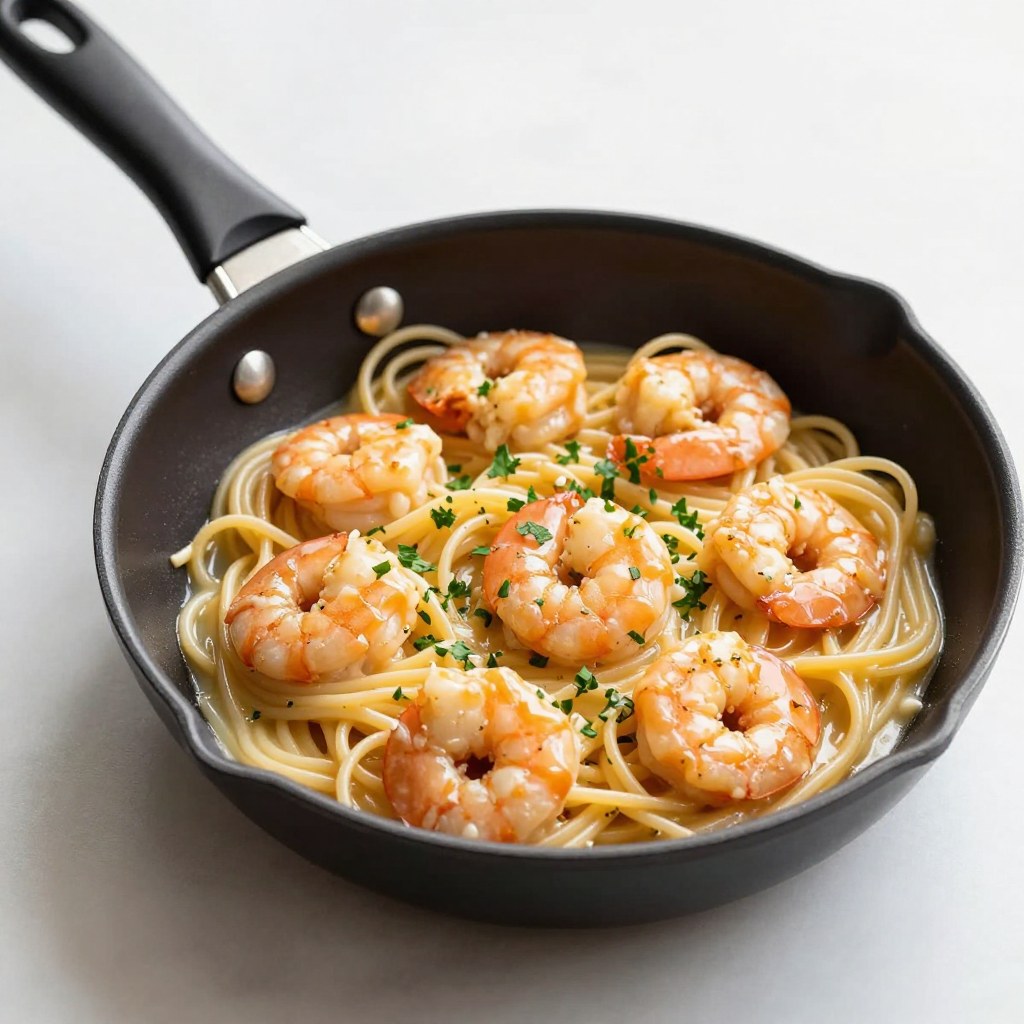
This is the pasta I make when I want something that tastes like it took real effort and actually took twenty minutes, start to finish, in one pan. Shrimp gets a quick sear for flavor and texture, then steps aside while garlic, wine, and broth build a base the pasta cooks directly in — no separate pot of boiling water, no straining, no second dish to wash. The sauce comes together in the same skillet, picking up everything the shrimp and garlic left behind.
Why the shrimp comes out and goes back in
Shrimp cooks fast — really fast — and it keeps cooking a little even after it’s off direct heat. Searing it first and setting it aside means it’s not sitting in a simmering pan for the twelve-plus minutes the pasta needs to cook through. Skip this step and the shrimp you started with as tender and the shrimp you serve as rubbery are two very different textures, cooked from the exact same ingredients.
One pan, real starch, no extra pot
Cooking the pasta directly in the broth mixture instead of a separate pot of water isn’t just about fewer dishes — the pasta releases starch straight into the sauce as it cooks, which is what gives this dish its clingy, restaurant-style texture instead of a thin broth that pools at the bottom of the bowl. Stir it a few times while it simmers so it doesn’t stick to the pan bottom or clump into a single starchy mass.
Keeping the cream sauce from breaking
A broken cream sauce — grainy, oily-looking, separated — is almost always a heat problem, not an ingredient problem. Once the cream and Parmesan go in, keep the pan at a gentle simmer rather than a boil, and don’t leave it on the heat longer than it takes to thicken. If it’s ever looking thin, patience fixes it faster than more cheese does.
Serve it the moment it comes off the stove with something crusty on the side to catch the extra sauce, because there will be extra sauce, and pretending you don’t want to mop it up is a lie nobody needs to tell in their own kitchen.
Tips & variations
- Buy shrimp already peeled and deveined if you're short on time — it costs a little more per pound but removes the single most tedious step in this recipe with no effect on the final dish.
- Don't skip searing the shrimp separately and setting it aside. Leaving it in the pan through the full pasta cook turns tender shrimp into rubber by the time everything else is ready.
- If the sauce looks too thin after adding the cream, simmer it a minute or two longer uncovered rather than adding more Parmesan — extra cheese can make it grainy instead of thicker.
- This scales down cleanly for two — halve everything except the garlic, which can stay closer to the full amount without overwhelming the dish.
One-Pan Garlic Butter Shrimp Pasta (Restaurant Sauce, One Pot) — Recipe Card
Ingredients
For the shrimp and sauce
For the pasta
Instructions
- Pat the shrimp fully dry with paper towels and season lightly with salt and pepper. A dry surface matters here — wet shrimp steam instead of sear, and you lose the light golden edge that makes the difference between good and forgettable.
- Heat the olive oil and 1 tablespoon of the butter in a large, deep skillet over medium-high heat. Add the shrimp in a single layer (work in two batches if the pan is crowded) and sear 1-2 minutes per side, until pink, opaque, and curled into a loose C shape — an internal temperature of 145°F (63°C) is the precise doneness marker. Remove the shrimp to a plate immediately; they'll finish cooking gently later, off the heat.
- Lower the heat to medium. Add the remaining 3 tablespoons of butter to the same skillet, then the minced garlic and red pepper flakes if using. Stir constantly for 30-45 seconds, just until fragrant — garlic burns fast and turns bitter, so don't walk away.
- Pour in the white wine (or extra broth) and scrape up any browned bits from the bottom of the pan — that's flavor, not mess. Let it simmer 1-2 minutes until slightly reduced, then add the chicken broth.
- Break the linguine in half and add it directly to the skillet, submerging it in the liquid as much as possible. Bring to a low boil, then reduce to a simmer, cover, and cook 10-12 minutes, stirring occasionally so the pasta doesn't clump or stick to the pan bottom, until just shy of al dente.
- Stir in the heavy cream and Parmesan, and simmer uncovered 2-3 minutes until the sauce thickens enough to coat the back of a spoon. Keep the heat at a gentle simmer, not a hard boil — cream sauces can break (separate into a grainy, oily mess) if they're rushed at high heat.
- Return the shrimp and any accumulated juices to the pan, along with the lemon juice. Toss gently just until the shrimp is heated back through, about 1 minute. Taste and adjust salt, pepper, and lemon.
- Remove from heat, scatter with fresh parsley, and serve immediately — the sauce is at its silkiest the moment it comes off the stove and continues to thicken as it sits.
Estimated nutrition per about 1/4 of recipe, estimate only, before optional bread or side salad : ~620 calories. This is a rough estimate for planning, not a substitute for exact dietary tracking.
Frequently asked questions
Can I use frozen shrimp?
Yes — thaw it fully in the refrigerator overnight, or in a bowl of cold water for about 20 minutes, then pat it very dry before searing. Shrimp that's still icy in the center won't sear properly and will release extra water into the pan.
What if I don't want to use wine?
Swap it for an equal amount of chicken broth, plus a small splash of extra lemon juice at the end to bring back some of the acidity the wine would have added.
Why did my cream sauce turn grainy or separated?
That usually means the heat was too high once the cream and Parmesan went in, or the pan sat too long after the cheese was added. Keep the sauce at a gentle simmer, not a boil, once the dairy is in, and serve promptly rather than holding it on high heat.
How we choose
This recipe is research-led, not a claim of hands-on laboratory testing. We compare public product specifications, recurring patterns in buyer feedback, and the measurements that matter most for a real small-kitchen constraint. Recommendations are organized by who each option fits, what to measure, and when to skip it—not by commission rate.
Last reviewed: July 14, 2026