
Chicken Alfredo Recipe (Silky Sauce That Won't Break)
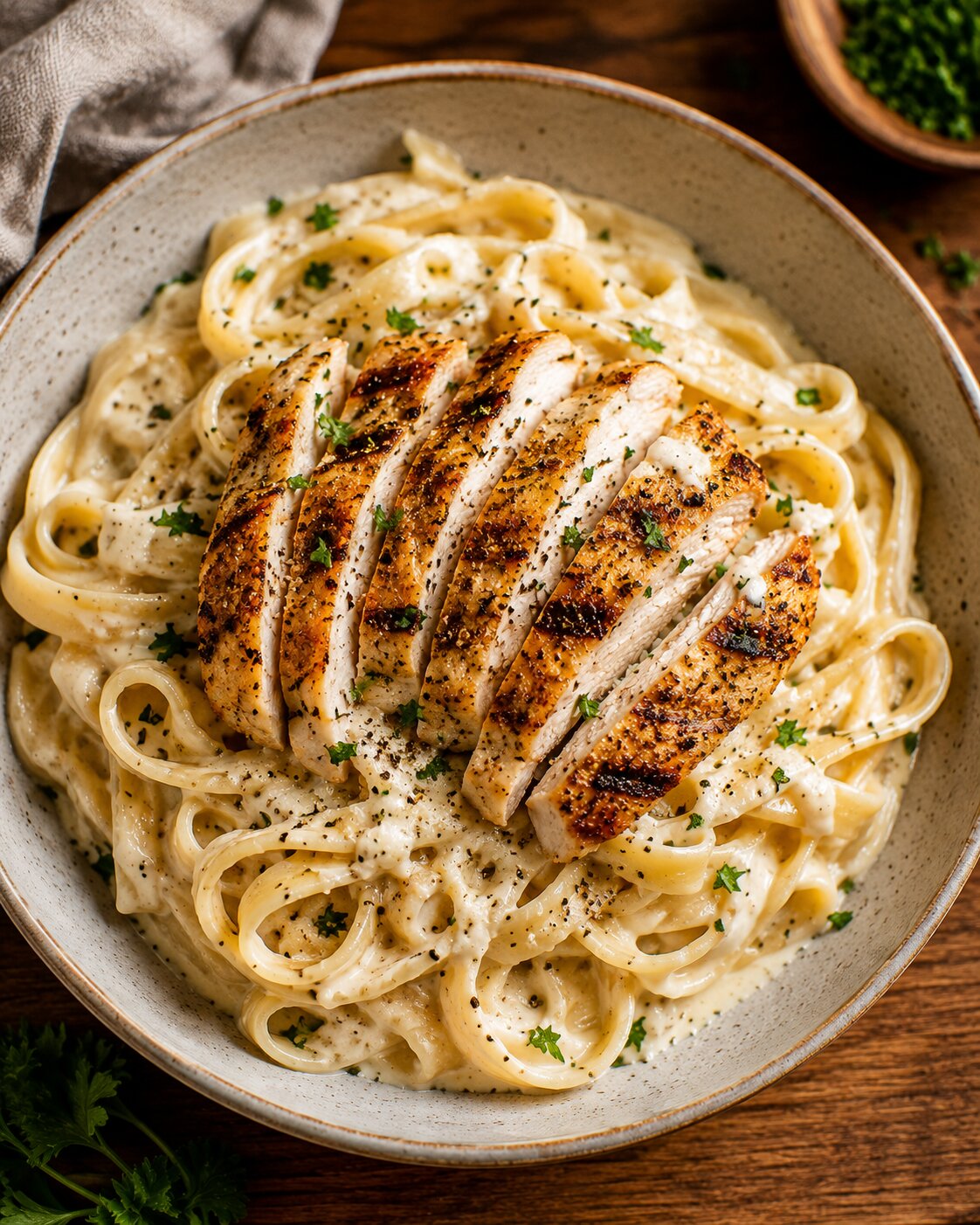
This chicken alfredo recipe fixes alfredo sauce’s reputation for being temperamental — breaking into a grainy, oil-slicked mess right when it should be coming together silky. That reputation is mostly earned by one habit: adding cheese to a sauce that’s too hot, too fast. Fix the temperature and the timing, and alfredo turns out to be one of the more forgiving sauces in the whole pasta-night rotation.
Broken sauce is a heat problem, not a recipe problem
Cheese is mostly protein and fat held in a delicate balance. Hit that balance with too much heat too quickly and the proteins tighten up and squeeze out the fat, which is what a “broken” or grainy sauce actually is at a molecular level. Pulling the pan completely off the heat before adding cheese, then stirring it in gradually, sidesteps the problem instead of trying to rescue a sauce that’s already started to separate.
The cheese itself matters more than people expect
Pre-shredded cheese is convenient, but it’s coated in cellulose and other anti-caking agents specifically so the shreds don’t clump in the bag — which is the same property that keeps it from melting into a smooth sauce on the stove. A block of Parmesan grated fresh right before cooking melts noticeably more evenly, for maybe two extra minutes of effort.
Pasta water is the adjustment tool, not an afterthought
Alfredo sauce thickens fast, both while cooking and while it sits waiting to be served, and going straight to plain water to thin it out mutes the flavor. Reserved pasta water carries starch that loosens the sauce’s texture while helping it cling to the noodles — it’s worth keeping a cup on the counter through the whole process, not just as an emergency fix.

Tips & variations
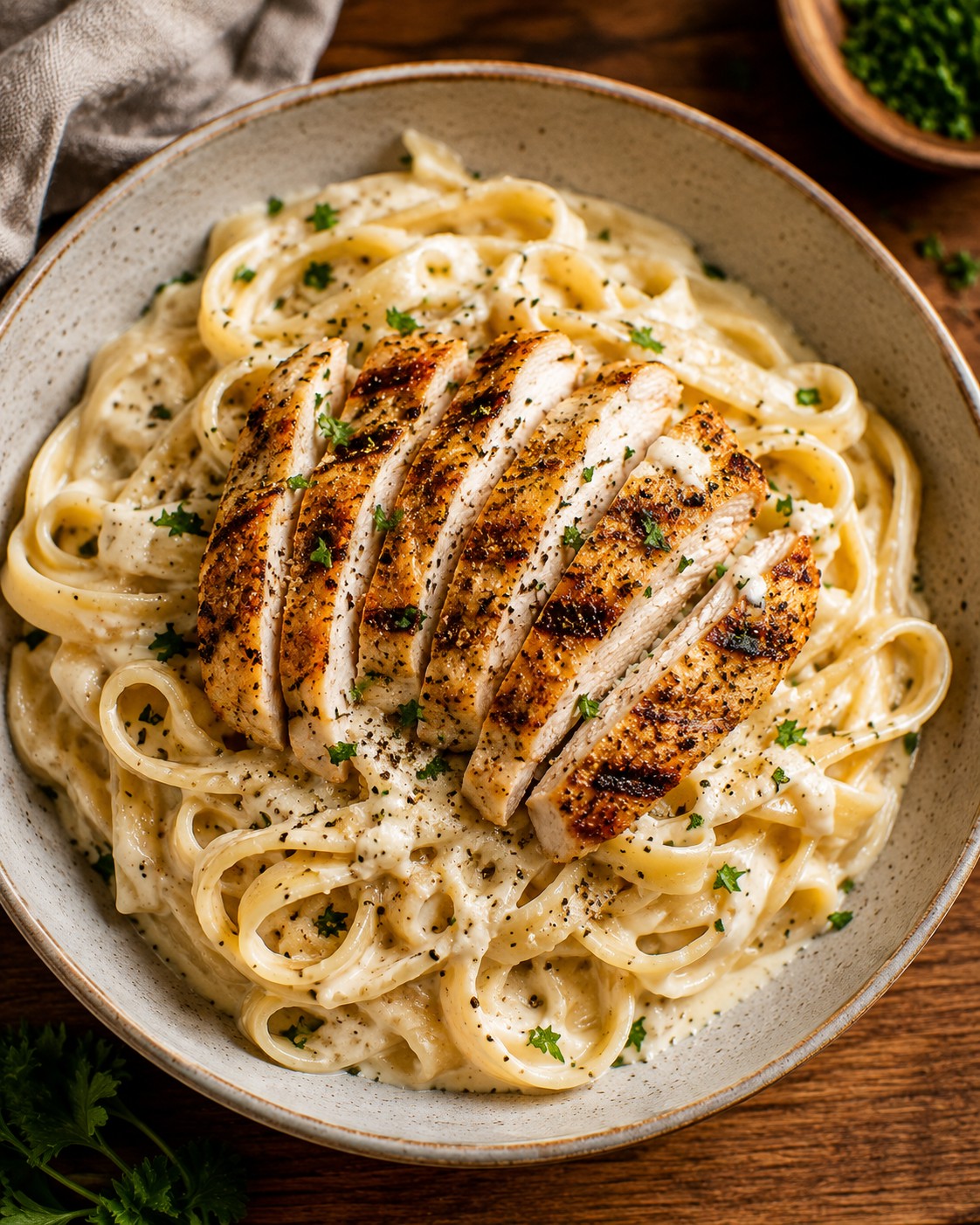
- Buy a block of Parmesan and grate it yourself. Pre-shredded cheese is coated in anti-caking agents (usually cellulose) that prevent it from melting smoothly, which is one of the most common reasons store-bought-cheese alfredo turns grainy.
- Melt the cheese off the heat, not on it. Cheese proteins tighten and separate from fat when they hit too much direct heat too fast — that's what 'broken' sauce actually is. Adding cheese gradually off-heat avoids the problem entirely.
- Keep the cream at a gentle simmer, never a hard boil, before adding cheese. A boiling base is hot enough on its own to break the sauce the moment cheese goes in.
- Reserved pasta water is the easiest fix for a sauce that's too thick — its starch content also helps the sauce cling to the noodles better than plain water would.
Chicken Alfredo Recipe (Silky Sauce That Won't Break) — Recipe Card
Ingredients
For the chicken
For the alfredo sauce
For the pasta
Instructions
- Season the chicken breasts with salt and pepper. Heat the olive oil in a large skillet over medium heat and cook the chicken for 6-7 minutes per side, until it reaches an internal temperature of 165°F (74°C). Rest for 5 minutes, then slice.
- Meanwhile, bring a large pot of salted water to a boil and cook the fettuccine according to package directions until al dente. Reserve 1 cup of the pasta water before draining.
- In the same skillet used for the chicken, melt the butter over medium heat. Add the garlic and cook for 30 seconds, until fragrant but not browned.
- Pour in the heavy cream and bring to a gentle simmer — small bubbles around the edges, not a rolling boil. Let it simmer for 2-3 minutes to reduce slightly.
- Remove the skillet from the heat completely. Add the grated Parmesan a handful at a time, whisking constantly until each addition melts smoothly before adding the next. Working off the heat is what keeps the cheese proteins from seizing into a grainy, broken sauce.
- Whisk in the nutmeg if using, and season with salt and pepper. If the sauce is thicker than you'd like, whisk in reserved pasta water a tablespoon at a time until it reaches a pourable, silky consistency.
- Add the drained fettuccine to the sauce and toss to coat, returning the skillet to low heat only briefly if needed to warm everything through.
- Top with the sliced chicken and extra cracked pepper. Serve immediately — alfredo sauce continues to thicken as it sits, so pasta water on hand for re-loosening is worth keeping nearby.
Estimated nutrition per 1 bowl (of 4), estimate only : ~640 calories. This is a rough estimate for planning, not a substitute for exact dietary tracking.
Frequently asked questions
Why did my alfredo sauce turn grainy or separate?
Almost always heat-related — either the cream was boiling too hard when the cheese went in, or the cheese was added directly over high heat instead of off the heat. Pre-shredded cheese with anti-caking coatings makes it worse.
Can I use pre-shredded Parmesan to save time?
You can, but it melts less smoothly because of the anti-caking agents coating it. Freshly grated cheese from a block makes a noticeably silkier sauce for very little extra effort.
My sauce is too thick — how do I fix it without watering down the flavor?
Whisk in reserved pasta water a tablespoon at a time. Its starch content loosens the sauce without diluting the flavor the way plain water would, and it helps the sauce grip the noodles.
How we choose
This recipe is research-led, not a claim of hands-on laboratory testing. We compare public product specifications, recurring patterns in buyer feedback, and the measurements that matter most for a real small-kitchen constraint. Recommendations are organized by who each option fits, what to measure, and when to skip it—not by commission rate.
Last reviewed: July 6, 2026