
Classic Meat Lasagna Recipe (No Watery Layers)
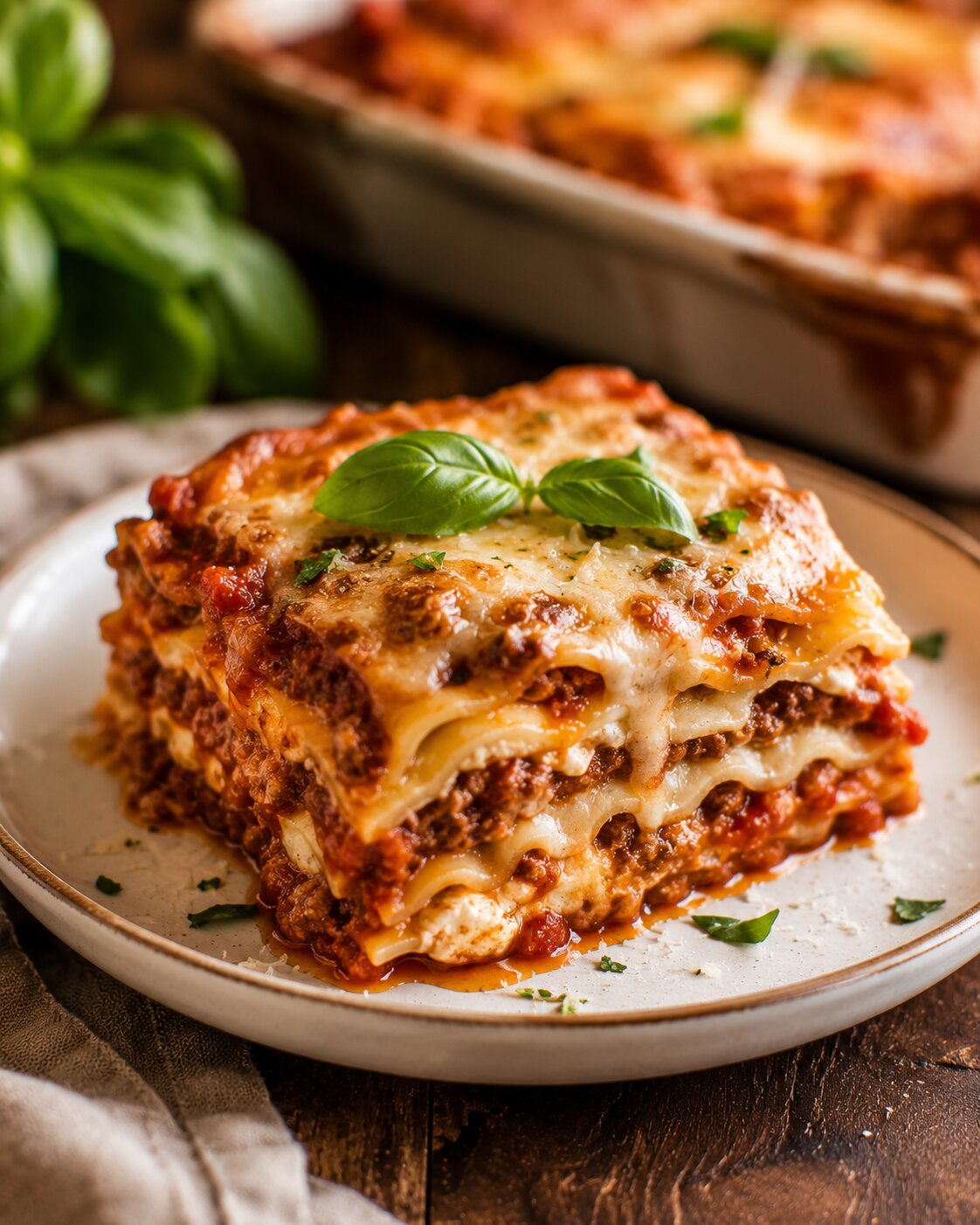
This lasagna recipe fixes lasagna’s reputation as a weekend project — a reputation that comes less from the number of steps and more from how often the result turns out swimming in liquid instead of neatly layered. That’s not bad luck or a bad pan — it’s moisture that had nowhere to go, and it traces back to one of two habits almost every time.
Ricotta holds more water than it looks like
Ricotta straight out of the container carries a real amount of whey and moisture, even when it looks thick in the tub. Mixed straight into the cheese layer, that water has nowhere to go but into the noodles around it during baking. A 15-20 minute rest in a strainer, or a firm press with paper towels, pulls out enough of that liquid to make a genuine difference in the final texture.
A thin sauce stays thin in the oven
Baking doesn’t reduce sauce the way stovetop simmering does — a lasagna sauce that goes into the dish thin comes out of the oven thin, just now distributed through every layer instead of contained in the pot. Simmering the meat sauce uncovered until it visibly mounds on a spoon, not just until it’s hot, is doing real structural work, not just building flavor.
The rest after baking matters as much as the bake itself
Lasagna straight out of the oven is still actively releasing steam and moisture from every layer. Cutting into it immediately means all of that comes out in one wave onto the cutting board or plate. A 15-minute rest gives the layers time to firm back up and reabsorb some of that moisture, which is the difference between clean slices and a dish that eats fine but doesn’t hold its shape.

Tips & variations
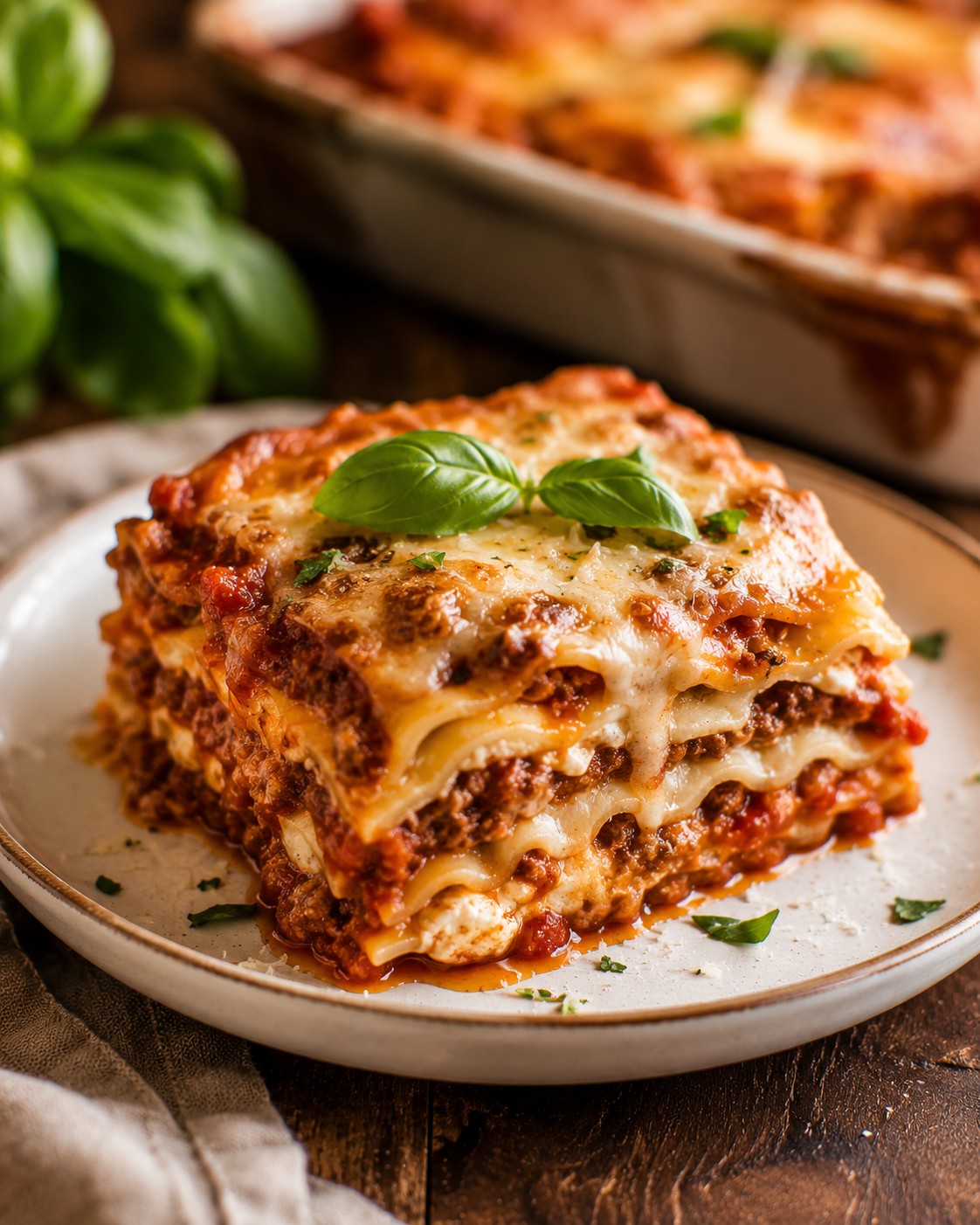
- Drain the ricotta before mixing it with the egg and Parmesan — set it in a fine-mesh strainer over a bowl for 15-20 minutes, or press it gently with paper towels. Ricotta straight from the tub carries a surprising amount of water, and that water ends up as a puddle in your baking dish.
- Simmer the meat sauce until it actually thickens, not just until it's hot. A watery sauce spreads that extra moisture into every layer above and below it during baking.
- No-boil noodles work, but they absorb moisture from the sauce as they bake — add about 1/4 cup extra sauce or a splash of water/broth if you use them, since they're pulling liquid the boiled version doesn't need.
- The 15-minute rest after baking isn't optional. Cutting into hot lasagna releases all the built-up moisture in one wave, which is why a beautifully layered lasagna can still look like a puddle on the plate if it's sliced too soon.
- This assembles well a day ahead — build it, cover, and refrigerate unbaked, then add 10-15 minutes to the covered bake time since it's starting cold.
Classic Meat Lasagna Recipe (No Watery Layers) — Recipe Card
Ingredients
For the meat sauce
For the cheese layer
To assemble
Instructions
- Brown the ground beef and sausage together in a large pot over medium-high heat, breaking it into crumbles, about 8 minutes. Drain excess fat, leaving a thin coating.
- Add the onion and cook until softened, about 5 minutes. Add the garlic and cook 30 seconds more.
- Stir in the crushed tomatoes, tomato paste, oregano, basil, salt, and pepper. Simmer uncovered for 20-25 minutes, stirring occasionally, until thickened — the sauce should mound slightly on a spoon, not run off it. A thin sauce is the top cause of watery lasagna, so don't rush this step.
- While the sauce simmers, boil the lasagna noodles according to package directions until just al dente, then lay them flat on a sheet pan (not stacked) so they don't stick together.
- Preheat the oven to 375°F (190°C). Stir together the drained ricotta, egg, Parmesan, parsley, and salt in a bowl.
- Spread a thin layer of meat sauce in the bottom of a 9x13-inch baking dish. Layer noodles, a third of the ricotta mixture, a third of the remaining meat sauce, and a scattering of mozzarella. Repeat twice more, finishing with a final layer of noodles, the remaining sauce, and the rest of the mozzarella and Parmesan on top.
- Cover tightly with foil (tent it slightly so the cheese doesn't stick) and bake for 25 minutes. Remove the foil and bake 15-20 minutes more, until bubbling and golden on top.
- Let the lasagna rest for at least 15 minutes before cutting — this is what keeps the slices holding their shape instead of sliding apart on the plate.
Estimated nutrition per 1 slice (of 8), estimate only : ~480 calories. This is a rough estimate for planning, not a substitute for exact dietary tracking.
Frequently asked questions
Why is my lasagna always watery?
Two usual causes: ricotta that wasn't drained before mixing, and a meat sauce that never reduced enough before assembly. Fix both and most watery-lasagna problems disappear.
Do I need to boil the noodles first?
Regular noodles, yes — boil until just al dente before layering. No-boil noodles skip this step but pull moisture from the sauce as they bake, so add a little extra sauce or liquid if you use them.
Can I assemble this ahead of time?
Yes — build the full lasagna, cover tightly, and refrigerate unbaked for up to a day. Add 10-15 minutes to the covered baking time to account for starting from cold.
How we choose
This recipe is research-led, not a claim of hands-on laboratory testing. We compare public product specifications, recurring patterns in buyer feedback, and the measurements that matter most for a real small-kitchen constraint. Recommendations are organized by who each option fits, what to measure, and when to skip it—not by commission rate.
Last reviewed: July 6, 2026