
Sheet-Pan Salmon and Vegetables (One Pan, Staggered Roast)
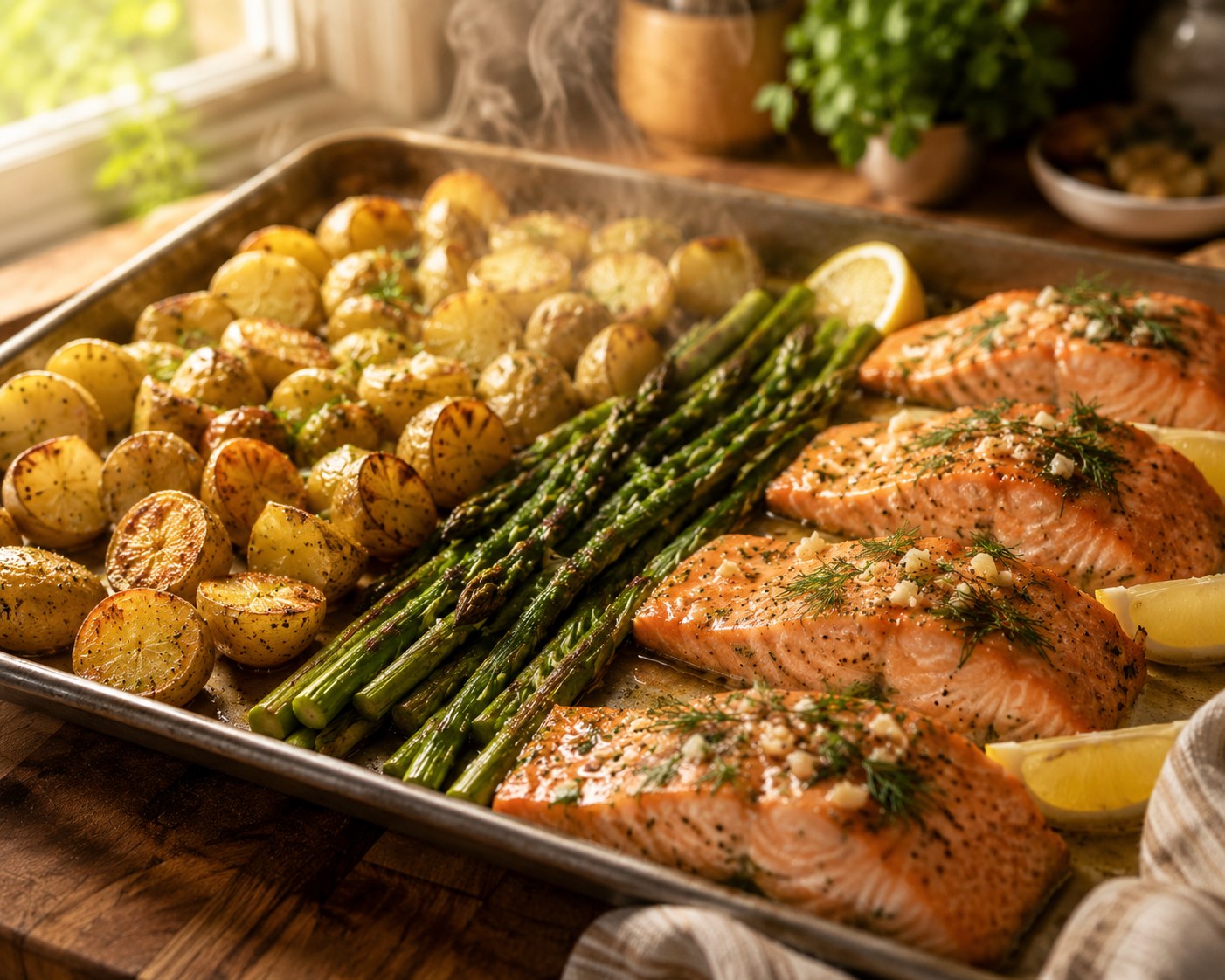
This is the sheet-pan dinner that actually respects that its three components don’t cook at the same speed. Most “one pan” recipes just dump everything on at once and hope for the best, which is how you end up with a fork-tender potato standing next to a raw one, or salmon that’s dry by the time the vegetables catch up. The fix is a fifteen-minute head start for the slowest thing on the pan — after that, it really is one pan, one oven, and very little to wash.
Why the staggered start actually matters
Potatoes need real time in a hot oven to go from raw to tender — usually 25-30 minutes on their own. Salmon and asparagus need roughly half that. Roast everything together from the start and you’re stuck choosing which one to sacrifice. Giving the potatoes their own 15-minute run before anything else joins the pan means all three finish within a couple of minutes of each other, which is the entire difference between “sheet pan dinner” and “sheet pan dinner that actually works.”
The lemon-garlic butter is doing more than flavor
Spooning the butter mixture over the salmon right before it goes back in the oven does two jobs at once: it bastes the fish as it roasts instead of leaving it dry, and the garlic and lemon zest toast slightly in the direct heat rather than just sitting on top raw. It’s a thirty-second step that changes the whole dish, and it’s the kind of small-effort, large-payoff ratio worth building a habit around.
Built for small kitchens on purpose
One sheet pan, one oven, and a five-minute cleanup — no second burner, no extra pot for the potatoes, no skillet to babysit while the fish is in the oven. If your current sheet pan warps at high heat or has started to actually stick despite being labeled nonstick, that’s worth replacing before anything else on this list; a warped pan cooks unevenly no matter how carefully the timing is staged.

Tips & variations
- Don't skip the potatoes' 15-minute head start — added at the same time as the salmon, they'll either still be raw when the fish is done or you'll overcook the fish waiting on them.
- Pat the salmon fillets dry with a paper towel before seasoning. Excess surface moisture steams instead of browns, even in a hot oven.
- Cut the potatoes to a consistent size (roughly 1-inch pieces) so they finish cooking at the same rate instead of some pieces staying firm.
- Leftovers reheat best in a low oven (275°F) for about 10 minutes or an air fryer — a microwave tends to dry the salmon out and turn the asparagus rubbery.
Sheet-Pan Salmon and Vegetables (One Pan, Staggered Roast) — Recipe Card
Ingredients
For the sheet pan
Lemon-garlic butter
To finish
Instructions
- Preheat oven to 425°F (220°C) and line a large sheet pan with foil or parchment for easy cleanup.
- Toss the potatoes with 2 tablespoons olive oil, salt, and pepper. Spread in a single layer on the pan and roast alone for 15 minutes — potatoes take longer than the salmon or asparagus, so they need the running start.
- While the potatoes roast, whisk together the melted butter, garlic, lemon zest, lemon juice, and red pepper flakes if using.
- Remove the pan and push the potatoes to one side. Toss the asparagus with the remaining tablespoon of olive oil, salt, and pepper, and add it to the other side of the pan. Nestle the salmon fillets into the remaining space, skin-side down.
- Season the salmon with salt and pepper, then spoon the lemon-garlic butter mixture evenly over the fillets.
- Return the pan to the oven and roast for 12-15 minutes more, until the salmon is opaque and flakes easily with a fork (internal temperature of 145°F/63°C) and the asparagus is crisp-tender.
- Let everything rest for 2 minutes, squeeze fresh lemon over the top, scatter with dill or parsley, and serve straight off the pan.
Estimated nutrition per 1 fillet with vegetables (1/4 of recipe), estimate only : ~420 calories. This is a rough estimate for planning, not a substitute for exact dietary tracking.
Frequently asked questions
How do I know when the salmon is done?
It should look opaque all the way through and flake easily when you press a fork into the thickest part. If you have a thermometer, 145°F (63°C) is the standard safe internal temperature for cooked fish.
Can I use frozen salmon fillets?
Yes, but thaw them fully in the refrigerator first and pat them very dry before seasoning — salmon straight from frozen releases extra water on the pan, which steams the fish instead of letting it roast properly.
Can I swap the vegetables?
Broccoli florets, green beans, or halved Brussels sprouts all work in place of asparagus — just match the cut size to asparagus spears so the roast time stays about the same, and add anything denser (like Brussels sprouts) at the same time as the potatoes instead of later.
How we choose
This recipe is research-led, not a claim of hands-on laboratory testing. We compare public product specifications, recurring patterns in buyer feedback, and the measurements that matter most for a real small-kitchen constraint. Recommendations are organized by who each option fits, what to measure, and when to skip it—not by commission rate.
Last reviewed: July 9, 2026