
Where to Put a Litter Box in a Small Apartment
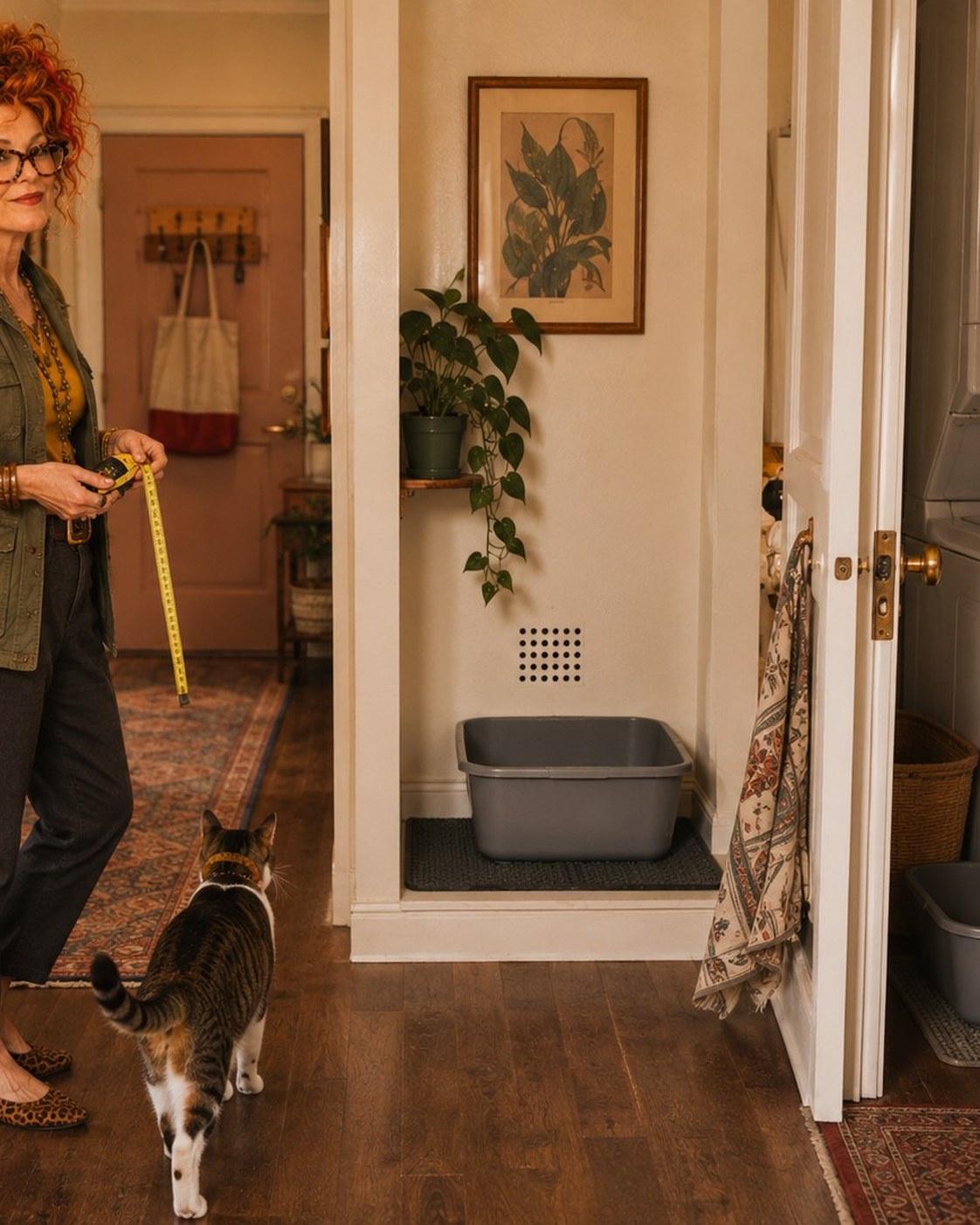
The empty corner is not automatically the right litter-box location. A box can physically fit beneath a shelf, behind a door, or beside the washing machine and still fail because the cat cannot approach calmly, escape easily, or use it when a door is closed. In a small apartment, placement is a balance between cat access, human cleaning access, airflow, and traffic.
Put the litter box in a quiet, consistently accessible area with a clear entrance and exit, routine airflow, and enough room to scoop without moving furniture. Keep it away from food and water when possible, and avoid noisy appliances, doors that may close, and tight dead ends. A bathroom or hallway nook can work when the cat can reach it at all times.
Map the complete litter zone before choosing a corner
Measure more than the box. Include:
- the cat’s approach path;
- a washable tracking mat;
- the front or top entry motion;
- room for the cat to turn and leave;
- scoop access to every corner;
- lid, hood, drawer, or cabinet-door movement;
- airflow around the box;
- the route for carrying waste out without crossing food-prep areas.
Then test the location at the noisiest time of day. A quiet laundry nook is not quiet when the spin cycle begins.
1. List every location the cat can reach all day
Start with places that do not depend on a door staying open. A bathroom only works if the cat cannot be accidentally locked out. A closet only works if it is genuinely ventilated and the entrance remains available. A balcony, fire escape, shared hallway, or building utility room is not a reliable indoor bathroom location.
2. Eliminate noisy and startling zones
Remove spots beside:
- washing machines and dryers;
- HVAC equipment that starts suddenly;
- slamming entry doors;
- speakers or televisions;
- busy kitchen appliances;
- narrow paths where people regularly step over the box.
A box beside a machine may seem efficient until vibration or sudden noise makes the location unpredictable.
3. Keep a clear entrance and exit
Do not point the entrance directly into a wall, cabinet, or dead-end gap. The cat should be able to approach, look around, and leave without squeezing past a person or another pet. In multi-pet homes, avoid a location where the box can be guarded from a single doorway.
4. Separate the bathroom from food and water
Use another room when possible. In a studio, create distance within the same room: opposite walls, a stable visual divider, and no path that lets kicked litter land near bowls. Do not put food on top of litter-box furniture simply because the cabinet resembles a table.
5. Protect airflow without creating a draft tunnel
A completely sealed closet can hold smell and moisture. A box directly beneath a forceful supply vent can blow dust and litter around the room. Choose ordinary room airflow and keep vents, radiators, and baseboard heaters unobstructed.
6. Leave enough room to clean it every day
The best hidden location is a bad choice if it makes scooping awkward. You should be able to reach the full pan, lift a hood, open cabinet doors, remove a drawer, and wipe the surrounding floor without dismantling the room.
For furniture options, compare the real cabinet access in our litter-box furniture guide. For open, covered, top-entry, and automatic formats, start with our small-apartment litter-box comparison.
7. Distribute multiple boxes instead of lining them up
When a household needs more than one box, separate locations are usually more useful than two pans touching side by side. In a small apartment, that may mean one bathroom zone and one quiet hall or living-area zone. Do not sacrifice access or cat-sized dimensions merely to force every box into one cabinet.
8. Move the box gradually
Set up the new location with the same familiar box and litter when possible. Keep the old location available while the cat investigates the new one. Once the new box is used consistently, phase out the old setup rather than moving the only bathroom in one abrupt jump.
Do not buy a placement solution if…
- It relies on keeping a household door propped open forever.
- It blocks the entrance, cleaning motion, or ventilation.
- A decorative screen creates a narrow dead end.
- The cabinet or mat reduces the usable box below the cat’s needs.
- It puts the box beside food, water, a stove, or a high-traffic prep area.
- It is being used to solve a sudden litter-habit change that needs veterinary attention.
When placement is not the whole explanation
A poor location can make a box harder to use, but a sudden change in litter habits should not be diagnosed as a décor or organization problem. Contact a veterinarian when a cat suddenly avoids the box, strains, visits unusually often, or changes elimination patterns.
A five-minute apartment placement test
Stand in the proposed location and answer:
- Can the cat reach this spot at every hour?
- Can the cat enter and leave without being cornered?
- Can the full box and mat fit without blocking a walkway?
- Can the box be scooped and washed without moving furniture?
- Is the location separated from feeding and food preparation?
- Does ordinary airflow reach the area?
- What happens when every nearby appliance and door is used?
A location that passes all seven is more useful than the one that hides best.
Frequently asked questions
What is the best room for a litter box in a small apartment?
The best room is the quietest consistently accessible area that still has airflow and cleaning access. A bathroom, low-traffic hallway nook, or open utility area can work if the door cannot trap the cat and appliances do not startle them.
Can a litter box go in a bedroom?
It can when the box has a clear approach, daily cleaning is realistic, and the room has airflow. Do not wedge it beside the bed or in a sealed closet simply because those are the only visually hidden places.
Should the litter box be near food and water?
Keep the litter area separated from feeding and water stations when the apartment layout allows it. If distance is limited, use different sides of the room and avoid a direct line where litter can be kicked toward bowls.
How do I move a litter box to a new location?
Make the change gradually when possible. Set up the new location while keeping the familiar box available, preserve the same litter and box format, and remove the old setup only after the cat uses the new one consistently.
Winnie’s take: The glamorous answer is “inside a beautiful cabinet.” The useful answer is “where the cat can reach it, leave it, and let you clean it without moving a chair, a plant, and your entire sense of dignity.”
How we choose
This how to is research-led, not a claim of hands-on laboratory testing. We compare public product specifications, recurring patterns in buyer feedback, and the measurements that matter most for a real small-space pet-care constraint. Recommendations are organized by who each option fits, what to measure, and when to skip it—not by commission rate.
Last reviewed: July 11, 2026