
Best Litter Boxes for Small Apartments (2026)
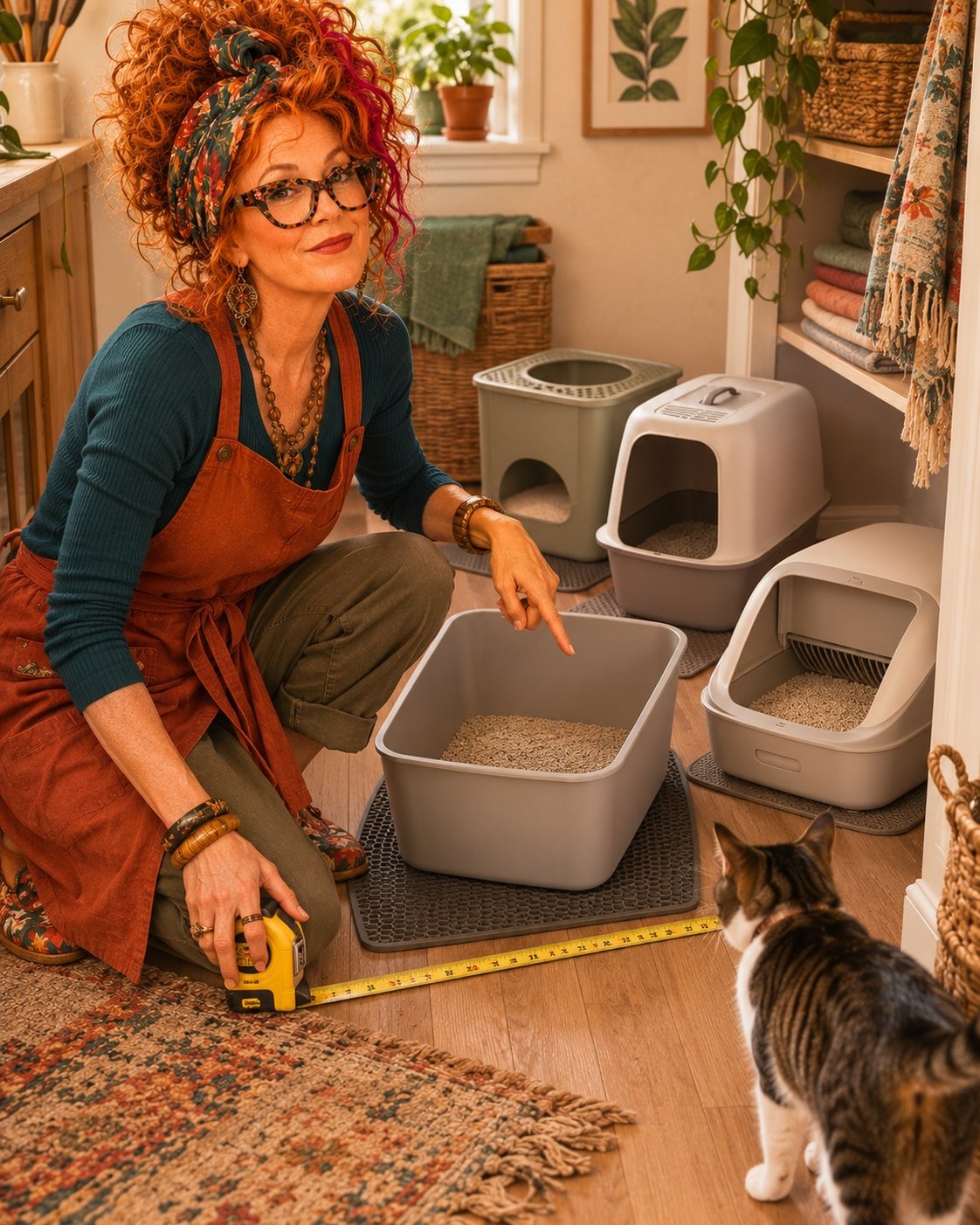
Best for, at a glance
| Option | Best for | Main trade-off |
|---|---|---|
| IRIS USA Open Top High-Sided Cat Litter Box | Best overall compact open box | The lowered front entry can still allow some litter onto the floor |
| IRIS USA Premium Square Top Entry Cat Litter Box | Best square footprint and tracking containment | Requires the cat to jump onto the lid and lower into the opening |
| Catit Airsift Jumbo Hooded Cat Litter Pan | Best covered option for cats that accept a hood | The exterior footprint is substantial for a small apartment |
| iPrimio XL Stainless Steel Cat Litter Box with Enclosure | Best long open pan for larger cats | Long footprint is harder to place than a square top-entry box |
| PetSafe ScoopFree Crystal Pro Self-Cleaning Litter Box | Best low-profile automatic format | Requires power and an ongoing compatible litter-and-tray system |
A small apartment creates pressure to buy the smallest litter box that will physically fit. That is the wrong direction. The box still has to work as a bathroom: the cat needs room to enter, turn, dig, and leave without squeezing past a wall or appliance. The useful comparison is therefore not simply “compact versus large.” It is usable interior room versus total operating footprint.
For most small apartments, start with a roomy open box that has high sides, such as the IRIS USA Open Top High-Sided box. It keeps access simple while containing more kicked litter than a low pan. Choose a square top-entry box only for an agile cat that accepts the format, and choose an automatic box only after measuring its outlet, tray-removal, and backup-box requirements.
Measure the cat, the floor, and the cleaning motion
Before comparing boxes, measure three different things:
- The cat’s usable room. A commonly cited behavior benchmark is a box around one and a half times the cat’s body length, excluding the tail. The cat should be able to turn and dig without curling into the corners.
- The exterior operating footprint. Include the entry mat, the cat’s approach path, a wall gap for airflow, and any lid, hood, drawer, or waste-tray movement.
- The cleaning motion. Make sure a scoop can reach every corner and that a lid, top, or automatic tray can be removed without dragging the whole box into the room.
Entry height matters as much as dimensions. A wall that contains litter for one cat can become an unnecessary barrier for another.
Small apartment does not mean smallest box
A tiny box can create more cleanup, not less. When a cat cannot turn comfortably, litter and waste are more likely to end up near the entry and walls. When the entrance is awkward, the cat may hesitate to use it. Save apartment space by choosing the right shape—square, long, open, or covered—not by shrinking below the cat’s needs.
Match the format to the cat
Open high-sided
This is the best general starting point. The cat keeps an open view and easy exit, while the taller back and sides may help contain digging. The front cutout still needs a mat if tracking is a problem.
Top-entry
This trades floor length for vertical entry. It can fit a corner neatly and may help contain tracking, but only when the cat can comfortably jump up, balance, and lower into the opening.
Covered or hooded
A hood may contain some scattered litter and visually hide the pan. It also adds interior walls, holds smells more readily when cleaning slips, and can make the cat feel boxed in. Use one when the cat already accepts covered boxes—not because the apartment needs the bathroom to disappear.
Stainless high-sided
A stainless basin offers a smooth cleaning surface and can be useful for larger cats when paired with a long footprint. It is not necessarily smaller; it is a material-and-size choice.
Low-profile automatic
A rake-style automatic box avoids the tall globe of many robot models, but it adds power, compatible litter or trays, moving parts, and drawer clearance. Measure the entire routine before calling it space-saving.
Do not buy a litter box for a small apartment if…
- The cat cannot turn comfortably inside the usable pan.
- The entry format demands jumping or climbing the cat cannot do easily.
- The box only fits when its entrance, lid, drawer, or cleaning access is blocked.
- A hood or cabinet is being used to hide poor airflow or delayed scooping.
- An automatic model would leave no room for a familiar backup box during transition.
- You are changing the box format in response to a sudden litter-habit change instead of talking with a veterinarian.
A practical apartment-fit order
- Choose the entry style the cat can use comfortably.
- Confirm the usable interior size.
- Fit that box into a quiet, accessible location.
- Add a washable tracking mat without blocking the approach.
- Confirm daily scooping and full-cleaning access.
- Only then compare materials, hoods, furniture, or automation.
The apartment should adapt around the litter box’s essential function. The cat should not have to adapt to a decorative object that happens to contain litter.
When a sudden change is not an organization problem
If a cat suddenly stops using a familiar box, strains, visits repeatedly, or changes elimination habits, treat that as a reason to contact a veterinarian. A different box, deodorizer, or placement trick is not a substitute for professional evaluation.
Frequently asked questions
What type of litter box is best for a small apartment?
For many cats, a roomy open box with high sides is the safest starting format because it preserves easy access and ventilation while containing some kicked litter. A top-entry, covered, or automatic box should be chosen only when the cat’s mobility, preferences, and the full cleaning footprint support that format.
How small can a litter box be?
Do not size the box from the apartment alone. A common behavior-guidance benchmark is roughly one and a half times the cat’s body length, excluding the tail, with enough width to turn and dig comfortably. Measure the cat and the usable interior, not just the exterior product dimensions.
Are top-entry litter boxes good for apartments?
They can use a compact square footprint and may help contain tracking, but they require jumping and a top-down entry. They are a poor default for kittens, older cats, cats with limited mobility, or any cat that hesitates to enter.
Should I replace a normal litter box with an automatic one?
Only after checking the operating footprint, outlet, supported litter, cleaning routine, and transition plan. Keep a familiar conventional box available while the cat adjusts, and do not treat automation as a substitute for inspecting and maintaining the box.
Specifications, listing identity, and availability can change. Recheck the linked product and manufacturer instructions before buying.
Winnie’s take: The smallest box in the room is not the most space-efficient box if it creates a tracking halo, blocks the cat’s turn, or has to be dragged into the hallway every time it is cleaned. Measure the whole routine, not just the plastic.
Product recommendations
IRIS USA Open Top High-Sided Cat Litter Box
Why this fits: This high-sided open box keeps the simple access and ventilation many cats accept while adding taller walls around the back and sides. Its listed footprint is roughly 19 by 15 inches, so it is easier to place than many jumbo boxes without shrinking all the way to a cramped kitten-sized pan.
Look for:
- Enough usable length for the cat to turn and dig without crouching
- A front-entry height the cat can step over comfortably
- Clear floor space around the entry for a washable tracking mat
Skip if:
- Your cat is large enough that the listed interior feels restrictive
- You need a very low entry for a cat with limited mobility
Small-space note: This is the most straightforward apartment default when a full-size open pan fits and the main issue is wall height rather than floor area.
View the current Amazon listing →Amazon retailer link. No Amazon commission is currently earned while our application is pending.
IRIS USA Premium Square Top Entry Cat Litter Box
Why this fits: The nearly square body uses vertical space rather than a long floor footprint, and the grooved lid may help knock loose litter from paws before the cat steps down. Top entry is a cat-access decision first: it suits agile cats that already accept climbing into a box, not every household.
Look for:
- A stable, unobstructed landing area above the box
- An opening large enough for the cat's body size
- Enough overhead room to lift the lid fully for cleaning
Skip if:
- The cat hesitates to jump, has mobility limits, or prefers a clear front exit
- The box would be wedged beneath a shelf that blocks lid removal
Small-space note: The small-space gain comes from the square footprint, but the format only works when the cat can enter and exit comfortably.
View the current Amazon listing →Amazon retailer link. No Amazon commission is currently earned while our application is pending.
Catit Airsift Jumbo Hooded Cat Litter Pan
Why this fits: The Catit is larger than the compact picks, but its lifting hood and wide front opening make it a more practical covered choice than a tiny enclosed box. It belongs on a small-apartment shortlist only when a covered format is already accepted and the floor area truly fits.
Look for:
- A cat that already uses covered boxes without hesitation
- Enough front clearance for entry and enough top clearance to lift the hood
- A placement zone with routine airflow and daily cleaning access
Skip if:
- The cat avoids enclosed boxes or needs more open sightlines
- Your available floor space only fits the box when the entrance is blocked
Small-space note: Covered does not mean tiny. Choose this for accepted enclosure and mess containment, not as a way to squeeze a large cat into a small shell.
View the current Amazon listing →Amazon retailer link. No Amazon commission is currently earned while our application is pending.
iPrimio XL Stainless Steel Cat Litter Box with Enclosure
Why this fits: This stainless-steel pan uses a long rectangular footprint and a detachable high-side enclosure. The smooth metal basin avoids deep plastic scratches that can become harder to scrub, while the open top preserves access. The trade-off is length: it needs a genuine wall run, not a decorative nook.
Look for:
- A wall run long enough for the full pan plus entry clearance
- A stable, level floor that keeps the metal pan from rocking
- A transition plan that keeps the previous box available at first
Skip if:
- Your only available location is a tight corner with no turning room
- The cat strongly dislikes unfamiliar box materials or sounds
Small-space note: This is the size-first pick: it sacrifices compact length to preserve usable room for a bigger cat.
View the current Amazon listing →Amazon retailer link. No Amazon commission is currently earned while our application is pending.
PetSafe ScoopFree Crystal Pro Self-Cleaning Litter Box
Why this fits: This rake-style automatic box stays lower than rotating globe machines, which can make it easier to fit under open shelving or along a wall. It still needs a nearby outlet, a long operating footprint, compatible crystal-litter trays, and enough clearance to remove and replace the tray.
Look for:
- A grounded outlet within the manufacturer-approved cord reach
- Enough room to pull the waste tray out without moving furniture
- A cat that accepts the litter texture and movement of an automatic rake
Skip if:
- You cannot maintain a conventional backup box during transition or outages
- You want to use a litter type the system does not support
Small-space note: Automatic is not automatically compact. This earns consideration because it is low-profile, not because it has the smallest total operating zone.
View the current Amazon listing →Amazon retailer link. No Amazon commission is currently earned while our application is pending.
How we choose
This roundup is research-led, not a claim of hands-on laboratory testing. We compare public product specifications, recurring patterns in buyer feedback, and the measurements that matter most for a real small-space pet-care constraint. Recommendations are organized by who each option fits, what to measure, and when to skip it—not by commission rate.
Products can change or disappear, so availability, specifications, and destination links should be rechecked during every scheduled refresh.
Last reviewed: July 11, 2026