
How to Control Litter Box Odor in an Apartment
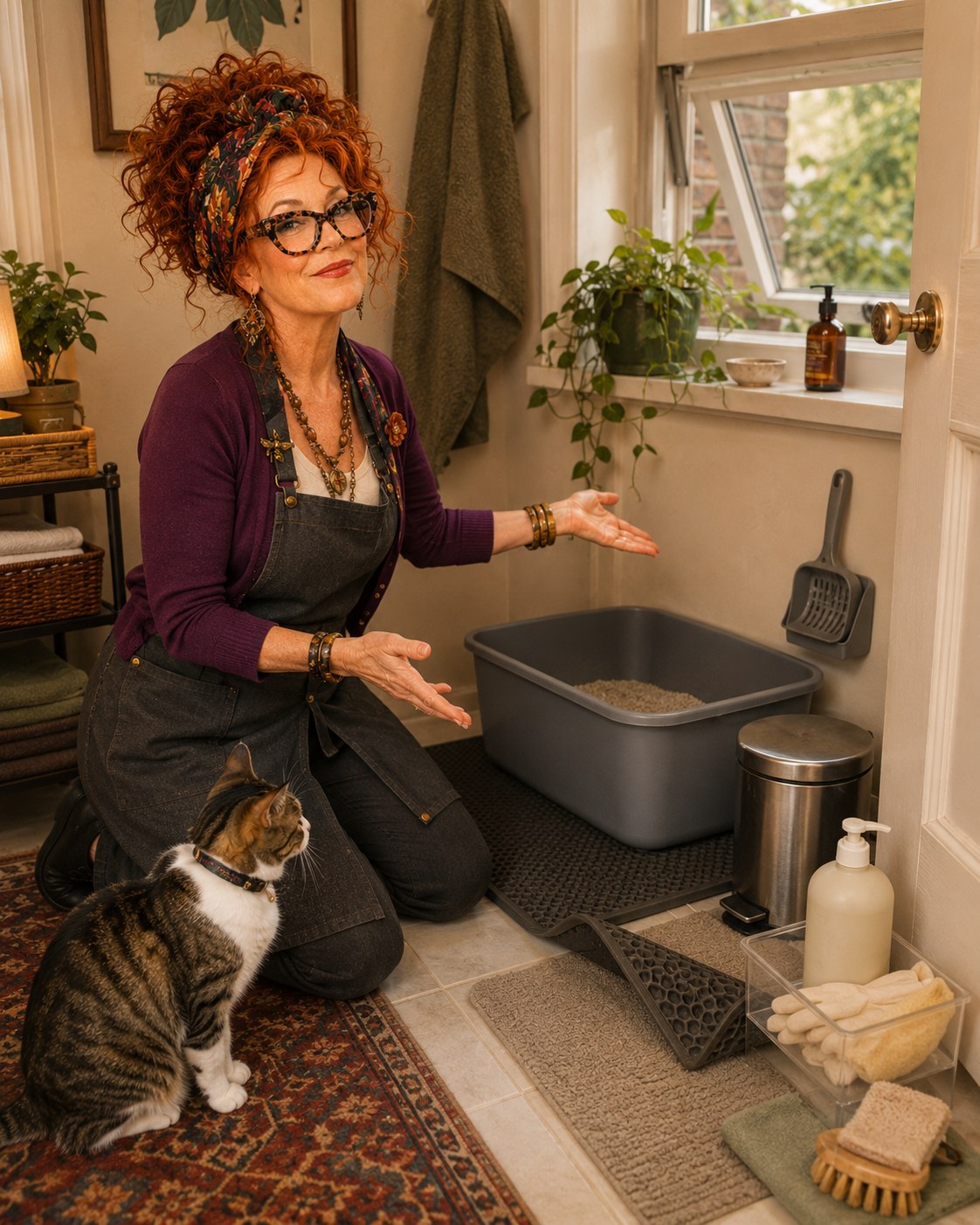
Apartment odor control is not a single charcoal filter, deodorizer, or covered box. It is a chain: waste leaves the pan promptly, the litter stays dry, the surrounding mat and floor get cleaned, the disposal container leaves the apartment on schedule, and ordinary airflow reaches the area. When one link fails, fragrance usually hides the problem for less time than the product label suggests.
Control litter-box odor by removing waste at least daily, keeping the litter dry, washing the box and mat on a regular schedule, sealing waste before disposal, and maintaining ordinary room airflow. A hood, cabinet, or automatic box may help contain some mess, but none is odor-proof and none replaces cleaning. Strong fragrance should not be the first fix.
Measure the odor routine, not only the box
Before adding a cabinet, pail, or mat, map:
- how the scoop reaches every corner;
- where sealed waste sits before leaving the apartment;
- how far the bag must travel to the building trash;
- whether the lid, hood, or cabinet opens fully;
- where the box and mat can be washed and dried;
- whether airflow reaches the zone without blowing litter;
- whether the box count and dimensions match the cats using them.
A disposal pail beside the box is not a solution if it remains full for a week.
1. Remove waste every day
Scoop feces and urine clumps at least daily, and more often when the box is heavily used. CDC prevention guidance specifically recommends changing the litter box daily because the Toxoplasma parasite does not become infectious immediately after it is shed. Wash hands with soap and water after handling material that may be contaminated with cat feces.
People who are pregnant or immunocompromised should discuss appropriate precautions with a healthcare provider. Follow current public-health guidance rather than relying on a household product for protection.
2. Keep the litter dry and at the intended depth
Moist litter holds odor and becomes harder to scoop cleanly. Follow the litter and box manufacturer’s depth and replacement instructions instead of continually topping up an old, damp base. Address water splashes, leaking liners, and boxes placed beside showers or utility sinks.
3. Schedule full box and mat cleaning
Daily scooping handles waste; it does not remove every residue from the pan, scoop, rim, mat, or floor.
A repeatable routine:
- Empty the litter according to product instructions.
- Wash the box with mild soap and water unless the manufacturer specifies another method.
- Rinse and dry it completely before refilling.
- Wash or wipe the scoop and surrounding mat.
- Clean the floor and nearby lower wall.
- Never mix household cleaners.
Avoid heavily perfumed or harsh products unless the box manufacturer specifically approves them. The goal is a clean, dry surface—not a stronger competing smell.
4. Seal waste, then remove it on a schedule
Use a bag or closed waste container designed for the routine, but empty it often enough that odor is not simply stored beside the box. In buildings with a long walk to shared trash, keep bags, scoop, and a handwashing route together so daily removal is easy rather than aspirational.
5. Improve airflow instead of sealing the box tighter
Ordinary room ventilation helps moisture and smell disperse. Do not block HVAC returns, place the box directly beneath a forceful vent, or shut it in an unventilated closet. Litter-box furniture should have ventilation and enough opening area for the cat. Compare cabinet access and airflow in our furniture guide.
6. Clean the tracking zone
Odor can remain on litter scattered beneath the mat, beside the baseboard, or under a cabinet. Choose a washable mat that can be lifted easily. Vacuum or sweep tracked litter, then clean the underlying floor according to the flooring manufacturer’s instructions.
Use “may help contain tracking” as the realistic standard. No mat stops every grain.
7. Check whether the box itself is the bottleneck
A pan that is too small, difficult to enter, or hard to scoop can create concentrated mess near one edge. A top-entry or covered format may contain some litter but can also create access or airflow trade-offs. Use the small-apartment litter-box comparison to match shape to the cat and room.
8. Keep multiple boxes usable
A common behavior recommendation is one box per cat plus an additional box, distributed where possible rather than treated as a single crowded station. In a very small home, exact implementation can be difficult, but reducing box access or delaying cleaning usually makes odor and usability worse, not better.
9. Know when odor control is not the question
A sudden change in box use, repeated visits, straining, or unusual elimination is not something to diagnose with a different litter or deodorizer. Contact a veterinarian.
Do not buy another odor-control product if…
- Waste is not being removed at least daily.
- The box, scoop, mat, or surrounding floor is overdue for washing.
- The disposal container is holding waste too long.
- A hood or cabinet would make the box harder to access or clean.
- Strong fragrance is being used to cover damp litter or poor airflow.
- An automatic box would replace the only familiar box during transition.
- The cat’s litter habits changed suddenly and veterinary guidance has not been sought.
The apartment odor audit
Work from the source outward:
- Waste: was it removed today?
- Litter: is it dry and within the product’s replacement schedule?
- Pan: are corners, seams, and rim clean?
- Mat and floor: is tracked litter hiding underneath?
- Disposal: is sealed waste still sitting indoors?
- Airflow: is the zone ventilated or trapped?
- Access: is the cat using the box comfortably?
Only after these seven checks should filters, pails, furniture, or automation enter the conversation.
Frequently asked questions
How often should I scoop a litter box in an apartment?
Remove feces and urine clumps at least daily, and more often when the box is heavily used. Daily removal also aligns with CDC toxoplasmosis-prevention guidance. Replace or refresh litter and wash the box according to the litter and box manufacturer’s instructions.
Will a covered litter box stop apartment odor?
No box is odor-proof. A hood or cabinet may contain some litter and temporarily hold smells inside, but odor still depends on waste removal, dry litter, routine washing, ventilation, and a box large and accessible enough for the cat to use comfortably.
Should I use scented litter or air freshener beside the box?
Strong fragrance can mask odor for people without fixing the source, and some cats may avoid heavily scented areas. Start with cleaning, dry litter, disposal, and airflow. Use only products intended for the box and follow their instructions.
What if the box suddenly smells worse or the cat stops using it?
First check for missed waste, damp litter, a dirty mat, or a blocked disposal container. A sudden change in litter habits, straining, repeated visits, or other concerning behavior is a reason to contact a veterinarian rather than treating it as an odor-control problem.
Winnie’s take: Odor control is boring in the most useful way: scoop, seal, wash, dry, air out, repeat. Any product asking to skip those verbs is selling theater.
How we choose
This how to is research-led, not a claim of hands-on laboratory testing. We compare public product specifications, recurring patterns in buyer feedback, and the measurements that matter most for a real small-space pet-care constraint. Recommendations are organized by who each option fits, what to measure, and when to skip it—not by commission rate.
Last reviewed: July 11, 2026