
How to Set Up a Pet Feeding Station in a Small Kitchen
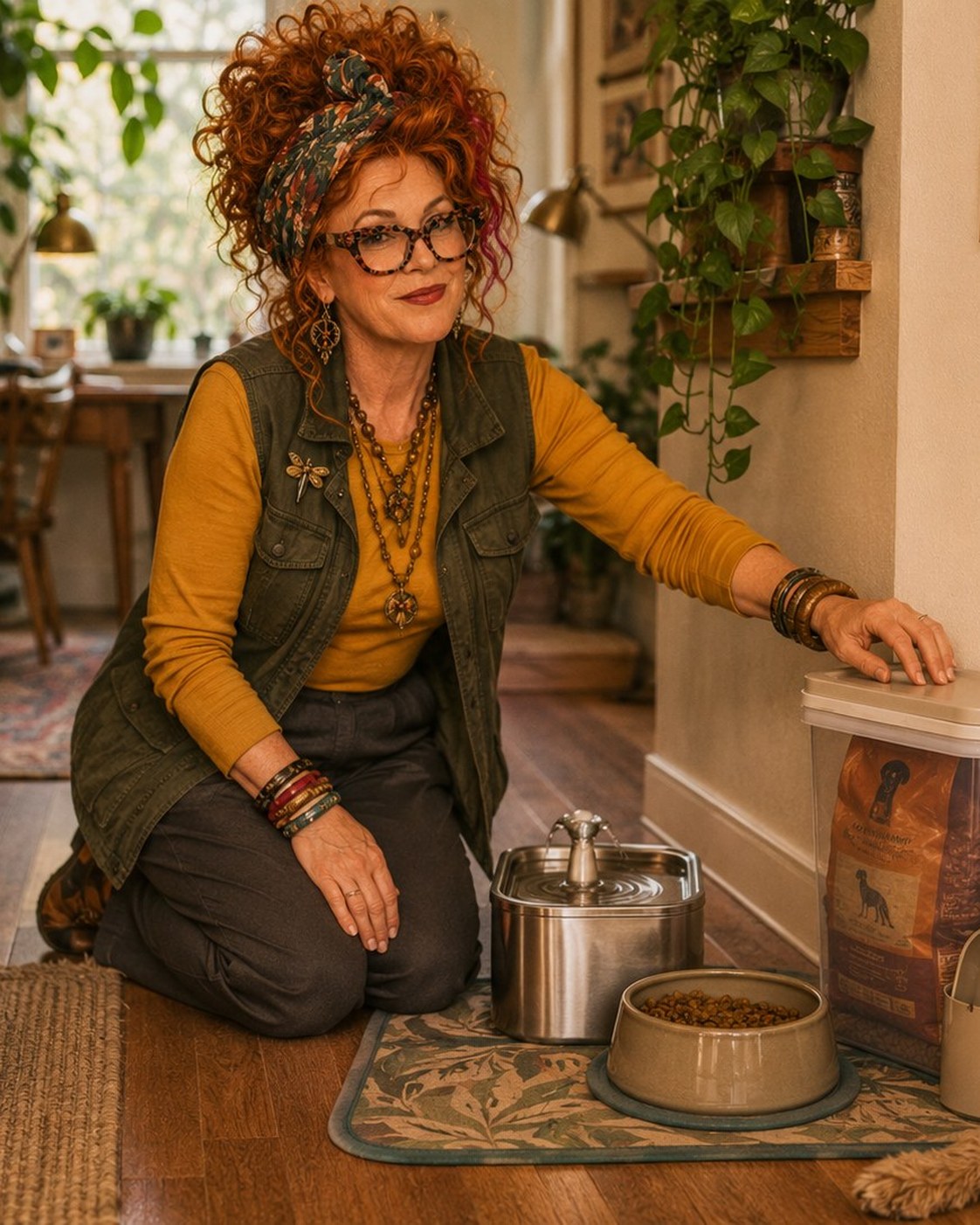
A small-kitchen feeding station has to do two contradictory things: stay convenient enough to maintain and stay far enough from human cooking that it does not block prep, appliances, or walkways. The best setup is not a matching set of containers. It is one washable floor zone with safe food storage, clean hardware, and no cable crossing the room.
Place the feeding station on a quiet kitchen edge outside the main cooking and walking paths. Use a flat washable mat, stable bowls or a maintainable fountain, and a secured food container that keeps the original bag when possible. Leave enough clearance to lift every item for cleaning, route cords away from water and traffic, and keep the entire zone separate from litter.
Map the pet's stance and the kitchen's moving parts
Measure the pet’s comfortable standing width, bowl or fountain base, splash radius, mat, and the space needed to bend and lift each item. Open the refrigerator, oven, dishwasher, cabinets, and nearby doors. The station fails if any moving part traps the pet or if a person must step over bowls to cook.
1. Choose a low-traffic edge
Look for a wall edge or dining-side zone with ordinary airflow and a clear retreat path. Avoid the stove, food-prep counter, dishwasher door, trash swing, and narrow galley pinch points. Do not place the station next to a litter box.
2. Start with one flat washable mat
Choose a mat that lies flat, extends beyond the expected splash and crumb area, and can be lifted easily. Avoid deep decorative trays that trap moisture or become difficult to wash in a small sink.
3. Match bowls to the household routine
Use stable food and water hardware sized for the pet and simple enough to clean. If using a fountain, include pump access, filter storage, charging or cord routing, and full disassembly in the plan. See our small-space fountain guide.
4. Put food storage in a cool, dry, secured place
Keep dry food in its original bag inside a suitable clean container when possible. Store it away from heat, direct sunlight, moisture, and pests. Do not sacrifice safe storage just to make the feeding station look visually unified.
5. Give the scoop and cleaning tools their own home
Use a dedicated clean scoop and a small drying location for washed bowls. Keep sponges or brushes used on pet hardware separate from food-prep tools according to the household’s hygiene plan.
6. Protect cords and charging points
Route fountain cords where they cannot be pulled, chewed, soaked, or stepped over. Keep plug connections dry. A cordless fountain still needs a dry charging location and a schedule.
7. Test the station at peak traffic
Use the kitchen while someone opens every nearby appliance and the pet approaches the station. Watch for crowding, tripping, bowl movement, guarded corners, and water reaching the walkway. Adjust before the arrangement becomes permanent.
8. Reset the zone after meals
Remove leftover food according to its instructions, clean bowls and utensils with soap and hot water after each use per FDA guidance, wipe the mat, and leave the area dry.
Do not add a feeding-station organizer if…
- It blocks the oven, refrigerator, dishwasher, cabinet, or main walkway.
- The pet must eat in a corner with no easy exit.
- The organizer cannot be washed or traps moisture beneath it.
- Food storage would sit beside stove heat, sunlight, or a wet zone.
- A fountain cord would cross traffic or run through standing water.
Function comes before matching bins. The station should take less effort to clean than the scattered setup it replaces.
Frequently asked questions
Where should a pet feeding station go in a small kitchen?
Use a quiet edge of the kitchen or adjacent dining area that stays outside the main prep triangle, oven path, dishwasher door, and busiest walkway. Keep bowls away from litter areas and protect cords from traffic and water.
How large should the feeding mat be?
It should extend beyond the bowls or fountain far enough to catch ordinary crumbs and splashes without curling into a trip edge. Measure the pet’s stance, bowl spacing, fountain footprint, and the clearance needed to lift everything for cleaning.
Can pet food be stored beside the bowls?
Yes, when the location is cool, dry, secured, and away from heat or splash. Keep dry food in its original bag inside a suitable container when possible, following FDA and manufacturer guidance.
Should food and water bowls be together?
They can share a station when the pet uses it comfortably and the water does not soak food or storage. Separate them when splashing, crowding, guarding, or multiple-pet access makes one combined zone impractical.
Winnie’s take: The feeding station is not a tiny café installation. It is a washable patch of floor where nobody gets stepped on, nothing blocks the oven, and the scoop has finally stopped living in a coffee mug.
How we choose
This how to is research-led, not a claim of hands-on laboratory testing. We compare public product specifications, recurring patterns in buyer feedback, and the measurements that matter most for a real small-space pet-care constraint. Recommendations are organized by who each option fits, what to measure, and when to skip it—not by commission rate.
Last reviewed: July 11, 2026