
How to Clean Pet Food and Water Bowls
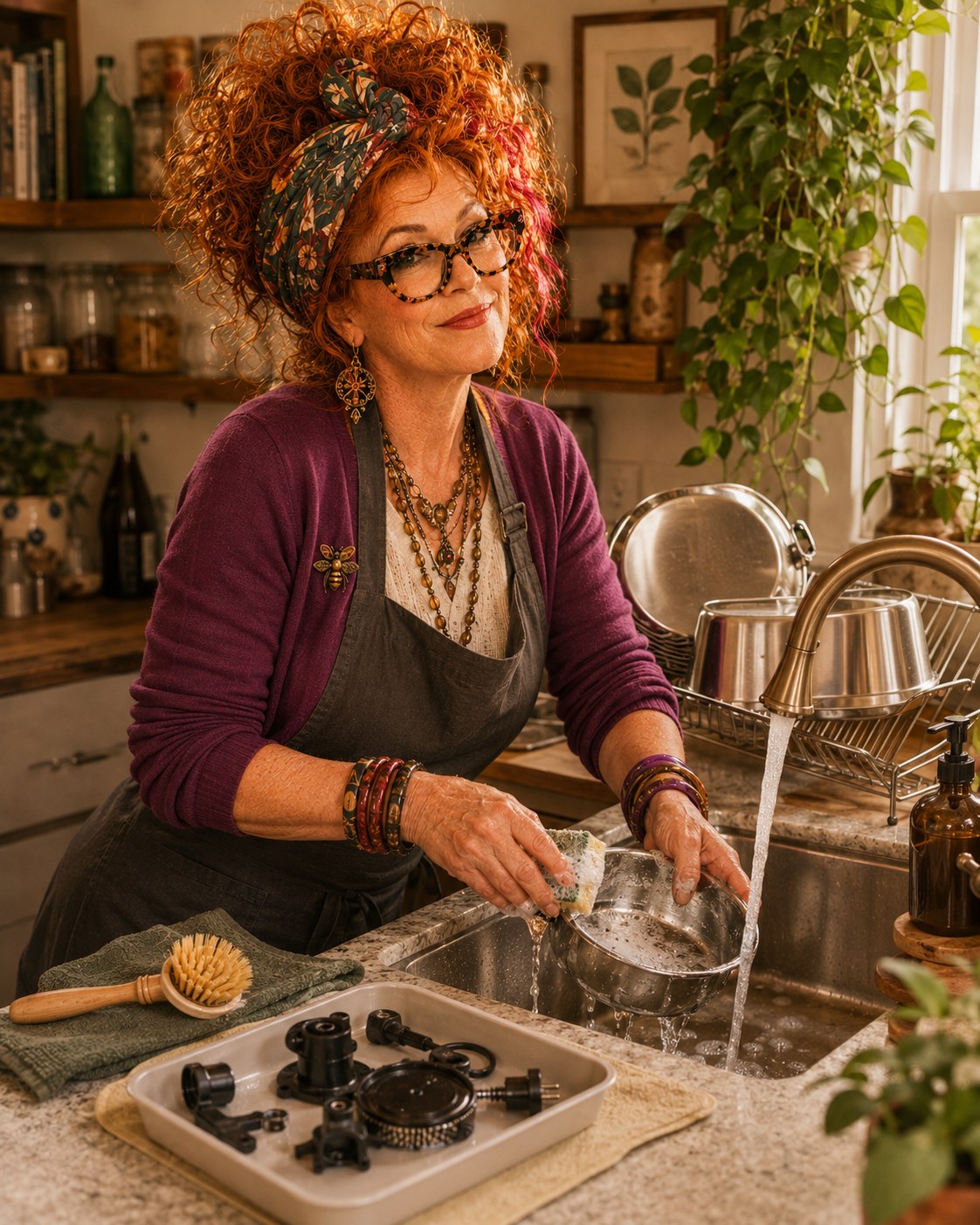
A bowl can look clean after a rinse and still carry food residue around the rim, rubber base, or textured logo. FDA’s practical standard is clearer: wash food bowls, scoops, and feeding utensils with soap and hot water after each use. In a small kitchen, the trick is creating a dedicated route that does not spread wet pet hardware across the human prep zone.
Wash pet food bowls, scoops, and feeding utensils with soap and hot water after each use, following FDA guidance. Rinse thoroughly and dry completely before refilling. Use the dishwasher only when every component is labeled safe for it. For fountains, unplug and disassemble the reservoir, tray, pump, tubing, and filter housing according to the manufacturer's instructions.
Inventory every food-contact and water-contact part
List bowls, non-slip rings, scoop, fountain tray, reservoir, pump housing, impeller, tubing, lid, filter cage, and feeding mat. Check which pieces separate, which are dishwasher-safe, and where they can dry without touching dirty dishes or blocking the sink.
1. Remove leftover food promptly
Refrigerate or discard leftovers according to the product’s instructions and FDA handling guidance. Do not add fresh food on top of an unwashed bowl or leave wet food residue at room temperature.
2. Separate removable pieces
Take off rubber rings, silicone mats, fountain lids, pump covers, and other parts before washing. Hidden seams are where residue and moisture collect.
3. Wash with soap and hot water
Scrub the complete food-contact surface, underside, rim, base, and utensils. FDA advises soap and hot water after each use. Use a dedicated clean brush or sponge if that makes separation from human dish tools clearer.
4. Rinse every seam
Remove soap from textured logos, silicone rings, screw threads, and fountain channels. A fast top rinse is not enough when the product has layers.
5. Dry completely
Air-dry on a clean rack or dry with a clean method appropriate to the material. Reassemble only when trapped cavities and non-slip bases are dry.
6. Use the dishwasher only as labeled
Confirm that the bowl, coating, rubber base, and fountain parts are dishwasher-safe. Follow rack and temperature guidance; a stainless bowl may be safe while its attached non-slip ring is not.
7. Deep-clean fountains by the manual
Unplug first, remove the filter, and open the pump housing as directed. Clean the impeller and internal channels, then install the correct replacement filter. Do not run the pump dry.
8. Clean the surrounding mat and floor
Wash the feeding mat, wipe splash residue, and let the floor dry before resetting the station. A clean bowl on a sour damp mat does not complete the job.
Do not use a bowl-cleaning method if…
- The material or coating is not approved for the dishwasher, heat, or cleaner.
- Bleach, disinfectant, or another chemical would be mixed with a different cleaner.
- Electronic fountain parts remain connected to power.
- A pump or filter is being rinsed without the manufacturer’s instructions.
- The bowl or container is cracked, deeply damaged, or cannot be cleaned fully.
For the physical layout that makes this routine easier, use the small-kitchen feeding-station guide.
Frequently asked questions
How often should pet food and water bowls be washed?
FDA advises washing pet-food bowls, scooping utensils, and feeding utensils with soap and hot water after each use. Fountains and automatic devices also require the manufacturer’s full disassembly and cleaning schedule.
Can pet bowls go in the dishwasher?
Only when the bowl and any non-slip base, coating, or attachment are labeled dishwasher-safe. Use the manufacturer-approved rack and cycle, and make sure every piece dries completely.
Should pet bowls have a separate sponge?
A dedicated brush or sponge can make the household routine clearer and reduce cross-use with food-prep items. Store it so it dries fully and replace it when worn or contaminated.
How do I clean a pet water fountain?
Unplug it, follow the manual, remove the pump and filter, and wash every approved wet component. Open the pump housing and clean the impeller area when instructed. Replace filters on the correct model schedule.
Winnie’s take: A rinse is a greeting. Soap, hot water, complete rinsing, and actual drying are the cleaning. The bowl does not get partial credit for looking shiny from across the room.
How we choose
This how to is research-led, not a claim of hands-on laboratory testing. We compare public product specifications, recurring patterns in buyer feedback, and the measurements that matter most for a real small-space pet-care constraint. Recommendations are organized by who each option fits, what to measure, and when to skip it—not by commission rate.
Last reviewed: July 11, 2026