
Classic Tomato Soup (The Grilled-Cheese Kind)

Tomato soup has a reputation problem: most people’s mental version of it is either the condensed-can-plus-water memory from childhood or something that shows up thin and one-note next to a much more interesting grilled cheese. Neither has to be true. A good homemade version comes together in about 40 minutes with ingredients that are already boring pantry staples, and the entire gap between “fine” and “actually good” comes down to two unglamorous moves: blooming the tomato paste in butter before anything else goes in, and not being afraid of the sugar.
Canned tomatoes are the right call, not a shortcut
Whole peeled tomatoes, picked and canned at peak ripeness, are frequently a more consistent starting point than whatever’s in the produce aisle outside of August — this is standard restaurant practice, not a compromise. The one detail that actually matters is reaching for whole peeled rather than diced: diced tomatoes are treated to hold their shape in the can, which means they resist breaking down fully even after a blender gets to them. Whole tomatoes soften completely, which is the difference between a soup that blends silky and one that stays faintly grainy no matter how long it runs.
The pinch of sugar is chemistry, not preference
Acidity is the single biggest variable between tomato soup that tastes bright and balanced and tomato soup that tastes like it’s fighting you. Canned tomatoes vary in acidity from can to can and brand to brand, and blending the soup smooth actually makes any sharpness more noticeable, not less, since there’s no texture left to distract from it. A teaspoon of sugar doesn’t make the soup sweet — it rounds off that edge. Skipping it because it feels like cheating is the most common reason a homemade version tastes worse than expected.
Getting it properly smooth without a blender incident
Hot liquid expands when it’s aerated, and a stand blender packed full with hot soup and a sealed lid is a genuinely common way to redecorate a kitchen ceiling. Work in small batches, fill the pitcher no more than halfway, and vent the lid’s center cap or hold a towel over a slightly cracked lid instead of sealing it completely. An immersion blender sidesteps the whole issue by working directly in the pot — worth the extra drawer space if tomato soup is going into regular rotation.

Tips & variations
- Use whole peeled tomatoes, not diced. Diced tomatoes are treated with calcium chloride to help them hold their shape in the can, which also keeps them from fully breaking down once blended — you'll notice a slightly grainier finish. Whole peeled tomatoes soften completely.
- Don't skip the sugar. Canned tomatoes vary in acidity can to can, and a small amount of sugar isn't there to make the soup sweet — it's there to round off a sharp edge that's very noticeable once the soup is blended smooth and there's nowhere for it to hide.
- Blend hot liquid in small batches with the lid vented, or use an immersion blender. Filling a stand blender all the way with hot soup is one of the more common kitchen mishaps — steam pressure can force the lid open mid-blend.
- This soup freezes well if you leave the cream out until reheating. Freeze the blended base, then stir in cream fresh after it's thawed and reheated, since dairy can separate slightly after freezing.
Classic Tomato Soup (The Grilled-Cheese Kind) — Recipe Card
Ingredients
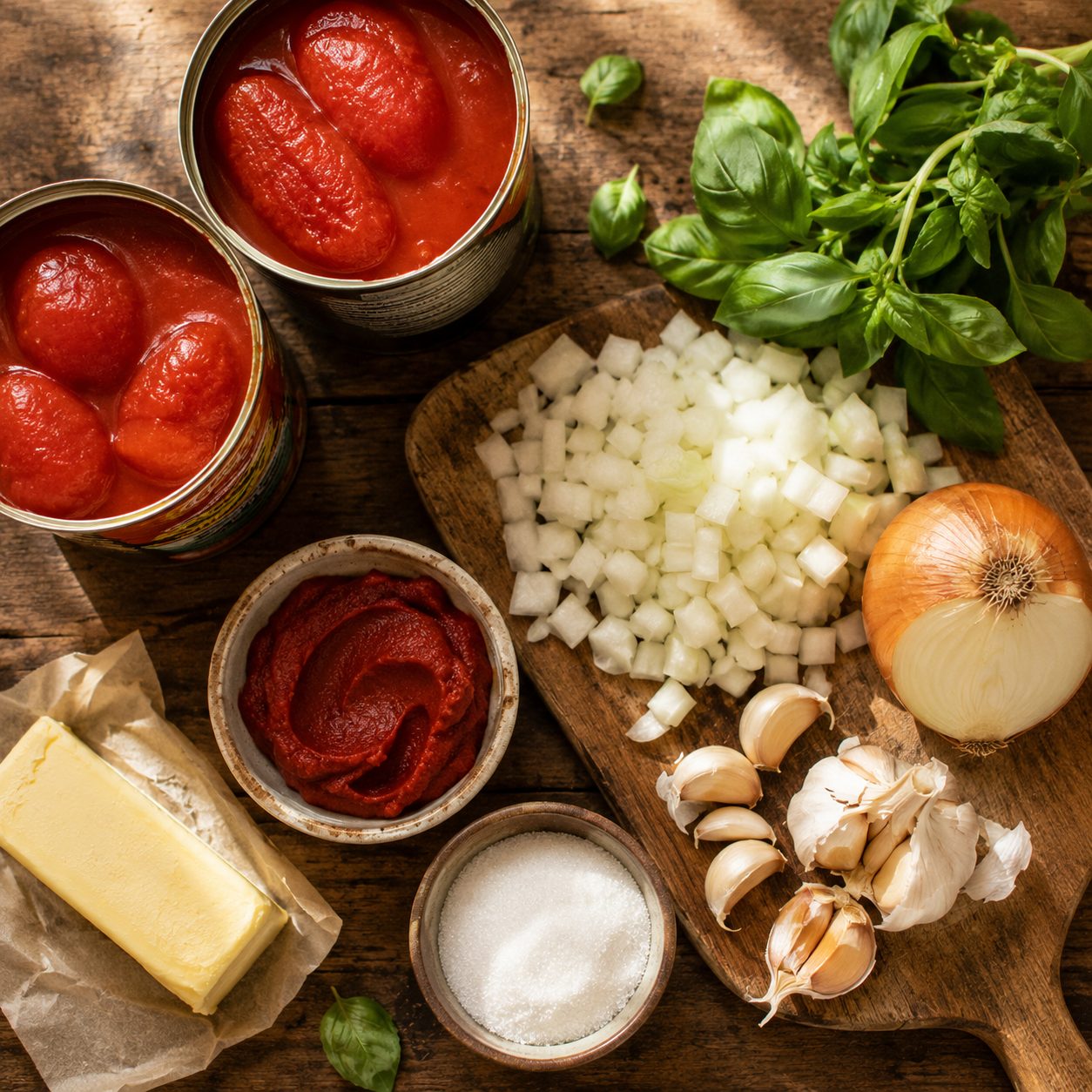
For the soup
To finish (optional but recommended)
For serving
Instructions
- Melt the butter in a large pot or Dutch oven over medium heat. Add the onion and cook, stirring occasionally, until soft and translucent, about 6 minutes. Add the garlic and cook 30 seconds more, until fragrant.
- Stir in the tomato paste and cook for 1-2 minutes, stirring constantly, until it darkens slightly and smells toasty rather than raw — this is the same flavor-blooming step that makes a good chili taste like it simmered all day, and it matters just as much here.
- Add the whole tomatoes with their juices, breaking them up with a wooden spoon as you go, along with the broth, sugar, dried basil, salt, and pepper. Bring to a simmer.
- Reduce heat to low and simmer, uncovered, for 20-25 minutes, stirring occasionally, until the tomatoes have fully broken down and the soup has thickened slightly.
- Remove from heat. Working in batches if using a stand blender (never fill it more than halfway with hot liquid, and vent the lid — steam needs somewhere to go), blend until completely smooth. An immersion blender works directly in the pot and is the lower-stress option.
- Return the soup to low heat, stir in the cream if using, and taste. Add more salt or a touch more sugar if the tomatoes are still tasting sharp rather than round.
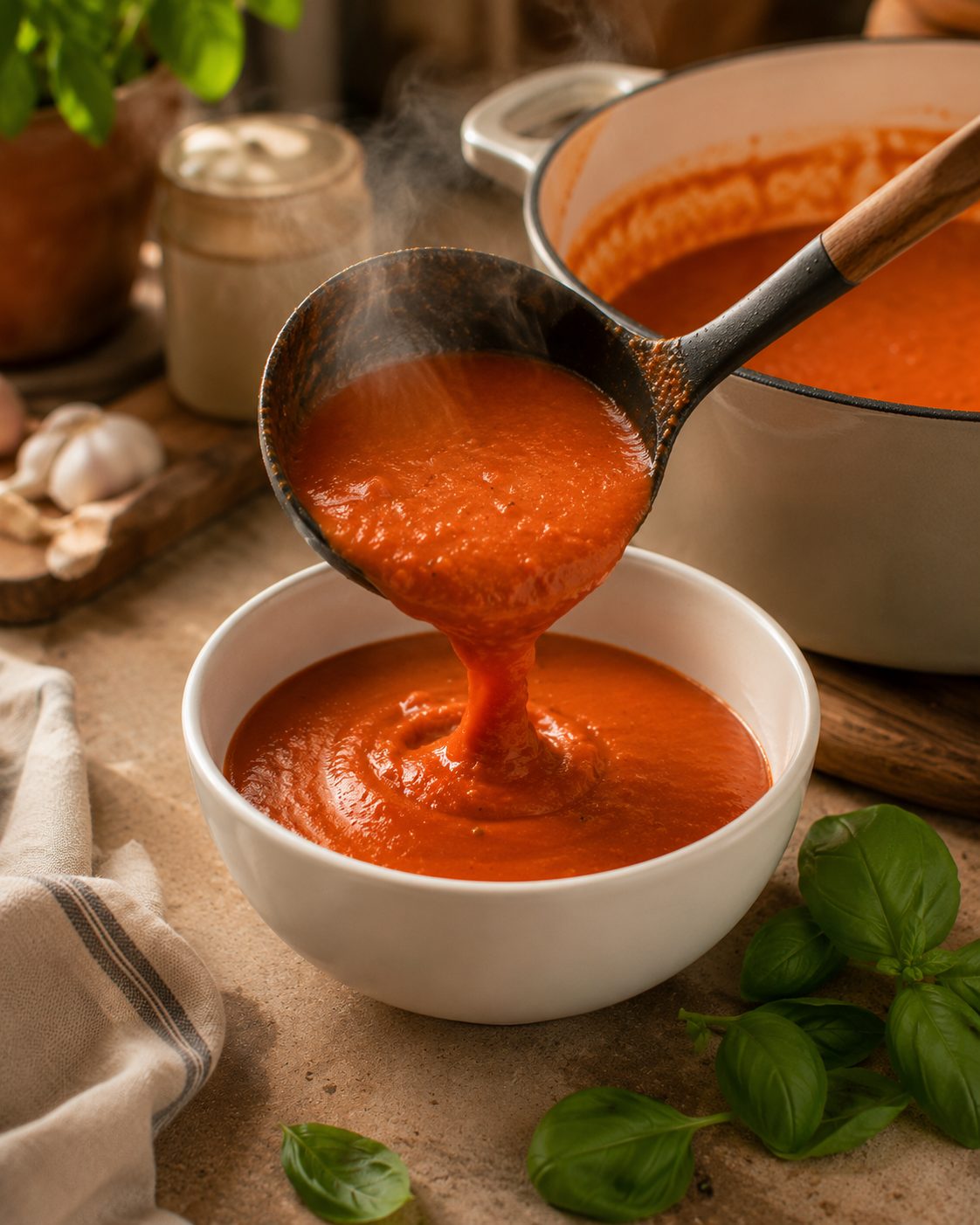
- Ladle into bowls, top with torn basil and a crack of pepper, and serve hot with grilled cheese for dipping.
Estimated nutrition per 1 bowl (of 4), with cream, estimate only : ~240 calories. This is a rough estimate for planning, not a substitute for exact dietary tracking.
Frequently asked questions
Why does my tomato soup taste too acidic or sharp?
This is almost always the tomatoes themselves — acidity varies noticeably between brands and even between cans. A teaspoon of sugar balances it without making the soup taste sweet. If it's still sharp, a slightly longer simmer before blending also helps mellow it.
Can I make this creamy without heavy cream?
Yes. A splash of whole milk or half-and-half gets you most of the way there with less richness, and a spoonful of plain Greek yogurt stirred in off the heat adds creaminess and a little tang. The soup is also fully good without any dairy at all — it just reads a bit brighter and more acidic.
Can I use fresh tomatoes instead of canned?
At peak summer ripeness, yes — you'll want about 3-3.5 lbs of ripe tomatoes, cored and roughly chopped, and roasting them first (400°F for 25-30 minutes with a drizzle of olive oil) concentrates the flavor closer to what canned tomatoes deliver year-round. Outside of peak season, canned tomatoes are usually the more reliable choice, since they're canned at peak ripeness rather than picked early for shipping.
How we choose
This recipe is research-led, not a claim of hands-on laboratory testing. We compare public product specifications, recurring patterns in buyer feedback, and the measurements that matter most for a real small-kitchen constraint. Recommendations are organized by who each option fits, what to measure, and when to skip it—not by commission rate.
Last reviewed: July 8, 2026