
Slow Cooker Pulled Pork (Set It and Forget the Stove)
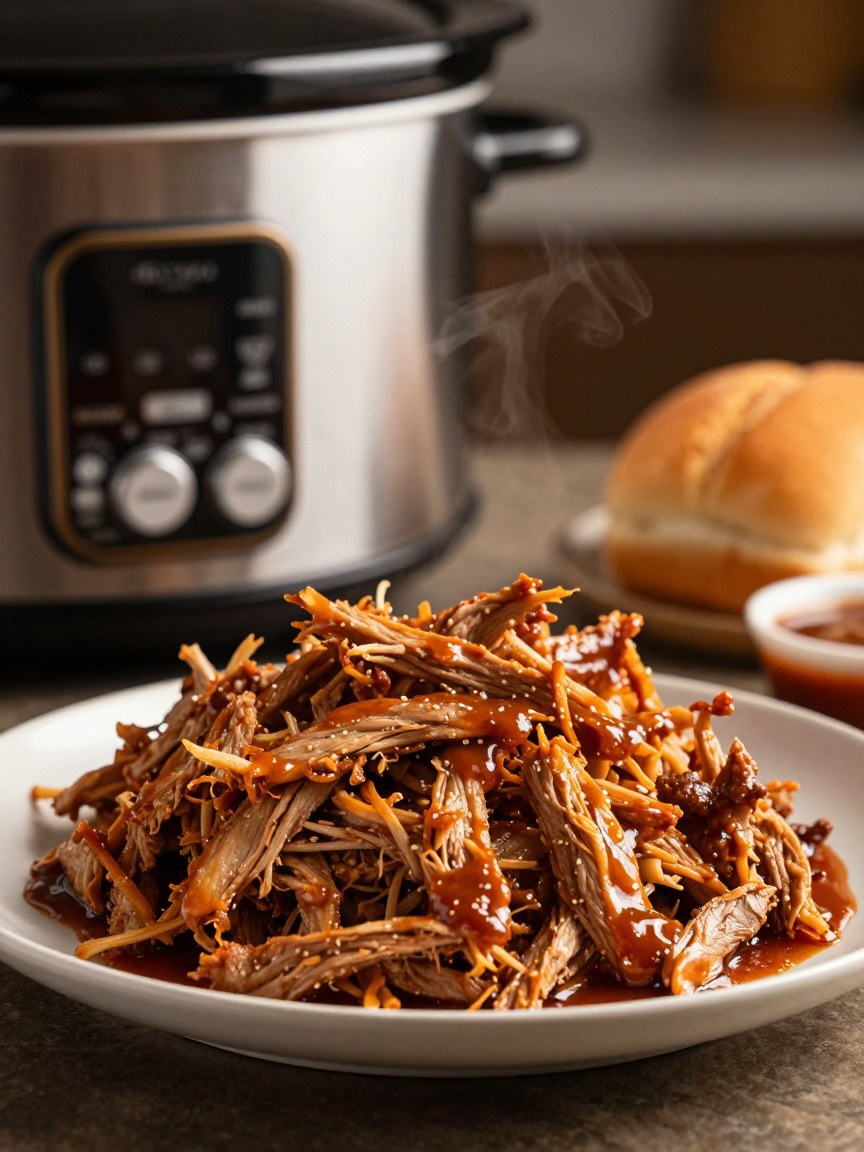
This is the recipe for the day you want a real, crowd-worthy dinner without spending it in the kitchen. A pork shoulder goes into the slow cooker in the morning with a dry rub and a splash of broth, and eight hours later it falls apart at the touch of two forks — no basting, no flipping, no oven to preheat and monitor. For a small kitchen especially, that’s the whole appeal: one countertop appliance, one pot, and a stove that stays completely free for anything else that day needs.
Why low and slow actually matters here
Pork shoulder is a tough, well-worked cut, full of connective tissue that stays chewy at a quick sear-and-serve temperature. Given eight hours at a low, steady heat, that same connective tissue slowly breaks down into gelatin, which is what makes the shredded meat come out moist instead of dry and stringy. Rushing it on high cuts the time roughly in half but pushes the meat closer to just-cooked-through instead of fall-apart-tender — the shred test at the end is what actually tells you which one you’ve got, not the clock.
The rub does more work than the sauce
Barbecue sauce gets all the credit, but the dry rub applied before cooking is what actually seasons the meat all the way through during those eight hours, rather than just coating the outside afterward. Patting the pork fully dry before applying it matters more than people expect — any surface moisture keeps the spices from sticking, and you end up with seasoning dissolved into the broth instead of clinging to the meat where it belongs.
Built for a slow cooker’s actual strengths
No stovetop babysitting, no oven taking up counter or cabinet space in the meantime, and a cook time that fits around a full day instead of demanding attention during it. If your slow cooker insert is on the smaller side, a 3-4 lb shoulder is the right size to start with — sizing up past what the insert comfortably holds is the most common reason people report uneven cooking in this category.

Tips & variations
- Don't skip patting the pork dry before the rub — a wet surface keeps the spices from actually adhering, and you end up with rub sitting in the cooking liquid instead of on the meat.
- Resist opening the lid to check on it. Every peek lets out heat the slow cooker has to spend time regaining, which adds real time to an already-long cook.
- The shred test beats the clock every time — pork shoulders vary in size and fat distribution enough that '8 hours' is a starting estimate, not a guarantee. If it resists shredding, it needs more time, not more sauce.
- This recipe scales up cleanly for a crowd — a 6-7 lb shoulder fits most standard slow cookers and roughly doubles the yield without changing the cook time much, since the cooker's temperature (not the meat's size alone) drives the timeline.
Slow Cooker Pulled Pork (Set It and Forget the Stove) — Recipe Card
Ingredients
For the pork and rub
For the cooking liquid
To finish
Instructions
- Pat the pork shoulder dry with paper towels. In a small bowl, mix the brown sugar, paprika, salt, garlic powder, onion powder, black pepper, and cayenne if using. Rub the mixture all over the pork, pressing it into the surface.
- Scatter the sliced onion in the bottom of the slow cooker and set the pork on top, fat side up. Pour the chicken broth and apple cider vinegar around (not over) the pork, so the rub stays mostly intact on the surface.
- Cover and cook on low for 8-9 hours, or high for 5-6 hours, until the pork shreds apart with almost no resistance when you press two forks into it. This is the real doneness test — a meat thermometer reading 195-205°F (91-96°C) in the thickest part is the more precise version of the same signal.
- Transfer the pork to a large bowl or rimmed sheet pan, discard any large fat pieces, and shred with two forks. Discard the onion or stir some of it into the shredded meat, depending on preference.
- Skim excess fat off the top of the remaining liquid in the slow cooker, then ladle about 1/2 cup of that liquid back over the shredded pork to keep it moist. Stir in the barbecue sauce.
- Serve on buns with extra barbecue sauce, or on its own with sides — pile any extra shredded pork into a container with a little of the reserved cooking liquid so it doesn't dry out in the fridge.
Estimated nutrition per about 5 oz shredded pork (1/8 of recipe), estimate only, before bun or extra sauce : ~380 calories. This is a rough estimate for planning, not a substitute for exact dietary tracking.
Frequently asked questions
Can I use a bone-in pork shoulder instead?
Yes — cook time is about the same, but budget an extra 10-15 minutes for shredding since you'll need to pull the meat off the bone first. The bone itself can help flavor the cooking liquid, so leave it in during cooking rather than removing it upfront.
What if my slow cooker only has a 'high' setting?
Cook on high for 5-6 hours instead of low for 8-9 — check for the same shred-test doneness (falls apart with two forks) rather than watching the clock, since slow cookers vary in actual temperature by brand and size.
Can I make this ahead and reheat it later?
Yes, and it reheats better than most meats — shred it, store it with some of the reserved cooking liquid so it doesn't dry out, and reheat gently on the stovetop or in a covered dish in the microwave. Keep it refrigerated and plan to use it within 3-4 days for food safety.
How we choose
This recipe is research-led, not a claim of hands-on laboratory testing. We compare public product specifications, recurring patterns in buyer feedback, and the measurements that matter most for a real small-kitchen constraint. Recommendations are organized by who each option fits, what to measure, and when to skip it—not by commission rate.
Last reviewed: July 11, 2026