
Fluffy Buttermilk Pancakes Recipe (No Lumpy Batter)
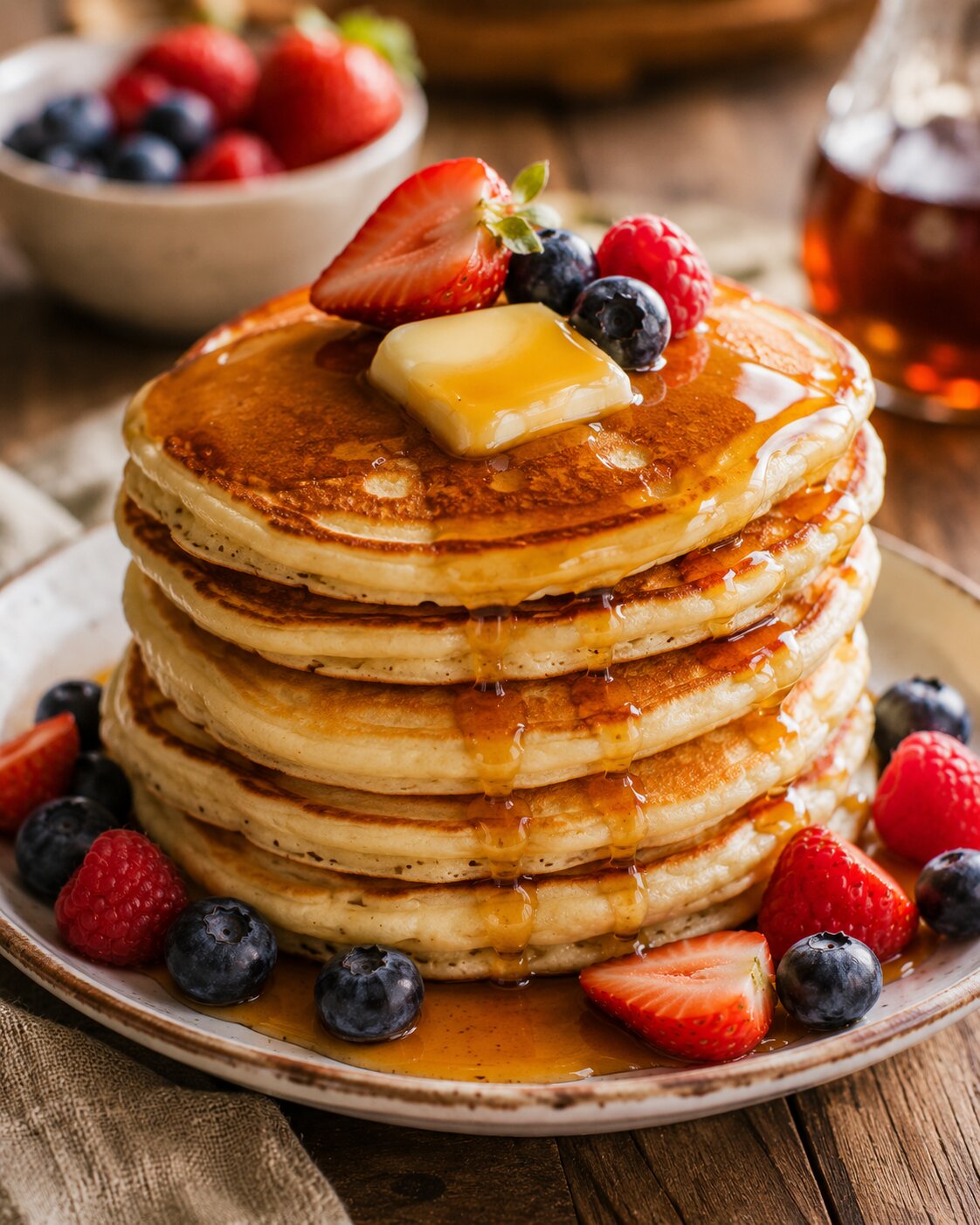
This pancakes recipe exists because pancakes are one of the few recipes where the technique is more important than the ingredient list, and most recipes bury that fact instead of leading with it. The batter itself is simple, forgiving flour math. Whether the result is fluffy or flat comes down to one habit: how much you mix it, and how much you don’t.
Overmixing is the whole problem
Stirring batter develops gluten, the same protein structure that gives bread its chew. Bread wants that. Pancakes don’t. The moment you stop seeing streaks of dry flour, stop stirring completely — the batter should still look a little lumpy and thick, not smooth like cake batter. A smooth, thoroughly-mixed batter is the single most common reason pancakes come out flat, tough, or rubbery instead of tender.
The resting step actually matters
Letting the mixed batter sit for five minutes before it hits the pan isn’t a stalling tactic — it gives the baking powder and baking soda a moment to start working and lets any remaining small lumps of flour finish hydrating without extra stirring. Skipping straight from mixing to cooking is a small thing, but it shows up in the texture.
Heat lower than you think
A hot pan seems like it should mean a faster, better pancake, but medium-high heat browns the outside long before the inside has cooked through, leaving a burnt exterior around a gummy center. Medium-low, with patience for the bubbles to actually form and set before flipping, is what gets an evenly cooked pancake all the way through.
Tips & variations
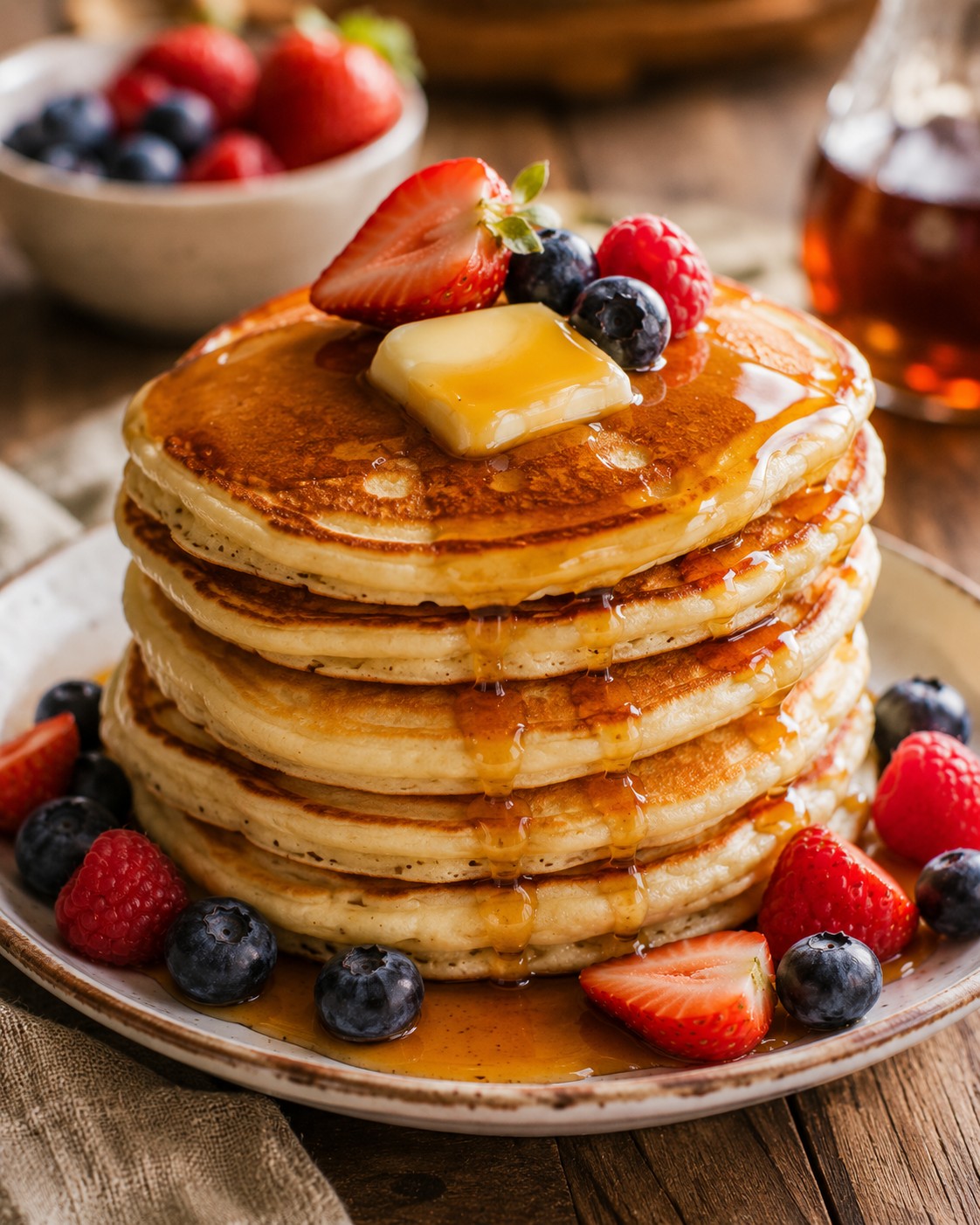
- Stop mixing the moment the flour disappears. Lumpy batter makes fluffy pancakes; smooth batter makes flat, dense ones. This one habit fixes more pancake problems than any other change.
- No buttermilk? Stir 2 tablespoons of lemon juice or white vinegar into 2 cups of regular milk and let it sit for 5 minutes until it slightly thickens and curdles. It's not identical to real buttermilk, but it gets you the acid reaction that makes the batter rise properly.
- Medium-low heat, not medium-high. Pancakes need time for the inside to cook through before the outside over-browns — a hotter pan just gives you a burnt exterior around a gummy center.
- Wait for bubbles to form and stay open across the whole surface before flipping. Flipping too early is the most common reason the first side looks fine but the pancake tears apart.
Fluffy Buttermilk Pancakes Recipe (No Lumpy Batter) — Recipe Card
Ingredients
Dry ingredients
Wet ingredients
For the pan
Instructions
- Whisk the flour, sugar, baking powder, baking soda, and salt together in a large bowl until evenly combined.
- In a separate bowl or large measuring cup, whisk the buttermilk, eggs, melted butter, and vanilla together until smooth.
- Pour the wet ingredients into the dry ingredients. Stir with a spatula or whisk just until the flour disappears — the batter should still look thick and slightly lumpy. Stop as soon as you don't see dry flour. Overmixing develops gluten, which is what turns pancakes rubbery or flat instead of tender.
- Let the batter rest for 5 minutes while your pan heats. This gives the baking powder and baking soda a head start and lets any small lumps hydrate on their own.
- Heat a griddle or nonstick skillet over medium-low heat. Add a small pat of butter and let it melt and foam, but not brown.
- Pour about 1/3 cup of batter per pancake onto the griddle. Cook until bubbles form across the surface and the edges look set and slightly matte, 2-3 minutes.
- Flip once and cook the second side until golden, another 1-2 minutes. Repeat with the remaining batter, re-buttering the pan between batches.
- Serve immediately, or hold finished pancakes on a baking sheet in a 200°F (95°C) oven while you finish the batch.
Estimated nutrition per 3 pancakes (of 12 total), estimate only : ~310 calories. This is a rough estimate for planning, not a substitute for exact dietary tracking.
Frequently asked questions
Why are my pancakes flat instead of fluffy?
Usually overmixed batter (which knocks the air back out) or old baking powder that's lost its lift. Mix just until the flour disappears, and if your baking powder is more than 6 months old, test it in a little hot water — it should fizz immediately.
Why do my pancakes turn out rubbery?
Overmixing develops gluten in the flour, and gluten is what makes bread chewy — which is exactly what you don't want in a pancake. Stir only until you stop seeing dry flour, even if a few small lumps remain.
Can I make the batter the night before?
You can, but the texture is better made fresh — the baking powder starts losing lift as soon as it hits liquid. If you need to prep ahead, mix the dry and wet ingredients separately and combine them right before cooking.
How we choose
This recipe is research-led, not a claim of hands-on laboratory testing. We compare public product specifications, recurring patterns in buyer feedback, and the measurements that matter most for a real small-kitchen constraint. Recommendations are organized by who each option fits, what to measure, and when to skip it—not by commission rate.
Last reviewed: July 5, 2026