
Classic French Toast Recipe (Custardy, Never Soggy)
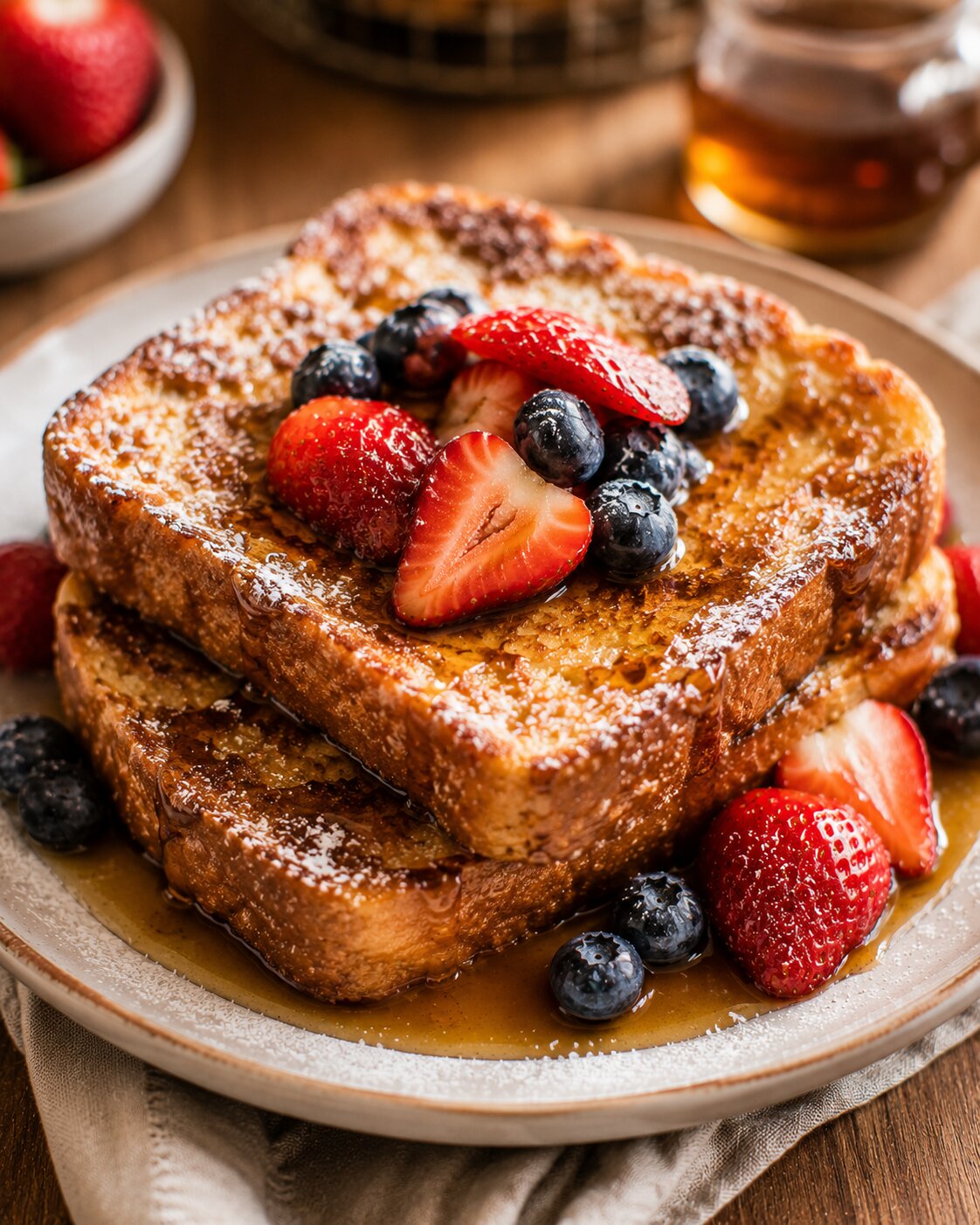
This french toast recipe exists because french toast has a short ingredient list and a reputation for being foolproof, which makes it a little surprising how often it actually goes wrong — soggy in the middle, or dry and eggy on the outside. The custard is rarely the issue. The bread almost always is.
Stale bread isn’t a compromise, it’s the requirement
Fresh, soft sandwich bread is built to absorb moisture fast, which is exactly the wrong quality for a slice that’s about to sit in an egg-and-milk custard. It soaks up liquid faster than its structure can handle and falls apart into something closer to bread pudding than French toast. Bread that’s a day or two old — or dried out on purpose in a low oven for ten minutes — has lost enough moisture to soak up custard at a rate its structure can actually support.
Soak time depends on the bread, not the clock
A precise soak time doesn’t really exist independent of what bread you’re using. Thick, sturdy, stale bread can handle 30 seconds a side and come out custardy all the way through. Thinner or fresher bread needs closer to 10-15 seconds, or it turns to mush before it ever hits the pan. Judge by feel — the slice should flex slightly and feel saturated, not floppy or falling apart.
Medium heat gives the center time to set
The instinct to crank the heat for a faster breakfast works against French toast specifically, because the custard-soaked center needs real time in the pan to cook through before the crust goes past golden into burnt. Medium heat and a little patience gets a crust that’s crisp and deep brown around a center that’s fully set, not raw and eggy.

Tips & variations
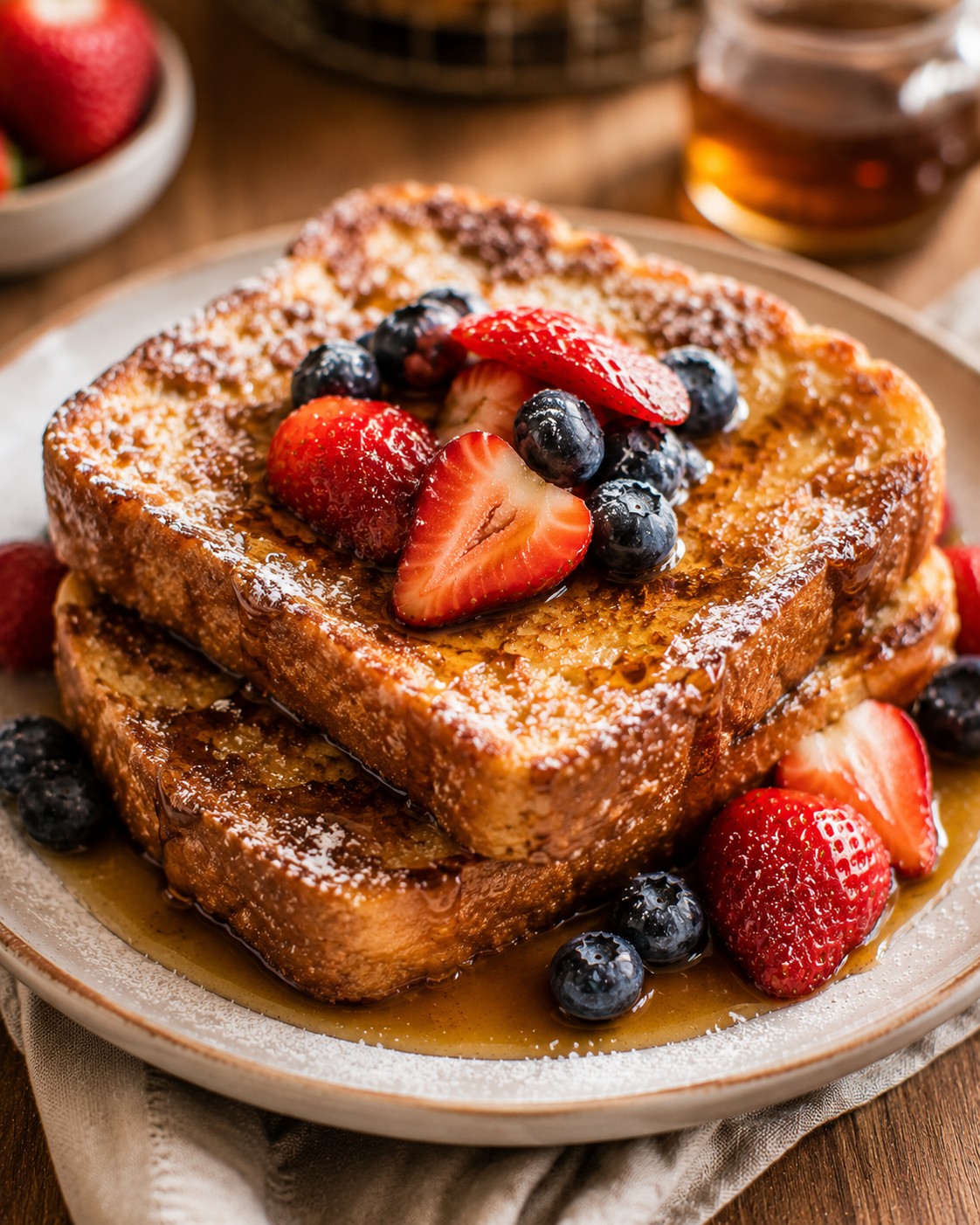
- Use bread that's a day or two old, or dry it out on purpose by leaving slices uncovered for a few hours (or in a 300°F oven for 8-10 minutes). Fresh, soft bread can't hold up to the custard soak and turns into wet mush instead of staying intact.
- Thick-cut bread (3/4 to 1 inch) gives the custard somewhere to go without the slice falling apart. Thin sandwich bread almost always ends up soggy because there's not enough structure to absorb liquid and still hold its shape.
- Medium heat, not high — French toast needs time in the pan for the custard-soaked center to actually set. Too-high heat browns the crust before the middle finishes cooking.
- Keep finished slices in a low oven instead of stacking them on a plate while you cook the rest — stacking traps steam and softens the crust you just worked for.
Classic French Toast Recipe (Custardy, Never Soggy) — Recipe Card
Ingredients
For the custard
For the toast
For serving
Instructions
- Whisk the eggs, milk, cream, sugar, vanilla, cinnamon, and salt together in a wide, shallow dish until fully combined and no streaks of egg white remain.
- Working one or two slices at a time, soak the bread in the custard for 20-30 seconds per side — long enough to absorb custard through the middle, not so long that it turns to mush. Thicker, staler bread can handle a longer soak; fresh sandwich bread needs closer to 10-15 seconds.
- Heat a large skillet or griddle over medium heat and melt a tablespoon of butter until foaming but not browned.
- Cook the soaked bread for 3-4 minutes per side, until deep golden brown and set in the center. Resist the urge to press down on the slices — that squeezes out the custard you just soaked in.
- Transfer finished slices to a baking sheet in a 200°F (95°C) oven to keep warm while you finish the rest, adding more butter to the pan between batches.
- Serve warm with maple syrup, fresh berries, and a dusting of powdered sugar.
Estimated nutrition per 2 slices (of 8 total), estimate only : ~350 calories. This is a rough estimate for planning, not a substitute for exact dietary tracking.
Frequently asked questions
Why does my French toast turn out soggy?
Almost always the bread. Fresh, soft bread absorbs custard too fast and can't hold together once cooked. Use bread that's a day or two stale, or dry fresh slices out in a low oven first.
What's the best bread for French toast?
Something sturdy and slightly stale — brioche, challah, or thick-cut Texas toast all work well. Avoid soft sandwich bread, which tends to disintegrate during the soak.
How do I keep a big batch warm for a crowd without it getting soggy?
Lay finished slices in a single layer (not stacked) on a wire rack set over a baking sheet, in a 200°F oven. The rack keeps air circulating underneath so the bottom crust doesn't steam and soften.
How we choose
This recipe is research-led, not a claim of hands-on laboratory testing. We compare public product specifications, recurring patterns in buyer feedback, and the measurements that matter most for a real small-kitchen constraint. Recommendations are organized by who each option fits, what to measure, and when to skip it—not by commission rate.
Last reviewed: July 5, 2026