
Baked Mac and Cheese Recipe (Creamy Inside, Crispy Top)
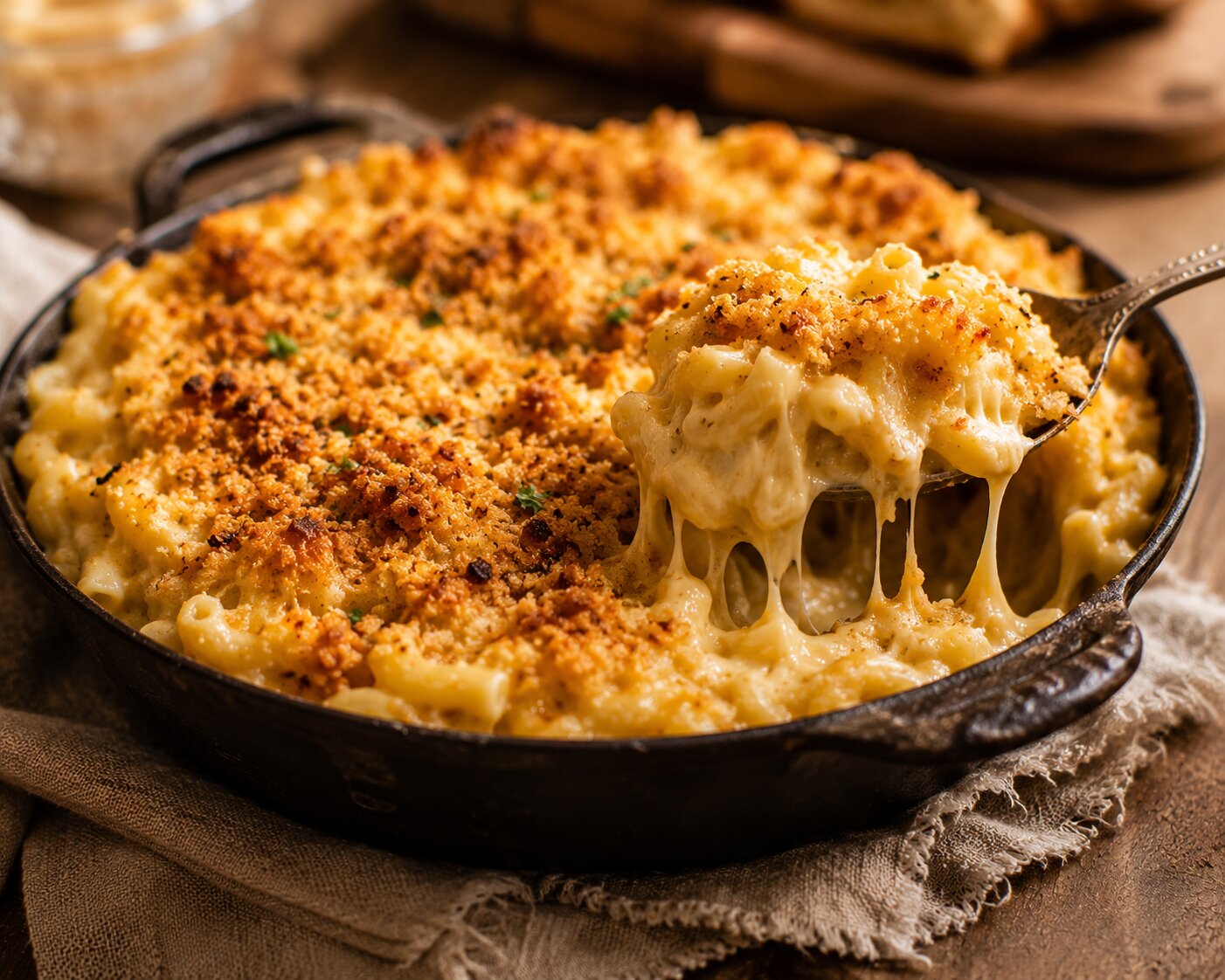
This mac and cheese recipe exists because baked mac and cheese sounds like it should be one of the simpler dishes in weeknight rotation, and the ingredient list backs that up — pasta, cheese, a few pantry staples. The gap between “fine” and genuinely good mac and cheese comes down to two decisions most recipes rush past: how long the roux cooks, and which cheeses actually go into the sauce.
The roux needs a real minute or two
A roux — butter and flour cooked together before liquid goes in — is doing double duty: it thickens the sauce, and cooking it past the raw-white stage removes a flour taste that otherwise lingers in the background of the whole dish. Rushing this step by adding milk to a roux that’s still pale and raw-smelling is one of the most common reasons homemade mac and cheese tastes slightly off in a way that’s hard to pin down.
One cheese for melting, one cheese for flavor
Aged, sharp cheeses taste incredible but have less moisture than younger cheeses, which makes an all-sharp-cheddar sauce more prone to turning grainy or oily as it heats. A blend — something mild or medium that melts smoothly, backed up by a smaller amount of something sharp for actual flavor — gets both qualities into the same pot instead of asking one cheese to do a job it’s not built for.
The oven finishes cooking the pasta, so start it underdone
Pasta that’s fully al dente before it goes into the cheese sauce and oven keeps absorbing liquid and heat through the entire bake, which is how a lot of baked mac and cheese ends up mushy by the time it comes out. Pulling the noodles about two minutes before their package-directed al dente point leaves exactly enough bite in reserve to survive the bake intact.

Tips & variations
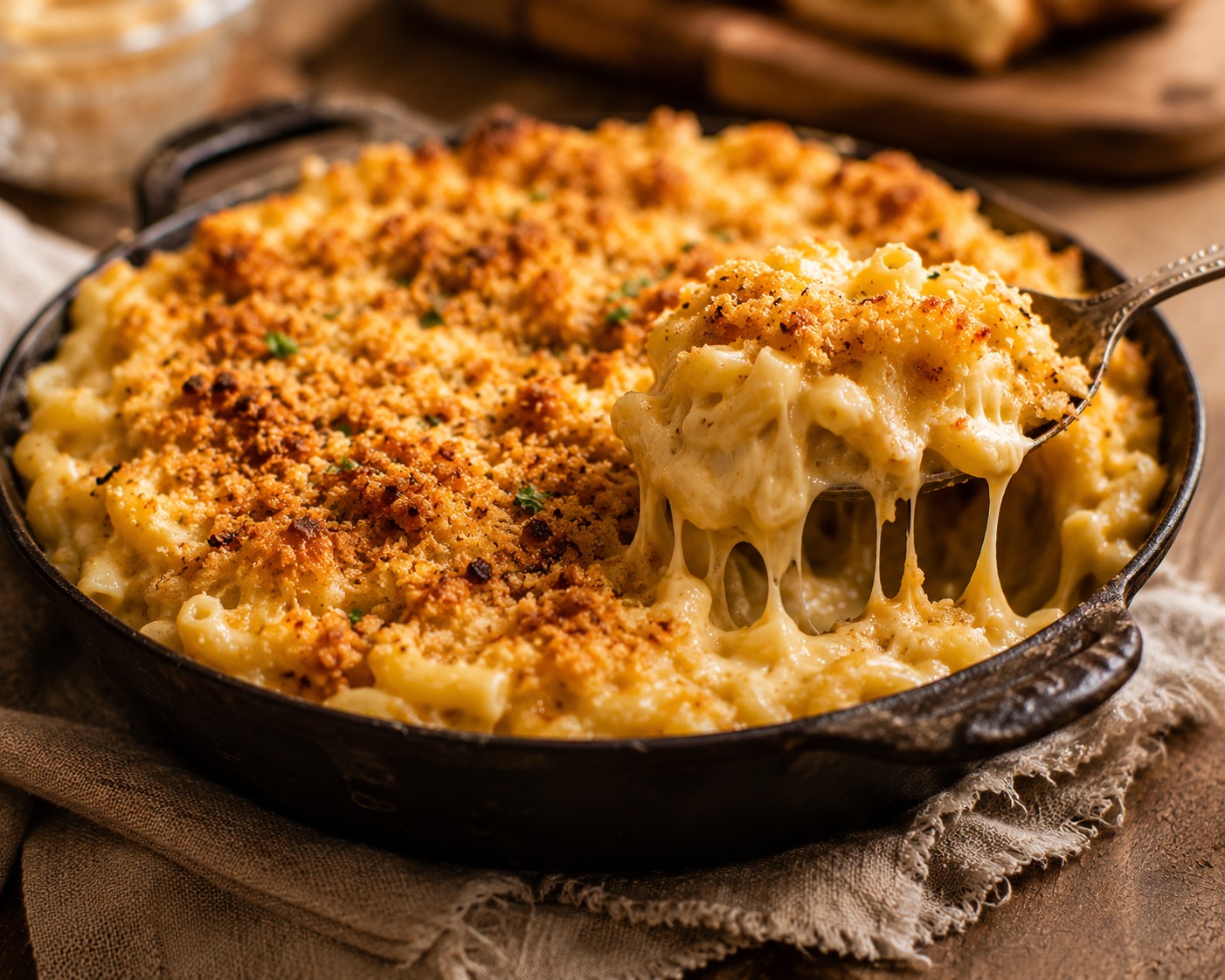
- Cook the roux until it's pale gold and smells lightly toasted, not raw. A roux that's added to milk while still white leaves a chalky, floury undertone in the finished sauce.
- Use two cheeses for two different jobs: a mild or medium cheddar that melts smoothly for texture, and a sharp cheddar or Gruyère for actual flavor punch. An all-sharp-cheddar sauce can turn grainy, since aged cheeses have less moisture and melt less evenly.
- Undercook the pasta by about 2 minutes before it goes into the oven. It keeps absorbing liquid and cooking during the bake, so fully-al-dente noodles going in means overcooked, mushy noodles coming out.
- Warm the milk before whisking it into the roux — cold milk hitting a hot roux can cause lumps that are hard to smooth back out, while warm milk incorporates cleanly.
Baked Mac and Cheese Recipe (Creamy Inside, Crispy Top) — Recipe Card
Ingredients
For the pasta
For the cheese sauce
For the topping
Instructions
- Preheat the oven to 375°F (190°C) and butter a 9x13-inch baking dish.
- Cook the macaroni in salted boiling water for 2 minutes less than the package's al dente time — it will finish cooking in the oven, and fully-cooked-ahead noodles turn mushy by the time the bake is done. Drain and set aside.
- Melt the butter in a large saucepan over medium heat. Whisk in the flour and cook, whisking constantly, for about 2 minutes, until it smells lightly toasted and turns a pale golden color. This is a roux, and cooking it to this stage removes the raw-flour taste that makes some cheese sauces taste chalky.
- Gradually whisk in the warmed milk, a little at a time at first, until fully smooth. Bring to a gentle simmer, whisking often, and cook for 3-4 minutes until thickened enough to coat the back of a spoon.
- Remove from heat and stir in the mild/medium cheddar and sharp cheddar (or Gruyère) a handful at a time, stirring until melted before adding more. Stir in the salt, dry mustard, paprika, and cayenne if using.
- Add the cooked macaroni to the cheese sauce and stir to coat evenly. Pour into the prepared baking dish.
- Toss the panko with the melted butter and Parmesan, then scatter evenly over the top of the mac and cheese.
- Bake for 20-25 minutes, until bubbling around the edges and the topping is golden brown. Let rest for 5 minutes before serving.
Estimated nutrition per 1 cup (of 6), estimate only : ~520 calories. This is a rough estimate for planning, not a substitute for exact dietary tracking.
Frequently asked questions
Why is my mac and cheese sauce grainy instead of smooth?
Usually one of two things: the roux wasn't cooked long enough before the milk went in, or an all-aged-cheese blend (like all sharp cheddar) was used. Aged cheeses have less moisture and can separate more easily — blending in a mild, high-moisture melting cheese helps.
Why does my baked mac and cheese come out dry?
Overbaking, or pasta that was fully cooked before going into the oven and then dried out further during baking. Slightly undercook the noodles beforehand, and pull the dish as soon as the edges are bubbling rather than baking until fully dried out on top.
What's the best cheese blend for mac and cheese?
A combination works better than any single cheese — a mild or medium cheddar for smooth melting, plus a sharp cheddar or Gruyère for flavor. All-sharp blends can turn grainy; all-mild blends melt well but taste flat.
How we choose
This recipe is research-led, not a claim of hands-on laboratory testing. We compare public product specifications, recurring patterns in buyer feedback, and the measurements that matter most for a real small-kitchen constraint. Recommendations are organized by who each option fits, what to measure, and when to skip it—not by commission rate.
Last reviewed: July 7, 2026