
Chicken Quesadillas Recipe (Crispy Outside, No Soggy Middle)
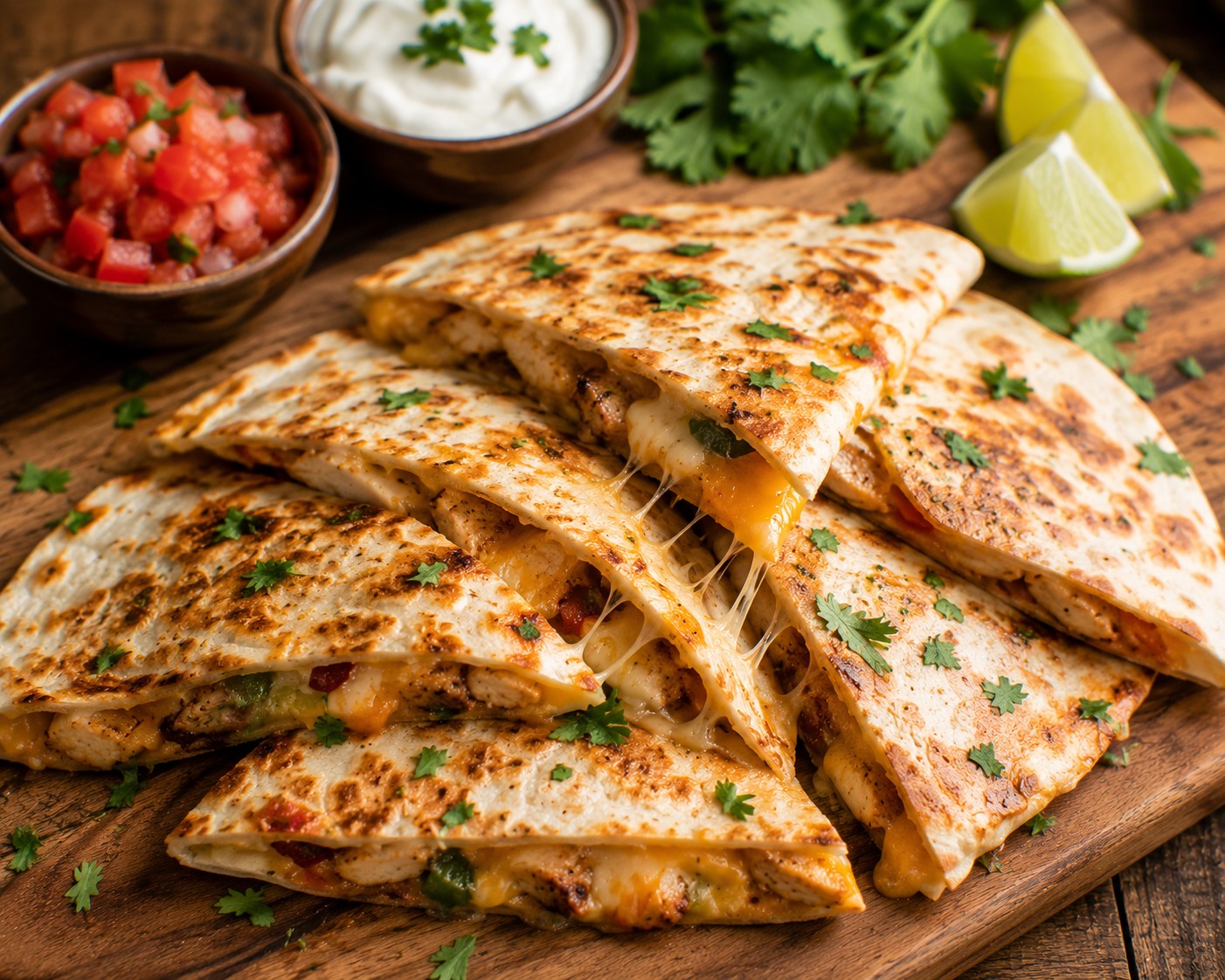
This chicken quesadillas recipe exists to fix the two most common failures in the dish: a soggy tortilla that falls apart the second you try to cut it, and a filling that slides out instead of staying put. Both come down to moisture management, not a fancier filling.
Moisture is the enemy, not flavor
Vegetables, saucy chicken, and even excess cheese moisture all release liquid as they heat inside a folded tortilla. That liquid has nowhere to go, so it soaks straight into the tortilla from the inside — which is why a quesadilla can look perfectly golden on the outside and still be soggy the moment you cut into it. Patting every component dry before assembly solves this at the source, instead of trying to cook the moisture out after the fact.
Cheese is structural, not just flavor
Putting a layer of cheese on both sides of the filling — not just underneath it — gives the melted cheese something to bond to on both halves of the fold. That’s what holds a quesadilla together when you cut it, rather than letting the filling slide out onto the cutting board.
Medium heat, and give it a minute to rest
High heat browns the tortilla before the interior cheese has fully melted, leaving a crisp shell around a filling that hasn’t quite come together yet. Medium heat gives everything time to catch up evenly. Letting the quesadilla sit for a minute before cutting lets the cheese firm up just enough to hold its shape, instead of pouring out the second the knife goes in.

Tips & variations
- Pat every wet ingredient dry before it goes near the tortilla. Peppers, onions, and even shredded chicken with excess marinade all release moisture as they heat, and that moisture is what turns a crisp tortilla soggy from the inside out.
- Cheese on both sides of the filling, not just one, gives the filling something to adhere to on both halves once it melts — this is what keeps the quesadilla intact when you cut it instead of sliding apart.
- Medium heat, not high — high heat browns the tortilla before the cheese inside has fully melted. Medium heat gives the interior time to catch up with the exterior.
- Let it rest a minute or two off the heat before cutting. Straight-from-the-pan cutting is the number one reason the cheese pours out onto the cutting board instead of staying put.
Chicken Quesadillas Recipe (Crispy Outside, No Soggy Middle) — Recipe Card
Ingredients
For the filling
For assembly
For serving
Instructions
- In a bowl, toss the shredded chicken with cumin, chili powder, and a pinch of salt. Make sure the bell pepper and onion are patted dry with a paper towel — excess moisture here is the main reason quesadillas turn soggy.
- Lay a tortilla flat and sprinkle cheese over one half, leaving a small border. Top with a portion of the chicken mixture, peppers, and onion, then another light layer of cheese on top (the cheese on both sides acts as glue holding the filling in place).
- Fold the tortilla in half over the filling, pressing down gently.
- Heat a large dry skillet or griddle over medium heat — no oil yet. Once hot, add a small amount of butter or oil, just enough to coat the pan thinly.
- Cook the folded quesadilla for 2-3 minutes per side, pressing down lightly with a spatula, until deeply golden and crisp and the cheese inside is fully melted. Repeat with remaining tortillas.
- Let each quesadilla rest for 1-2 minutes before cutting into wedges — cutting immediately lets the melted cheese run out instead of setting slightly. Serve with salsa, sour cream, and avocado.
Estimated nutrition per 1 quesadilla (of 4), estimate only : ~420 calories. This is a rough estimate for planning, not a substitute for exact dietary tracking.
Frequently asked questions
Why do my quesadillas always turn out soggy?
Almost always excess moisture from the filling — wet vegetables, saucy chicken, or too much filling packed in. Pat every ingredient dry before assembling, and don't overfill; a thinner, well-drained filling crisps up far better than a thick, wet one.
Can I make these ahead and reheat them?
Assemble and cook them fresh for the best texture — quesadillas are quick enough that make-ahead rarely saves real time. If you do need to reheat, use a dry skillet over medium heat rather than a microwave, which turns the tortilla soft and chewy instead of crisp.
What's the best cheese for quesadillas?
Monterey Jack or a Mexican cheese blend melt smoothly without turning greasy or stringy in a bad way. Cheddar works too but can separate slightly at high heat — keep the pan at medium if you're using it.
How we choose
This recipe is research-led, not a claim of hands-on laboratory testing. We compare public product specifications, recurring patterns in buyer feedback, and the measurements that matter most for a real small-kitchen constraint. Recommendations are organized by who each option fits, what to measure, and when to skip it—not by commission rate.
Last reviewed: July 8, 2026