
One-Pan Chicken Fajita Bowl Recipe (Charred, Not Steamed)
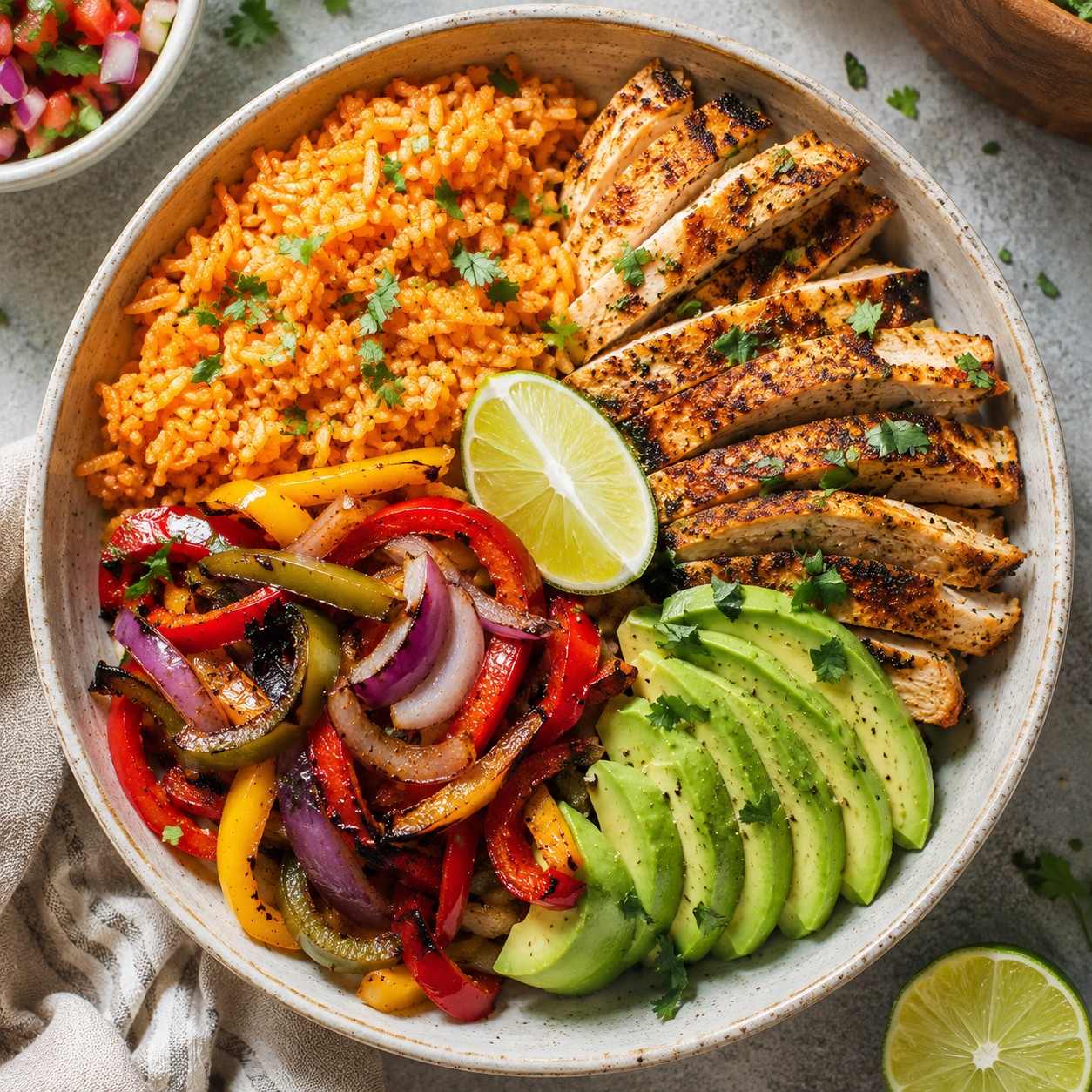
This chicken fajita bowl recipe exists to fix the most common failure of home-cooked fajitas: chicken and vegetables that taste fine but never develop the charred, blistered edges that make restaurant fajitas taste the way they do. The fix is almost entirely about pan management, not the seasoning.
An overcrowded pan steams instead of chars
Charring happens when food sits in direct, sustained contact with a very hot pan surface. Pack too much chicken or too many vegetables into the pan at once, and the food releases moisture that has nowhere to go, dropping the pan’s surface temperature and effectively steaming everything instead. Cooking in batches, with real breathing room between pieces, is the single biggest fix for gray, soft fajita vegetables.
High heat and patience, together
It’s not enough to have an uncrowded pan if the heat isn’t high enough to begin with — a medium-heat pan simply can’t build char before the chicken or vegetables finish cooking through. Preheating the pan until it’s genuinely hot, then letting each batch sit undisturbed for a couple of minutes before stirring, gives the char time to actually develop instead of getting interrupted by constant movement.
Lime goes in last
Cooking lime juice into the pan for an extended period mutes its brightness, which is exactly the quality it’s there to provide. Adding it at the very end — off heat or in the last few seconds of tossing everything together — keeps that acidity sharp enough to cut through the richness of the seared chicken and charred vegetables underneath it.

Tips & variations
- A crowded pan is the number one reason home fajita vegetables come out steamed and gray instead of charred. If your skillet isn't large enough to fit everything in a single layer with a little breathing room, cook in two batches — it's a few extra minutes for a real difference in flavor and texture.
- Let the chicken and vegetables sit undisturbed for a couple minutes at a time before stirring. Constant stirring prevents the deep contact with the hot pan that actually creates char.
- High heat matters as much as an uncrowded pan — a medium-heat pan can't develop char fast enough before the food overcooks, so preheat the pan properly before anything goes in.
- Add lime juice at the very end, off or right at the end of cooking — cooking it in for too long mutes its brightness, which is meant to cut through the richness of the seared chicken and charred vegetables.
One-Pan Chicken Fajita Bowl Recipe (Charred, Not Steamed) — Recipe Card
Ingredients
For the chicken and vegetables
For the bowls
Instructions
- Toss the chicken strips with 1 tablespoon oil, chili powder, cumin, garlic powder, smoked paprika, salt, and pepper until evenly coated.
- Heat a large skillet over high heat until very hot. Add 1 tablespoon oil, then add the chicken in a single layer, without crowding the pan (work in two batches if needed). Sear for 3-4 minutes per side, until deeply browned and cooked through. Remove to a plate.
- Wipe out the pan if needed, then return it to high heat with the remaining tablespoon of oil. Add the peppers and onion in a single layer — again, don't overcrowd, or they'll steam instead of char.
- Cook the vegetables undisturbed for 2-3 minutes before stirring, letting them pick up real color against the hot pan, then continue cooking and stirring occasionally for another 4-5 minutes, until charred at the edges and just tender-crisp.
- Return the chicken to the pan with the vegetables, squeeze the lime juice over everything, and toss to combine and warm through, about 1 minute.
- Divide the rice among bowls. Top with the chicken and pepper mixture, avocado slices, pico de gallo, and cilantro. Serve with extra lime wedges.
Estimated nutrition per 1 bowl (of 4), estimate only : ~460 calories. This is a rough estimate for planning, not a substitute for exact dietary tracking.
Frequently asked questions
Why do my fajita vegetables always come out soggy instead of charred?
Almost always an overcrowded pan. Too much food in the pan at once drops the surface temperature and traps steam, which cooks the vegetables through without ever developing char. Cook in batches in a properly hot, uncrowded pan instead.
Can I use chicken thighs instead of breast?
Yes — thighs are more forgiving of a slightly longer sear and stay juicier, though they'll take a minute or two longer to cook through since they're often cut a bit thicker. Adjust searing time accordingly.
What can I use instead of rice for the bowl base?
Cauliflower rice, quinoa, or even shredded lettuce all work well as a base if you want to switch it up — the chicken and pepper mixture is the flavor engine of the dish regardless of what's underneath it.
How we choose
This recipe is research-led, not a claim of hands-on laboratory testing. We compare public product specifications, recurring patterns in buyer feedback, and the measurements that matter most for a real small-kitchen constraint. Recommendations are organized by who each option fits, what to measure, and when to skip it—not by commission rate.
Last reviewed: July 8, 2026