
How to Keep a Dog Busy in an Apartment
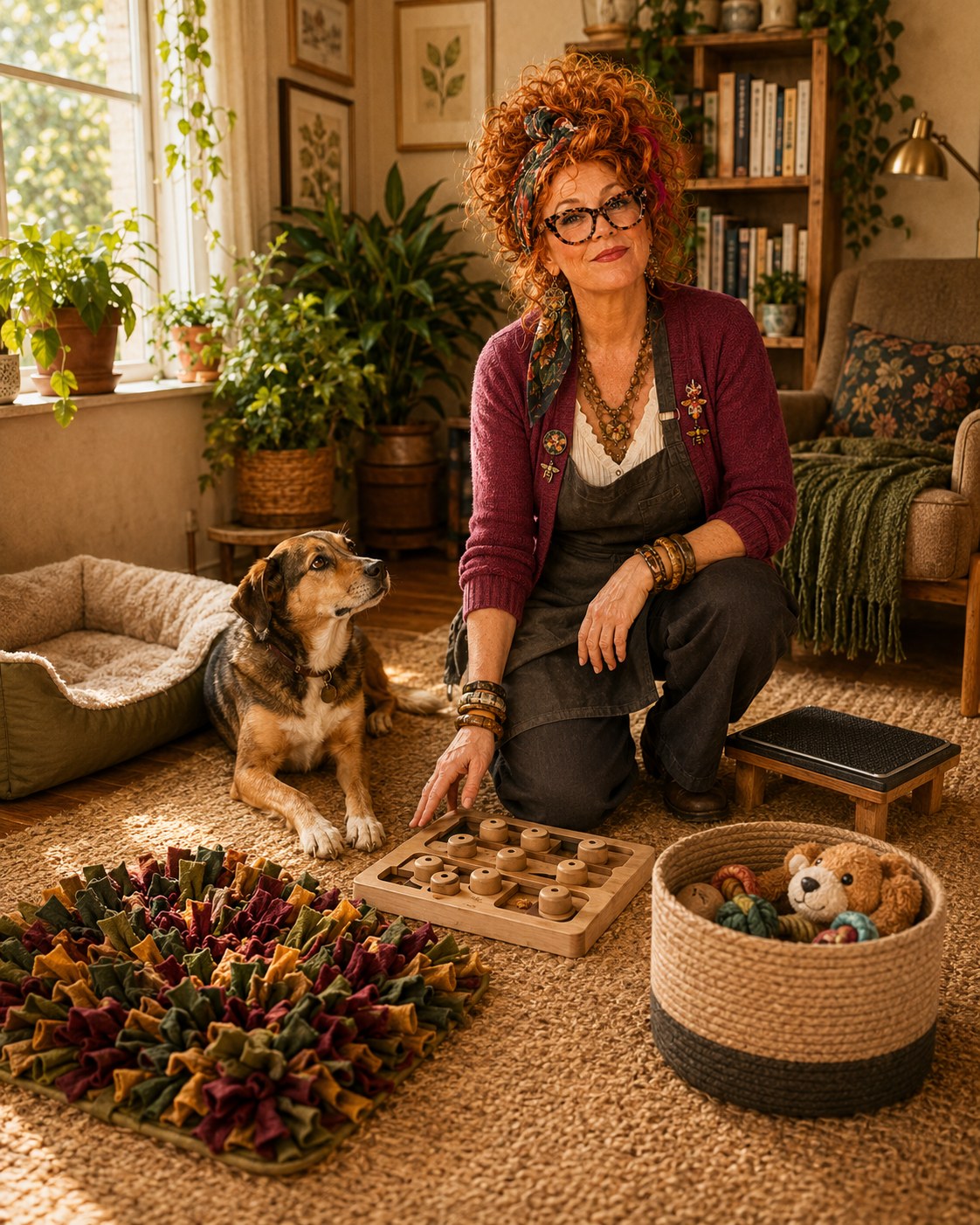
Keeping a dog busy in an apartment is not the same as keeping a dog in constant motion. Good indoor rotation alternates sniffing, problem solving, short interaction, food work, and rest without turning the floor into a collision course or the downstairs ceiling into a percussion instrument.
Keep a dog busy in an apartment with a quiet rotation: a sniffing search, a flat food puzzle, a correctly sized stuffable toy, a few minutes of cue practice, and deliberate rest. Use part of the normal food plan where appropriate, supervise toys, protect shared floors with a mat, inspect every item, and remove damaged pieces immediately.
Measure noise, movement, and safe working space
Clear a play zone away from stairs, cords, glass, food prep, and tight furniture. Measure how far a wobble or rolling toy travels, what it sounds like on the floor, and where the dog can turn without collision. Check toy size against manufacturer guidance and the dog’s mouth and chewing style.
1. Begin with a sniffing search
Scatter a measured portion of approved food across a washable sniffing mat or hide it in easy supervised locations. Start simple and avoid places with cleaners, cords, vents, or objects the dog may swallow.
2. Add one quiet puzzle
Use a flat board or lick mat on a nonslip surface. Show how it works, supervise, and stop if the dog chews components. Compare compact formats in the apartment enrichment-toy guide.
3. Use short interaction games
Practice familiar cues, hand targets, find-it, toy names, or calm stationing in brief sessions. This article does not diagnose behavior or replace individualized training support.
4. Rotate rather than accumulate
Keep a small active set and store the rest in one closed bin. Rotation changes novelty without filling the room. Inspect every returning toy for wear.
5. Control floor noise
Place hard toys on a rug or dense mat, avoid throwing against shared walls, and schedule active indoor games at reasonable hours. Choose quieter formats for early morning or late evening.
6. Count food used in activities
Use part of the dog’s normal meal when suitable, or follow professional guidance for the individual dog. Do not let several small enrichment sessions become an invisible second dinner.
7. Wash and dry food-contact toys
Open cavities, clean grooves, follow dishwasher labeling, and let everything dry before storage. Remove food toys after the session rather than leaving residue on the floor.
8. Build in rest
A calm bed, mat, or crate used appropriately gives the dog an off-switch between activities. Constant stimulation can become clutter and noise rather than useful occupation.
Do not use an apartment activity if…
- The toy size, material, or parts do not match the dog.
- The activity repeatedly strikes shared walls, doors, or hard floors.
- The dog becomes frustrated, destructive, or able to access loose pieces.
- Food use is not being counted within the dog’s normal plan.
- The activity is being presented as a substitute for appropriate outdoor, veterinary, or professional support.
The goal is a sustainable rhythm of activity and rest, not a full-day performance schedule.
Frequently asked questions
What are quiet indoor activities for an apartment dog?
Try supervised sniffing games, flat puzzle boards, appropriately sized stuffable toys, lick mats, short cue practice, and toy rotation. Put moving hard toys on a padded mat and use them at reasonable hours.
Can enrichment replace walks and outdoor needs?
No household toy replaces the dog’s appropriate exercise, bathroom, social, and outdoor routine. Indoor activities add variety and occupation. Ask a veterinarian or qualified professional about individual physical or behavioral needs.
How long should an enrichment session last?
Use the dog’s interest, safety, food plan, and the product instructions rather than forcing a universal duration. End before frustration, fatigue, damage, or excessive noise appears.
What if the dog destroys puzzle toys?
Supervise use, choose the correct size and material, remove damaged items immediately, and switch to a safer format. A food puzzle is not automatically a chew toy.
Winnie’s take: Busy is not the same as launched. A dog can sniff, solve, lick, learn, and nap without sending a hard plastic comet through the apartment every seven minutes.
How we choose
This how to is research-led, not a claim of hands-on laboratory testing. We compare public product specifications, recurring patterns in buyer feedback, and the measurements that matter most for a real small-space pet-care constraint. Recommendations are organized by who each option fits, what to measure, and when to skip it—not by commission rate.
Last reviewed: July 11, 2026