
Best Dog Slow Feeders for Small Apartments (2026)
Somewhere, Winnie is rearranging a shelf that was already fine.
Best for, at a glance
| Option | Best for | Main trade-off |
|---|---|---|
| Neater Pet Brands Neater Slow Feeder Dog Bowl | Best overall, non-slip everyday pick | Wider footprint than a single small bowl |
| Outward Hound Fun Feeder Slo Bowl, Small | Best compact pick for small dogs and puppies | 3/4-cup capacity means frequent refills for anything but a small dog |
| UPSKY Slow Feeder Dog Bowl | Best budget interactive-maze option, with a caveat | Maze walls can be uncomfortably tall for flat-faced or short-snout breeds |
A slow feeder bowl solves a specific, common problem — a dog that eats too fast, gulps air, or occasionally vomits right after a meal — without needing a training program or a change in food. The right pick in a small apartment depends on your dog’s size and muzzle shape more than anything else, since a maze pattern that works great for one dog can be genuinely uncomfortable for another.
For most apartment dogs, the Neater Pet Brands Slow Feeder is the safest default — non-slip, wide enough to stay put, and shallow enough to work for most muzzle shapes. Go smaller with the Outward Hound Fun Feeder Slo Bowl for a small dog or puppy, and treat the UPSKY maze bowl as a budget option to test the concept, skipping it specifically for flat-faced breeds.
Match the bowl to your dog's size and muzzle shape before buying
Measure your dog’s current bowl footprint and note whether they’re a flat-faced or short-snout breed, since that single detail rules out some maze-style designs entirely. Then check the bowl’s listed capacity against a typical meal size — a bowl too small means constant refilling, and one too large defeats some of the portion-pacing benefit the design is built around.
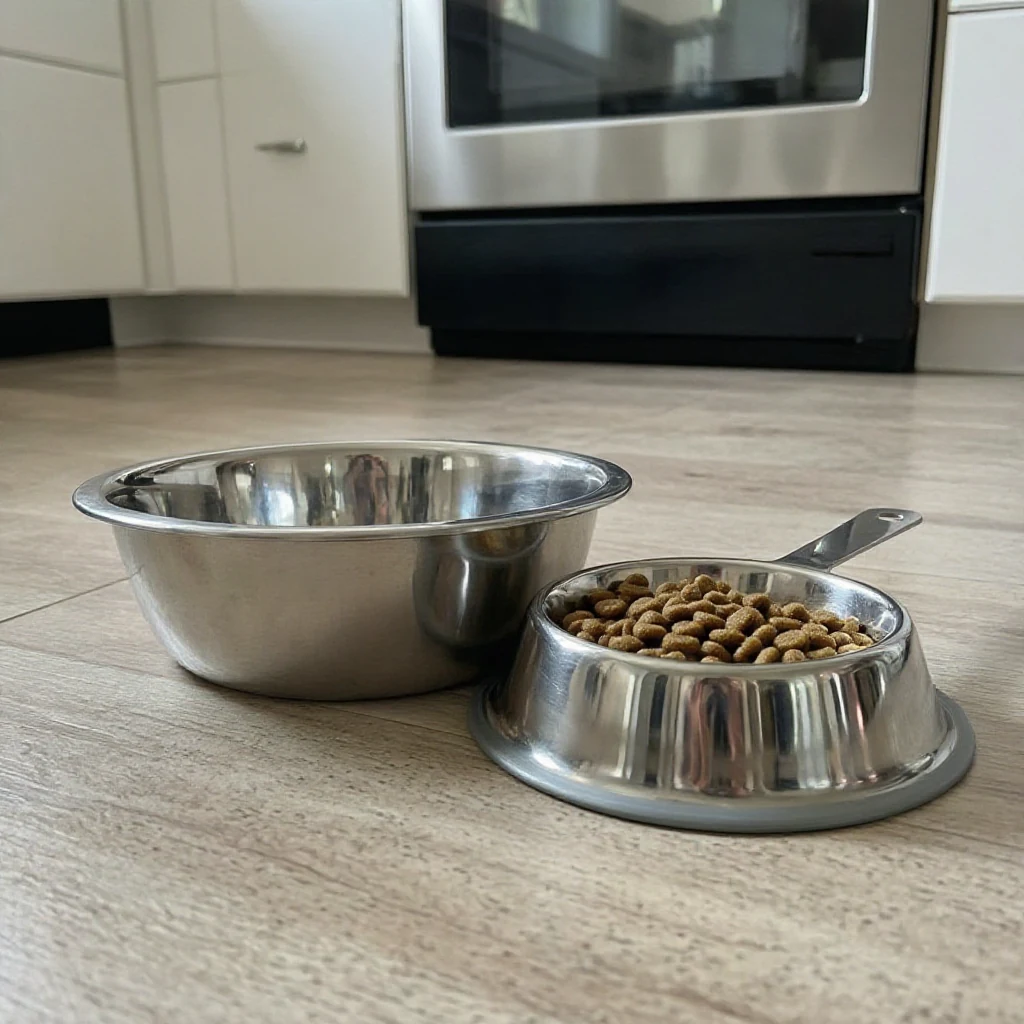
Non-slip base matters more in an apartment
A bowl that skids across a hard floor during an enthusiastic meal is a small annoyance in a house and a real noise problem in an apartment, especially with a downstairs neighbor. A genuinely non-slip base — not just a bowl labeled “non-skid” with a thin rubber ring — stays put through normal eating motion instead of migrating a few inches with every bite.
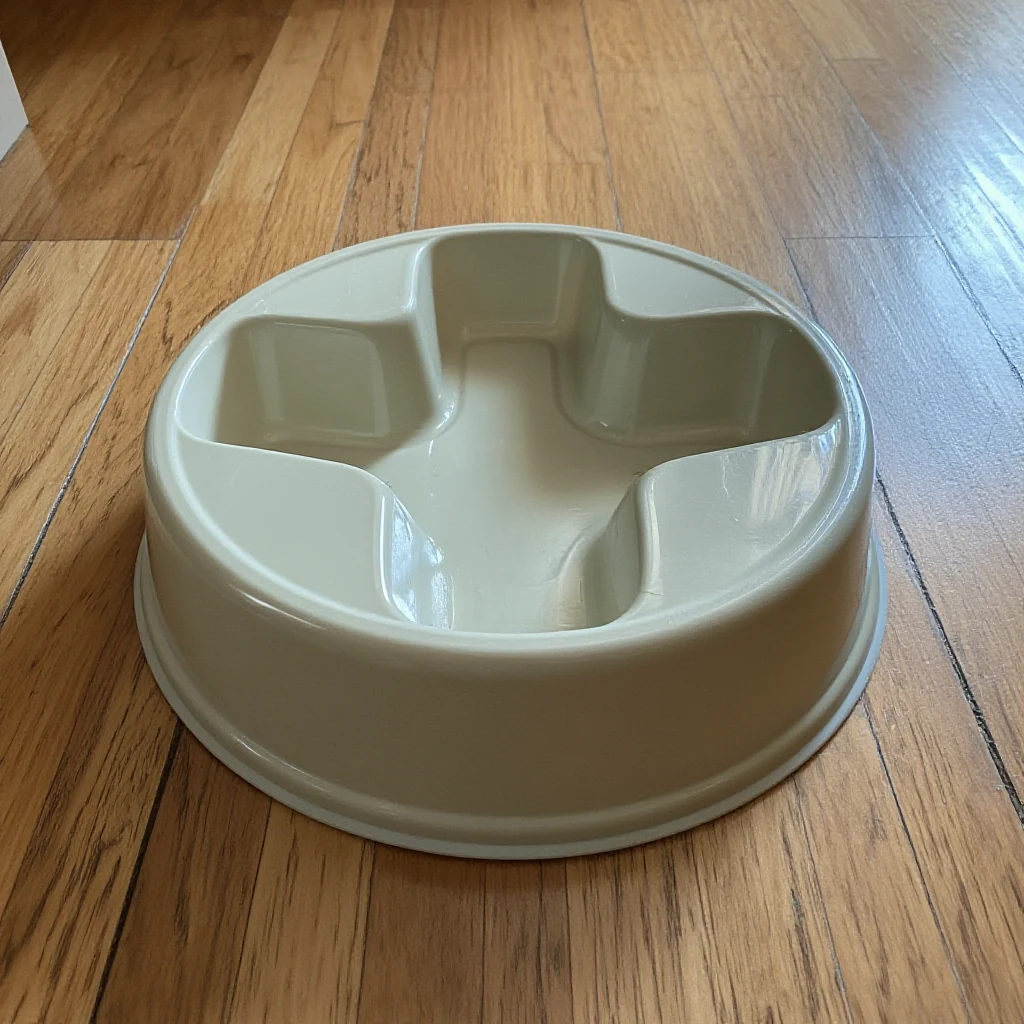
Maze depth is not one-size-fits-all
Deeper maze walls slow eating more effectively for a determined gulper, but the same depth can be uncomfortable for a flat-faced dog whose shorter muzzle doesn’t reach into tall channels comfortably. A wide, shallow ridge pattern is the safer default when you’re not sure, and it still meaningfully slows most dogs down compared to a flat bowl.
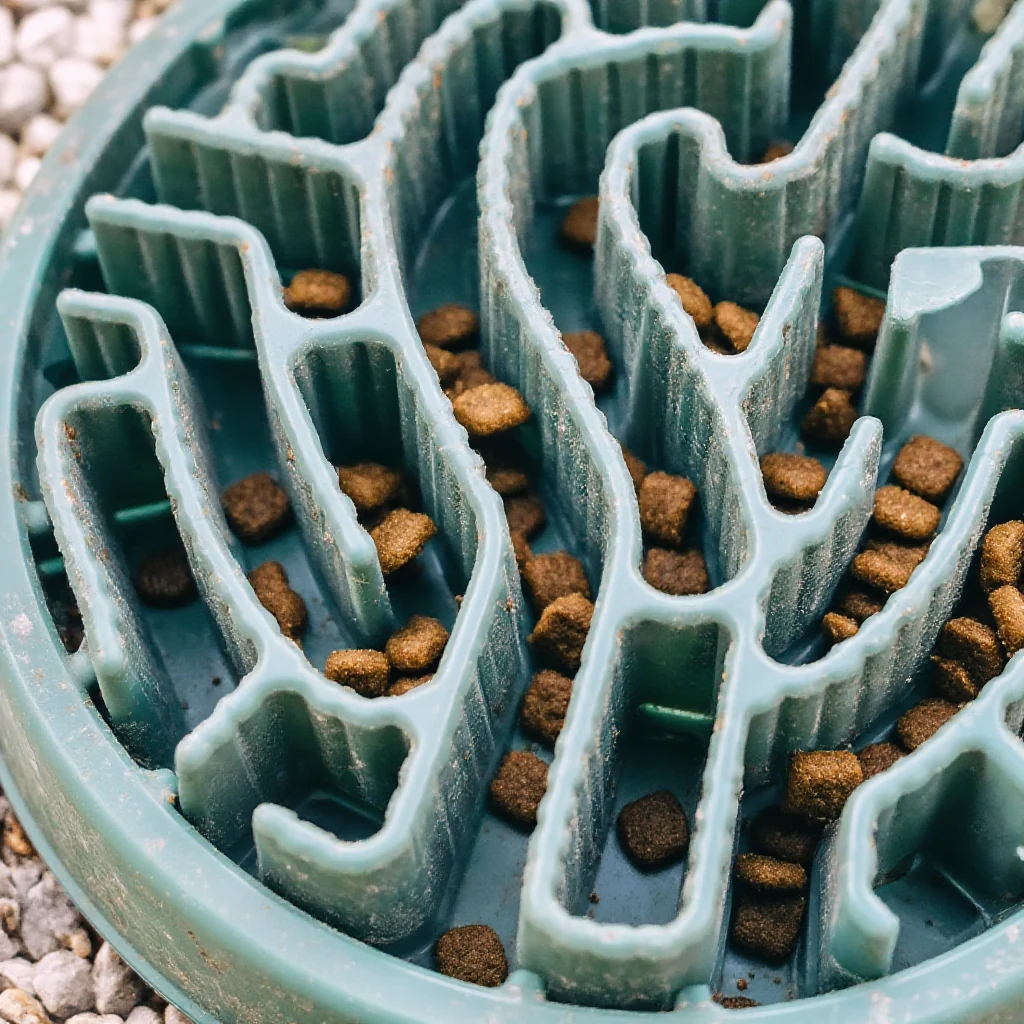
Material and cleaning routine
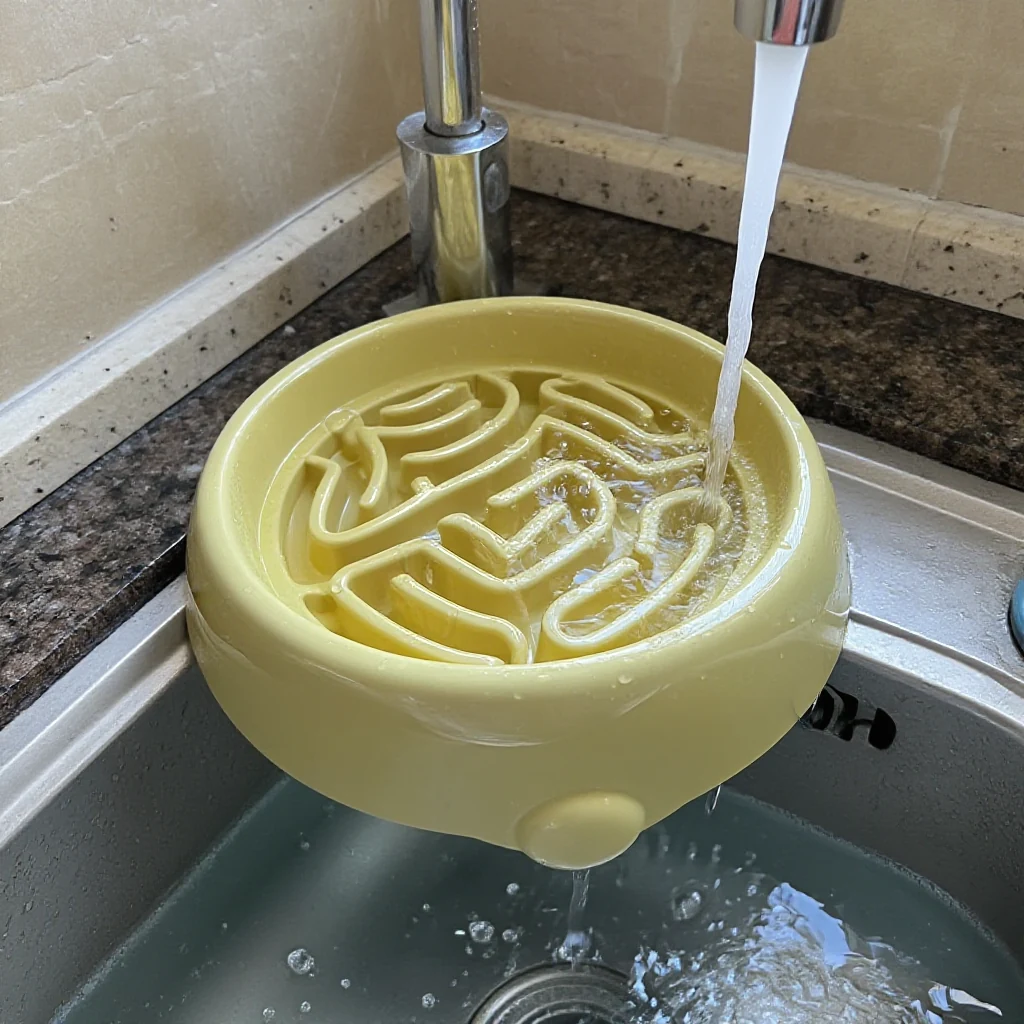
Most slow feeders on the market are food-safe plastic or resin, which is lightweight and dishwasher-safe but can pick up scratches over time that trap odor if not cleaned regularly. A quick pre-rinse before a dishwasher cycle keeps the ridges genuinely clean instead of just food-free on the surface.

Do not buy a slow feeder bowl if…
- Your dog is a flat-faced or short-snout breed and the specific model’s maze walls aren’t described as shallow or brachycephalic-friendly.
- Your dog has a history of flipping or chewing through lightweight plastic bowls — a heavier or more chew-resistant material may be worth the extra cost.
- Vomiting or fast eating started suddenly and wasn’t a longstanding habit — a sudden change is worth mentioning to a vet before assuming a slower bowl is the whole fix.
- You need a bowl that also elevates food off the floor — none of these three are raised designs; check a dedicated elevated feeder instead if that’s the actual need.
For water alongside a slow feeder, see our pet water fountain guide.
Frequently asked questions
Do slow feeder bowls actually work?
For dogs that gulp or eat too fast, a slow feeder’s raised ridges or maze pattern physically forces smaller bites and more chewing per mouthful, which can reduce gulping, vomiting after meals, and excessive air swallowing. Results vary by dog, but the mechanism is straightforward and well documented.
Are slow feeders safe for flat-faced breeds like pugs or bulldogs?
Not all of them. Taller maze-style ridges can be uncomfortable for a short-snout dog to navigate. Look for a shallow, wide design specifically described as suitable for flat-faced breeds rather than assuming any slow feeder works for every muzzle shape.
How do I clean a slow feeder bowl with a lot of ridges?
Most slow feeder bowls are top-rack dishwasher safe, which handles the grooves and channels far more thoroughly than hand-washing. Check the specific product’s care instructions, since maze depth varies and some deeper designs benefit from a quick pre-rinse before the dishwasher.
Will a slow feeder bowl fit in a small apartment kitchen?
Yes — slow feeders generally sit at or near standard bowl footprint, with the wider designs adding a few extra inches. Measure your dog’s actual feeding spot and compare it to the bowl’s listed dimensions before choosing between a wide non-slip design and a more compact small-dog size.
Winnie’s take: I did not expect a dog bowl to be the thing I’d spend twenty minutes measuring floor space for, and yet here we are. The right slow feeder is a genuinely small object doing a genuinely large job — it just has to actually fit the dog eating from it, not just the floor it sits on.
Product recommendations
Neater Pet Brands Neater Slow Feeder Dog Bowl
Why this fits: A wide, low-profile slow feeder bowl with a non-slip base and raised interior ridges that slow down fast eating, gulping, and the mess that comes with both. It holds 2.5 cups of food and 8.5 cups of water in the double-bowl version, and the wide shape keeps it stable on a kitchen floor without sliding during an enthusiastic meal.
Look for:
- A dedicated feeding spot with room for the wider base
- A dog whose main issue is gulping rather than food-guarding speed
- A dishwasher-safe material for daily cleaning
Skip if:
- Floor space at the feeding spot is genuinely too tight for a wider bowl
- Your dog needs the deepest possible maze channels to actually slow down
Small-space note: The non-slip base matters more in an apartment than a house — no scraping bowl noise against a hard floor for a downstairs neighbor to hear.
View the current Amazon listing →Amazon retailer link. No Amazon commission is currently earned while our application is pending.
Outward Hound Fun Feeder Slo Bowl, Small
Why this fits: A 3/4-cup capacity bowl with raised ridges and a wave pattern designed to slow eating up to 10 times versus a flat bowl, sized specifically for small dogs, puppies, and cats rather than scaled down from a large-dog design. Its smaller capacity means more frequent refills for bigger dogs, but it's the right proportion for a genuinely small eater.
Look for:
- A small or toy-breed dog, puppy, or a cat that eats too fast
- A feeding spot with minimal floor space
- A dog that tends to flip lighter bowls, which calls for extra caution with plastic
Skip if:
- You have a medium or large dog needing more than 3/4 cup per meal
- Your dog has flipped lightweight plastic bowls before despite a non-slip base
Small-space note: This is the pick when the eater and the apartment are both compact — no reason to buy feeder capacity a small dog will never use.
View the current Amazon listing →Amazon retailer link. No Amazon commission is currently earned while our application is pending.
UPSKY Slow Feeder Dog Bowl
Why this fits: A 1-2 cup maze-pattern bowl made of food-safe PP resin with a widened, non-slip base designed to resist tipping. It's an effective, inexpensive way to add foraging-style engagement to mealtime, but the maze walls run taller than some flat-faced or short-snout dogs find comfortable — worth checking before buying if that describes your dog.
Look for:
- A dog without a flat-faced or short-snout build
- A budget-friendly option to test whether slow feeding helps before spending more
- A small to medium dog within the 1-2 cup range
Skip if:
- Your dog is a flat-faced or brachycephalic breed — the taller maze walls have been reported as uncomfortable for that muzzle shape specifically
- You need more than 2 cups of capacity per meal
Small-space note: A genuinely low-cost way to test whether slow feeding actually changes your dog's eating pace before investing in a pricier bowl.
View the current Amazon listing →Amazon retailer link. No Amazon commission is currently earned while our application is pending.
How we choose
This roundup is research-led, not a claim of hands-on laboratory testing. We compare public product specifications, recurring patterns in buyer feedback, and the measurements that matter most for a real small-space pet-care constraint. Recommendations are organized by who each option fits, what to measure, and when to skip it—not by commission rate.
Products can change or disappear, so availability, specifications, and destination links should be rechecked during every scheduled refresh.
Last reviewed: July 31, 2026