
How to Hide Small Kitchen Appliances Without Losing Counter Use
Winnie is mid-opinion about a throw pillow. Photo to follow.
Somewhere between “everything out on the counter” and “everything crammed into the one deep cabinet nobody can reach without kneeling” is a real middle option: keep the appliances you use often close and plugged in, but visually contained so the counter doesn’t read as cluttered the second you’re not actively cooking. That’s the actual goal of hiding appliances — not banishing them to storage, just giving them a defined home that isn’t the open counter.
Hide small kitchen appliances by giving each one a defined, closeable spot near an outlet — a roll-top appliance garage, a lift-up cabinet shelf, or a rolling cart for rentals — rather than storing them loose in a deep cabinet or leaving them permanently on the open counter. Measure the appliance's full height (lid open, if applicable) before choosing a door or opening style, and keep the one or two appliances you use daily the most reachable.
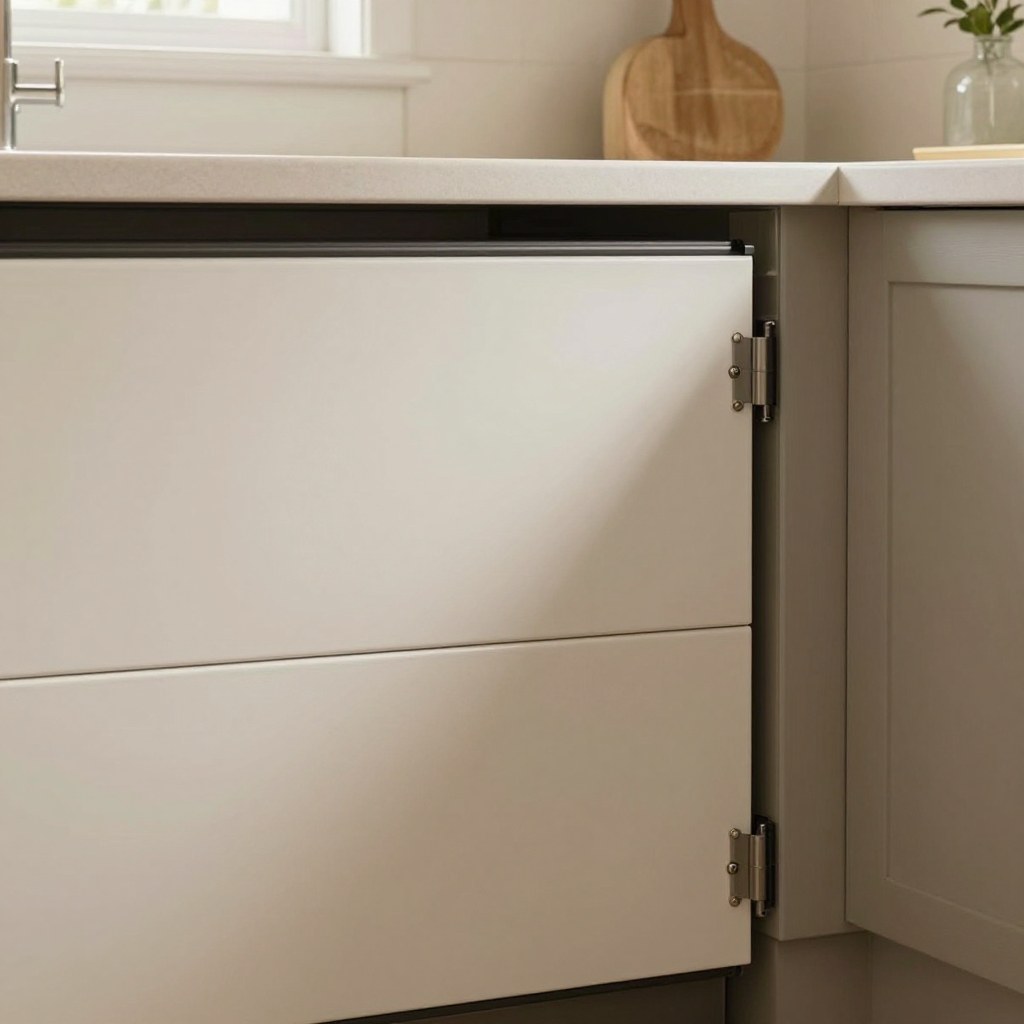
Measure the appliance, the outlet, and the door swing first
Before buying or building any kind of appliance garage, measure the appliance at its tallest point — for a stand mixer or blender, that means lid or attachment raised, not just the base sitting closed. Check where the nearest outlet actually is; an appliance hidden three feet from power just moves the annoyance instead of solving it. And if you’re adding a lift-up or roll-top door to existing cabinetry, confirm it has room to travel without hitting a shelf, a light fixture, or the counter’s backsplash.
1. Sort appliances by how often they’re actually used
Not every appliance deserves a hidden home. The one or two you reach for daily — a coffee maker, a toaster — do better staying the most accessible, whether that’s fully visible or behind the easiest-opening door in the kitchen. Appliances used weekly or less (a stand mixer, a waffle iron, a slow cooker) are the better candidates for a garage or lift shelf, since the slightly slower access matters less.
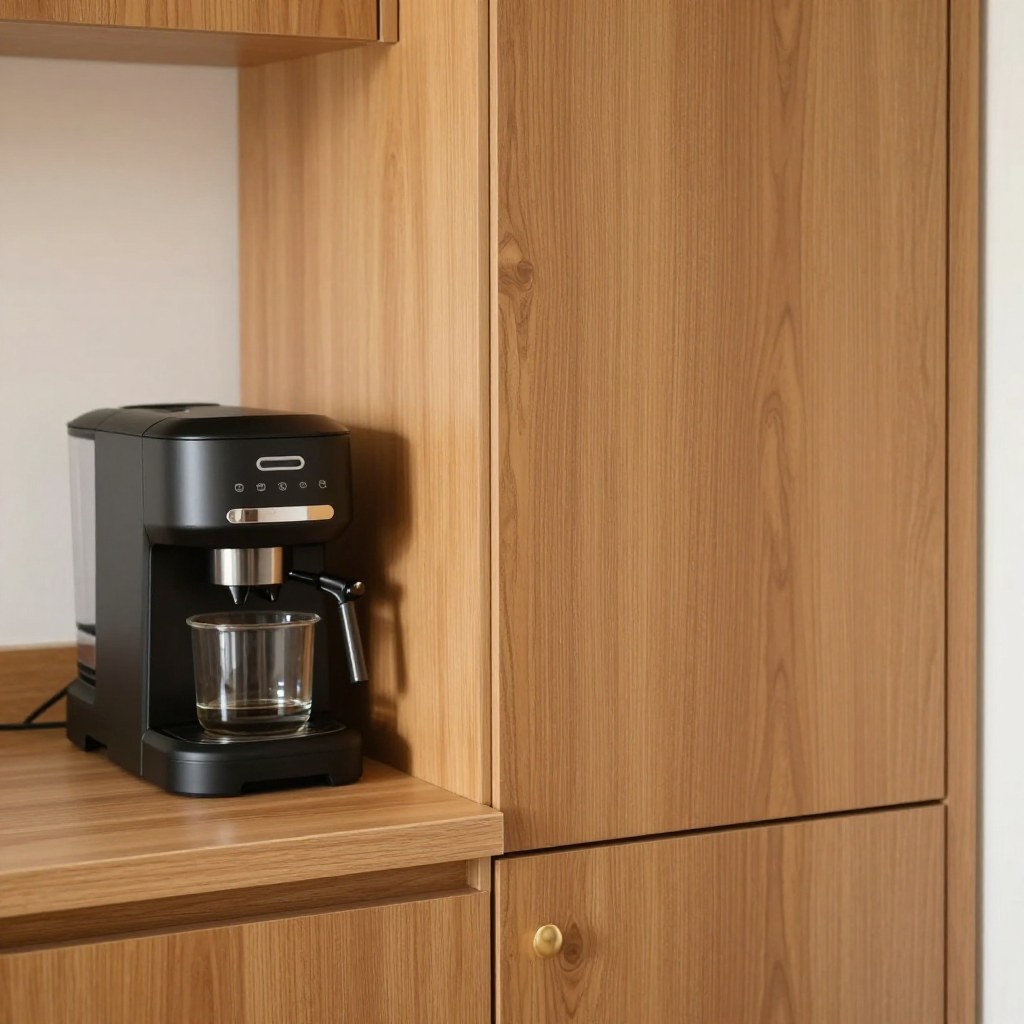
2. Roll-top and tambour doors for a built-in look
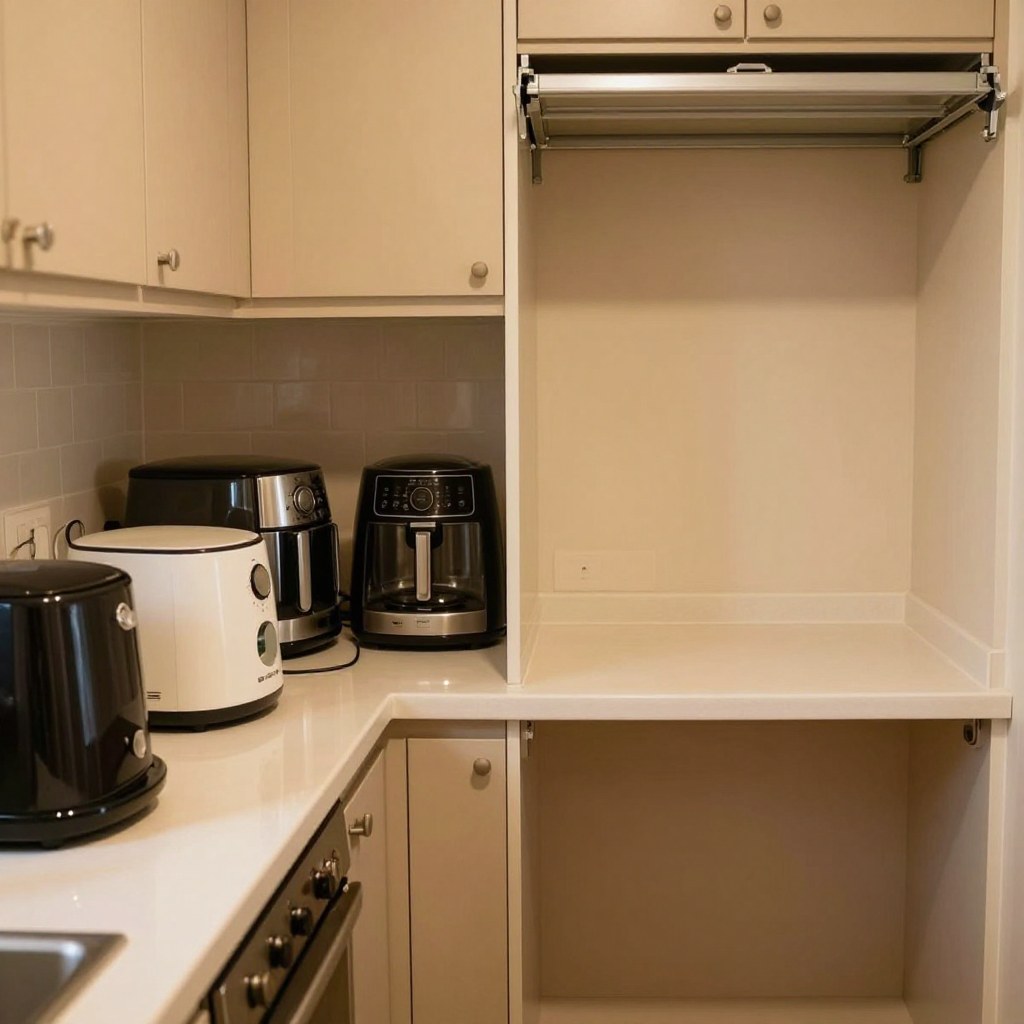
A tambour (roll-up, slatted) door built into a corner cabinet is the closest thing to a real appliance garage without a full renovation — some are retrofit kits designed to mount onto existing cabinet boxes. The appliance stays plugged in behind the door, and rolling it up takes about as long as opening any cabinet. The main measurement risk is depth: a deep corner appliance garage can eat more usable counter footprint than people expect, so measure the finished depth against what’s actually left for prep space next to it.
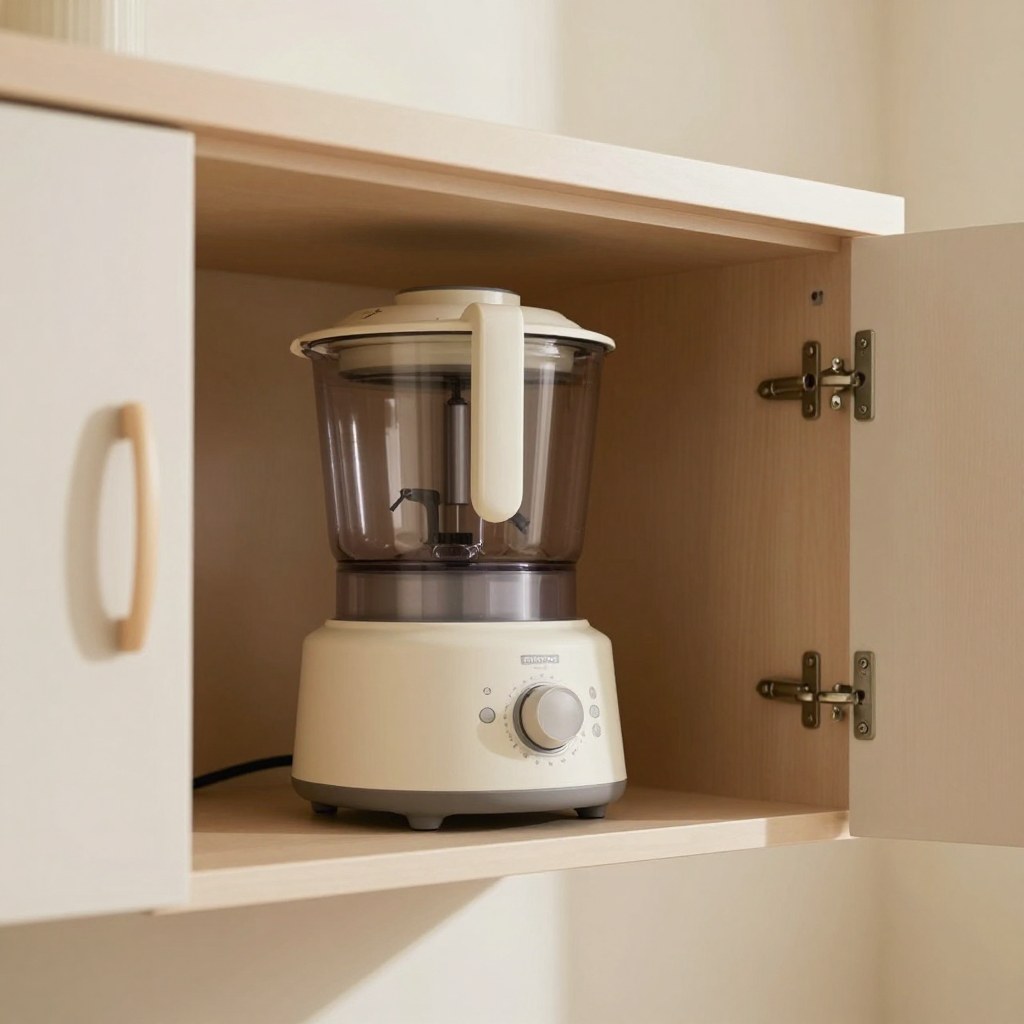
3. Lift-up cabinet fronts for wall cabinets
For a wall cabinet mounted just above the counter, a lift-up (also called a flip-up or nova-lift) hinge lets the door swing upward and stay open on its own, turning the cabinet into a small appliance nook without a swinging door in the way. This works well for shorter appliances — a toaster, a small food processor — but check the appliance’s height against the cabinet’s interior clearance before assuming it’ll fit with the door raised.
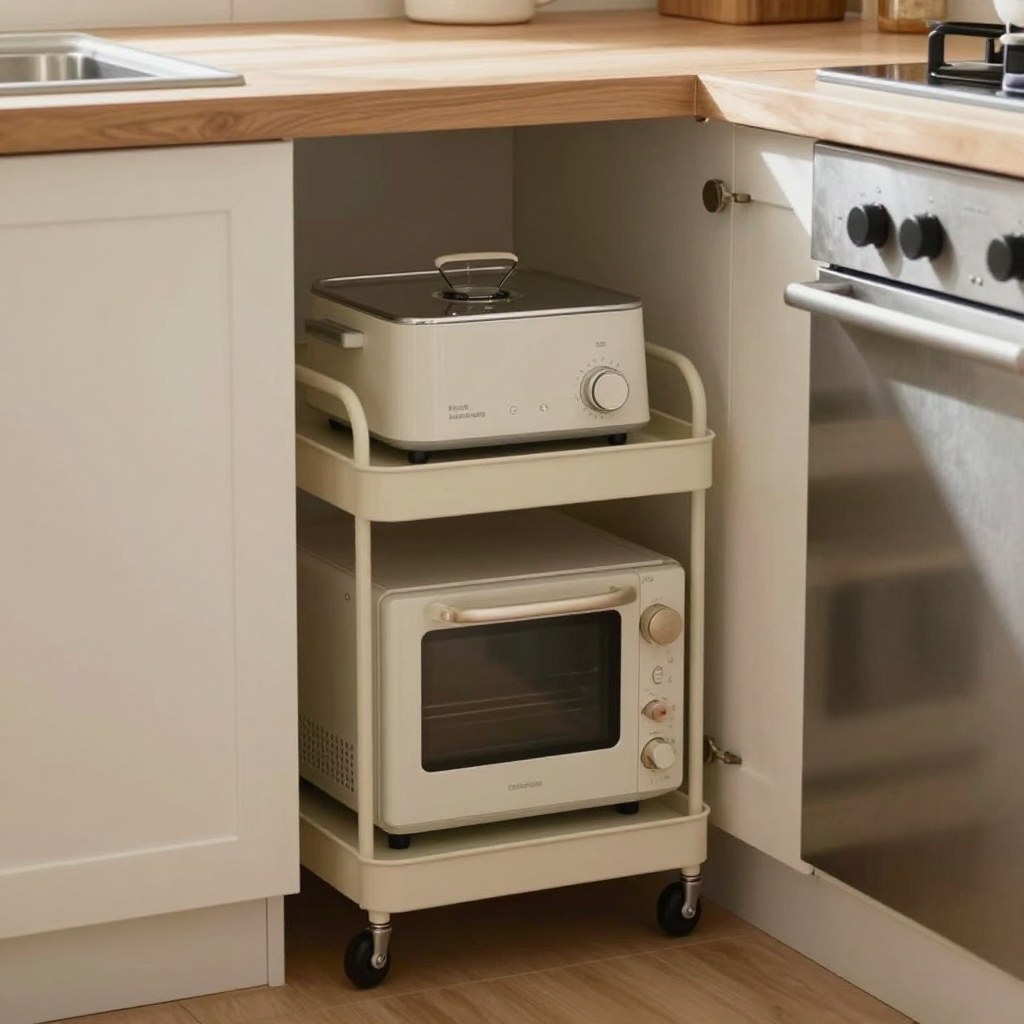
4. A rolling cart, for renters and anyone who can’t modify cabinets
If cutting into cabinetry isn’t an option, a narrow rolling cart does a version of the same job: appliances live on it, contained to one footprint, and it tucks against a wall or into a corner between uses. Roll it out next to an outlet when needed, then push it back. The tradeoff is that a cart doesn’t hide anything from view the way a door does — it just contains the clutter into one predictable rectangle instead of letting it spread across the counter.
5. Don’t create a worse problem than the one you started with
An appliance garage that’s too small, too far from an outlet, or too fussy to open one-handed will get used exactly once before everything migrates back onto the open counter. The point of hiding an appliance is to reduce friction, not add a new step between you and your coffee. If a solution requires two hands and a small negotiation every morning, it’s not actually solving the clutter problem — it’s just relocating it behind a door.
Skip an appliance garage or lift shelf if…
- You haven’t measured the appliance at its tallest point, including any raised lid or attachment.
- There’s no outlet within reach of the planned spot — you’ll just be moving the appliance, not solving the reach problem.
- The door or lift mechanism needs two hands and real effort to open, for an appliance you actually use daily.
- The retrofit kit’s depth would eat more counter footprint than you have to spare next to it.
- You’re renting and the modification isn’t reversible without damaging the cabinet.
Frequently asked questions
What is a kitchen appliance garage? An appliance garage is an enclosed or semi-enclosed storage spot — a tambour (roll-up) door, a lift-up cabinet front, or a dedicated cabinet with a pull-out shelf — that keeps a small appliance out of sight but still plugged in and ready to use, without hauling it out of a low cabinet every time.
Will hiding an appliance behind a door make it harder to use? Only if the door or opening doesn’t clear the appliance’s actual height and cord. Measure the appliance with its lid open (for things like stand mixers) before committing to a lift-shelf or roll-top design, since a garage that requires wrestling the appliance out defeats the purpose.
Is a rolling cart a real alternative to a built-in appliance garage? Yes, especially in a rental where you can’t modify cabinetry. A narrow rolling cart keeps one or two small appliances contained and mobile — it can tuck into a corner between uses and roll out next to an outlet when needed.
Winnie’s take: A cabinet door is not a punishment. It’s a filing system with a hinge. The coffee maker earns its spot on the open counter. The waffle iron, which shows up twice a year, does not.
How we choose
This how to is research-led, not a claim of hands-on laboratory testing. We compare public product specifications, recurring patterns in buyer feedback, and the measurements that matter most for a real small-kitchen constraint. Recommendations are organized by who each option fits, what to measure, and when to skip it—not by commission rate.
Last reviewed: July 14, 2026