
Classic Meatloaf Recipe (Moist, Never Dense)
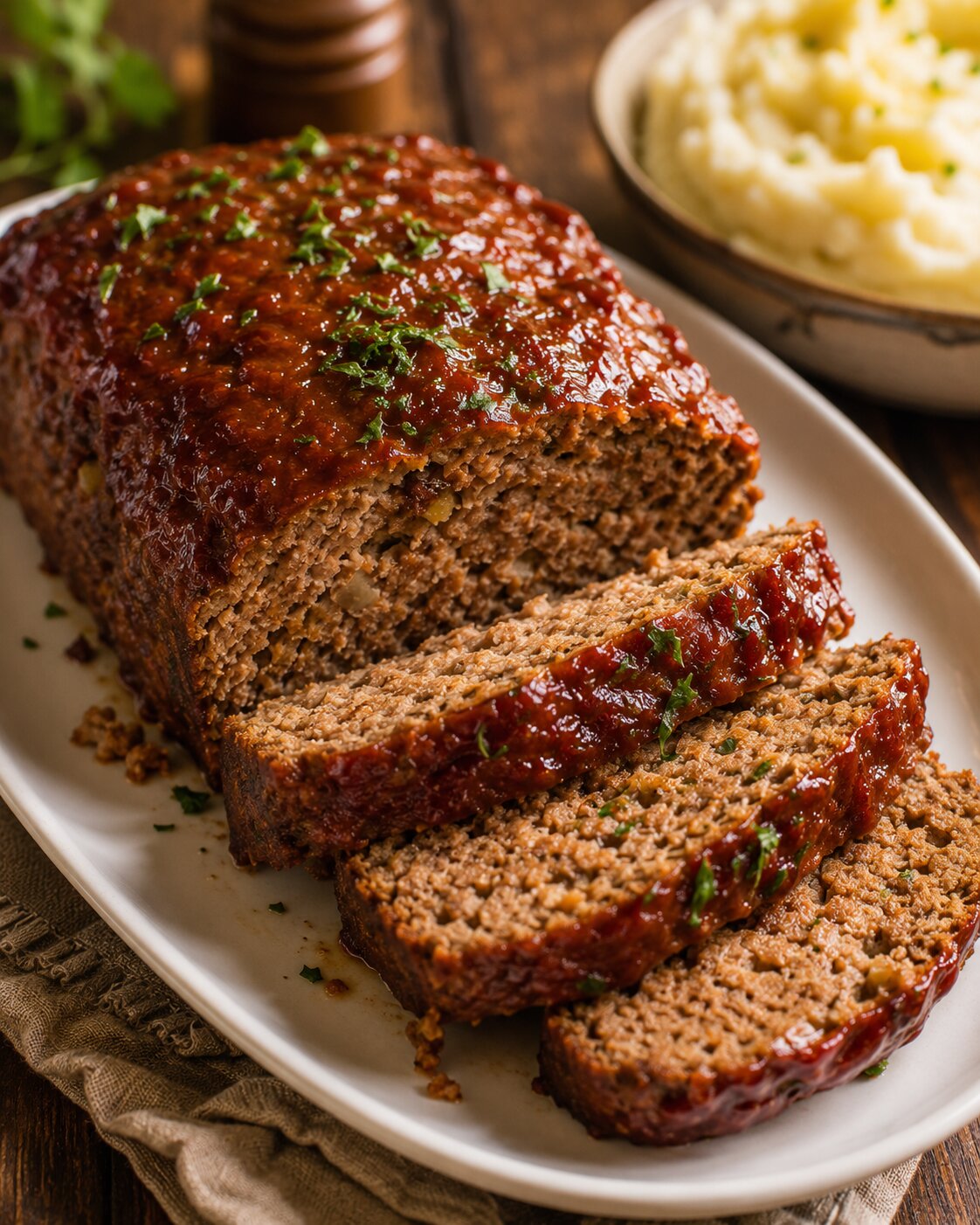
This meatloaf recipe exists because meatloaf gets a bad reputation it mostly doesn’t deserve. The dry, dense, sad-brick version most people have suffered through at some point isn’t a flaw in the concept — it’s what happens when two small technique details get skipped: something to hold moisture in the meat as it cooks, and a light enough hand when mixing everything together. Fix those two things and meatloaf turns into what it’s actually supposed to be — genuinely tender, a little sweet-and-tangy on top, and one of the easiest make-ahead dinners in regular rotation.
The panade is the whole trick
A panade — bread torn up and soaked in milk until it turns into a paste — sounds like an unnecessary extra step, but it’s the single biggest difference between moist meatloaf and dry meatloaf. As the loaf bakes, that soaked bread holds onto liquid and releases it slowly through the meat, instead of all the moisture cooking straight out the way it does in a panade-free loaf. It takes five minutes and one extra bowl. Skipping it is the most common reason people end up with a dry result and blame the beef.
Don’t overwork the mix
The other failure point is mixing too aggressively, for too long, the way you might with bread dough that needs gluten development. Ground meat is the opposite — the more you work it, the tighter and denser the protein strands get, and that’s what turns a tender loaf into a rubbery one. Combine everything with your hands just until you stop seeing streaks of raw egg or dry seasoning, then stop completely. It should still look loosely combined, not smooth.
Free-form beats a loaf pan
Shaping the mixture into a loaf directly on a lined sheet pan, rather than packing it into a traditional loaf pan, gives more surface area for the glaze to caramelize and lets rendered fat drain away instead of pooling around the base of the loaf. It also bakes a little faster and more evenly, since heat reaches the sides of the loaf directly instead of through a metal pan wall.

Tips & variations
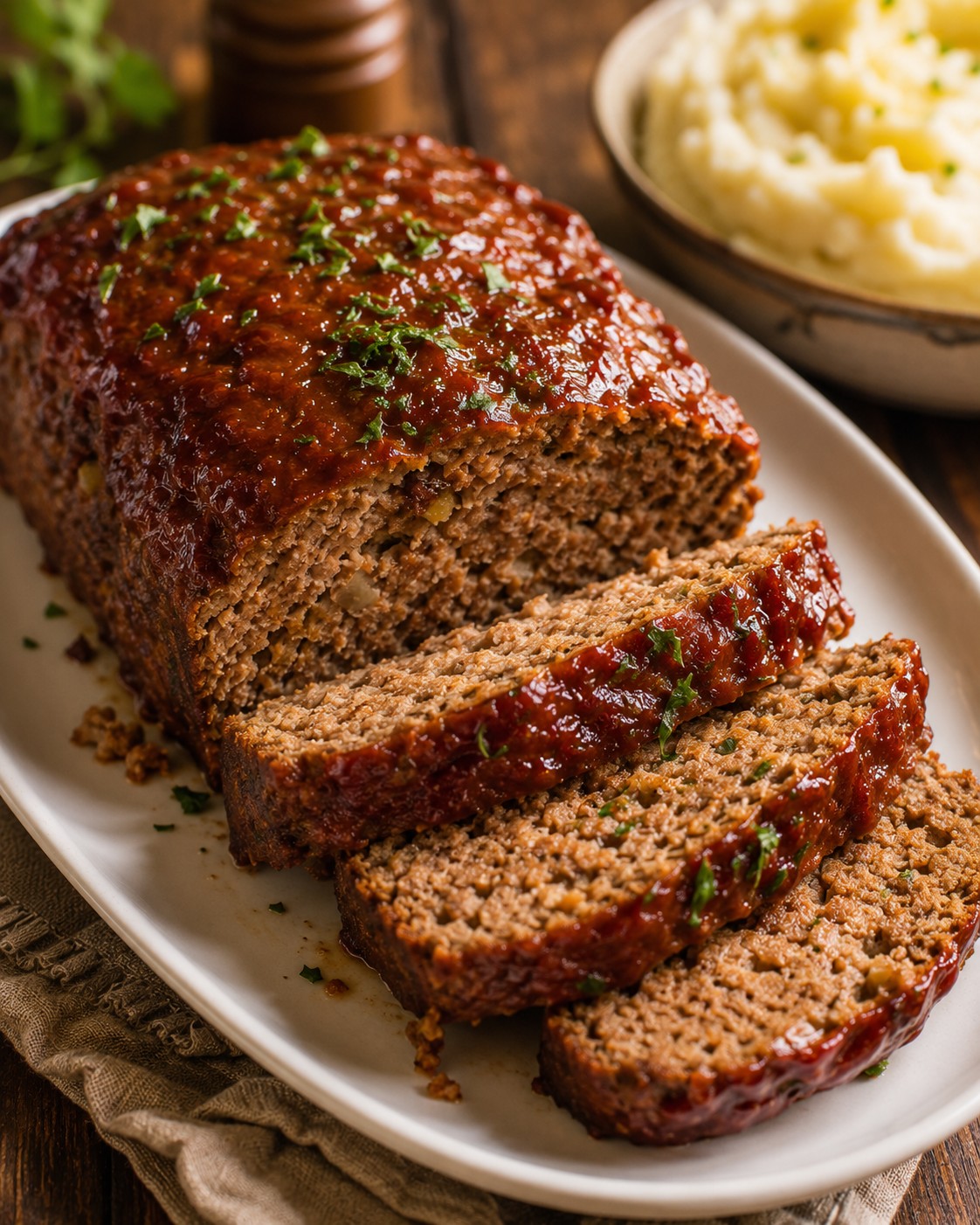
- The panade (bread soaked in milk) is doing real work, not just filler — it holds moisture inside the loaf as it bakes, which is the actual difference between moist meatloaf and a dry one. Don't skip it, and don't substitute dry breadcrumbs without the milk.
- Always check doneness with a meat thermometer, not baking time alone — ground beef needs to reach a verified internal temperature of 160°F (71°C) to be safely cooked through, and ovens vary enough that time alone isn't a reliable signal.
- Shaping the loaf free-form on a sheet pan rather than packing it into a loaf pan lets more of the surface area caramelize under the glaze and lets excess fat drain away instead of pooling around the loaf.
- Let it rest before cutting. Slicing immediately out of the oven is the most common reason a meatloaf falls apart on the plate — the internal structure needs those 10 minutes to firm back up.
Classic Meatloaf Recipe (Moist, Never Dense) — Recipe Card
Ingredients
For the panade (the moisture trick)
For the meatloaf
For the glaze
Instructions
- Preheat oven to 350°F (175°C). Line a rimmed baking sheet or a loaf pan with parchment or foil for easier cleanup.
- Make the panade: combine the torn bread and milk in a large mixing bowl. Let it sit for 5 minutes until the bread fully absorbs the milk and mashes into a paste when stirred.
- Add the ground beef, diced onion, garlic, eggs, Parmesan (if using), Worcestershire sauce, salt, pepper, and thyme to the bowl with the panade.
- Mix by hand just until everything is evenly combined — stop as soon as you no longer see streaks of egg or dry seasoning. Overworking the mixture is the single biggest cause of a dense, rubbery loaf.
- Shape the mixture into a loaf roughly 5 inches wide and 9 inches long directly on the lined baking sheet (or press into a loaf pan). A free-form loaf on a sheet pan browns and glazes better on more surfaces than a loaf pan does.
- Whisk together the ketchup, brown sugar, and vinegar for the glaze. Spread half over the top of the loaf.
- Bake for 45 minutes, then brush on the remaining glaze and continue baking for 15–20 more minutes, until a meat thermometer inserted into the center reads 160°F (71°C).
- Let the meatloaf rest for 10 minutes before slicing — this is what keeps the slices holding together instead of crumbling apart.
Estimated nutrition per 1 slice (of 6), estimate only : ~340 calories. This is a rough estimate for planning, not a substitute for exact dietary tracking.
Frequently asked questions
Why does my meatloaf fall apart when I slice it?
Usually one of two things: not enough binder (egg and panade) relative to the meat, or slicing it too soon after it comes out of the oven. Let it rest at least 10 minutes before cutting.
Can I use ground turkey or chicken instead of beef?
Yes, though lean poultry dries out faster than 80/20 beef, so the panade matters even more. Ground poultry meatloaf should reach a verified internal temperature of 165°F (74°C), which is higher than the 160°F target for beef.
Why is my meatloaf dense instead of tender?
Almost always overmixing. Combine the ingredients just until evenly distributed — the moment you stop seeing streaks of egg, stop mixing. Treating it like bread dough that needs kneading is the most common mistake.
How we choose
This recipe is research-led, not a claim of hands-on laboratory testing. We compare public product specifications, recurring patterns in buyer feedback, and the measurements that matter most for a real small-kitchen constraint. Recommendations are organized by who each option fits, what to measure, and when to skip it—not by commission rate.
Last reviewed: July 4, 2026