
Drop Biscuits Recipe (Tall, Flaky, No Rolling Required)
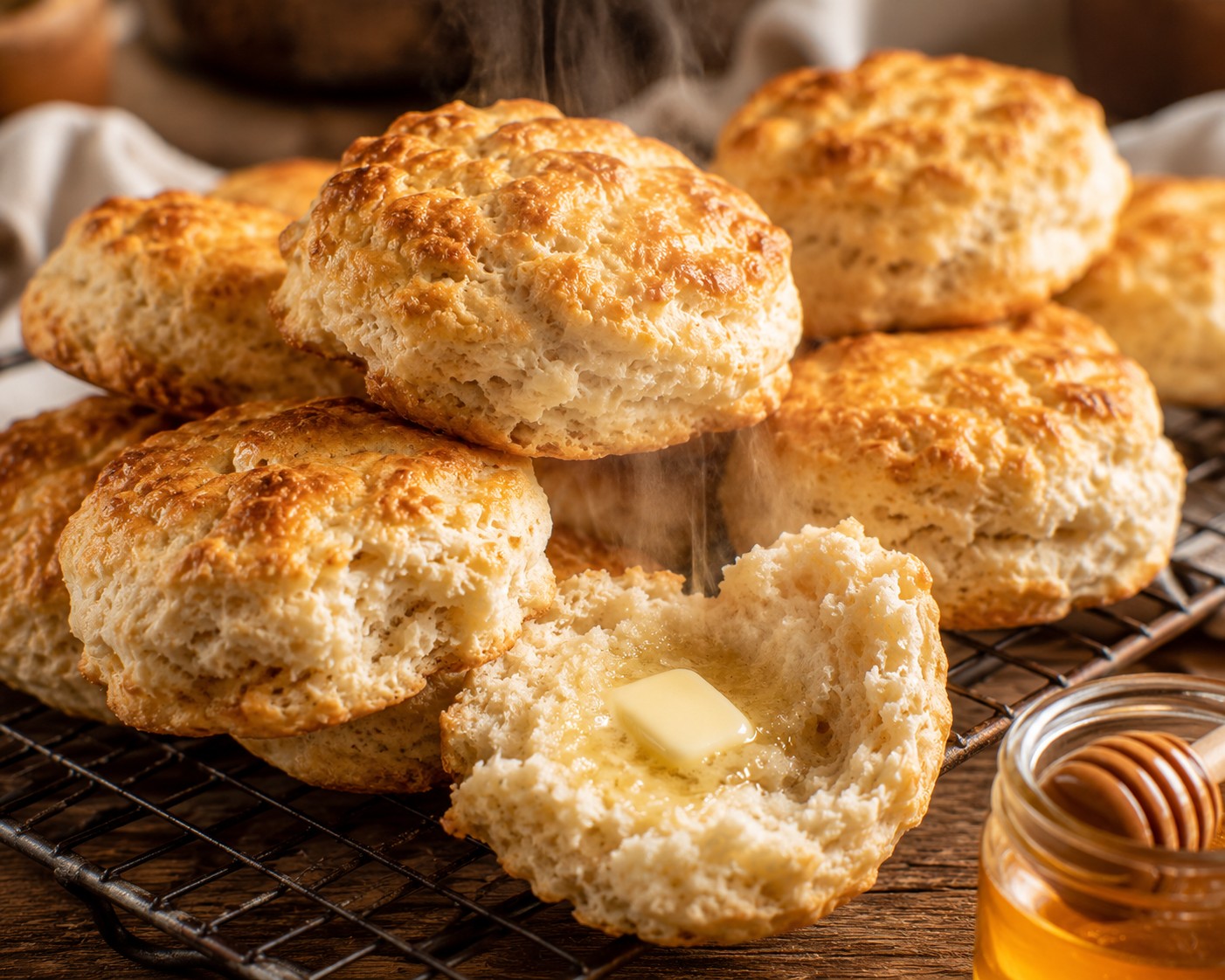
This drop biscuits recipe exists for anyone who wants flaky, homemade biscuits without a rolling pin, a biscuit cutter, or a countertop covered in flour. The technique that makes traditional cut biscuits flaky — folding cold butter through the dough in layers — gets replaced here with something faster and just as effective.
Frozen, grated butter does the same job as folding
Traditional biscuit recipes fold cold butter through the dough repeatedly to create thin layers that puff apart in the oven. Grating frozen butter directly into the flour achieves the same distinct, separate butter pieces in about thirty seconds, no folding required. As those shreds melt in the oven’s heat, they release steam that pushes the surrounding dough apart into flaky layers — same mechanism, much less effort.
Shaggy dough is correct dough
The urge to keep stirring until a drop-biscuit dough looks smooth and uniform is exactly the instinct to resist. A smooth dough means the flour’s gluten has developed and the butter has worked its way in rather than staying in distinct pieces — both of which lead to a denser, tougher biscuit. Stop stirring the moment everything is just combined, even if it still looks rough and uneven.
The craggy shape is the point
Drop biscuits don’t get shaped, cut, or smoothed before baking, and that irregular, spooned-out shape is exactly what gives them their crisp, craggy edges — a texture contrast that a perfectly round, cut biscuit doesn’t have in the same way. Let the mounds keep their natural shape going into the oven.

Tips & variations
- Freezing the butter and grating it directly into the flour is what makes drop biscuits flaky without any rolling or folding — the frozen shreds stay distinct through mixing and create pockets of steam as they melt in the oven, which is exactly what builds layers.
- Keep the buttermilk cold, straight from the fridge. Cold liquid helps keep the butter from softening prematurely while you mix, which protects those all-important separate butter pieces.
- Stir only until the dough just comes together. It should look rough and a little shaggy, not smooth — a smooth dough means you've overmixed and developed gluten, which is the fast track to a dense, tough biscuit.
- Don't flatten or smooth the mounds before baking — the craggy, uneven shape is exactly what gives drop biscuits their characteristic crispy edges and irregular, flaky top.
Drop Biscuits Recipe (Tall, Flaky, No Rolling Required) — Recipe Card
Ingredients
For the biscuits
Instructions
- Preheat oven to 425°F (220°C). Line a baking sheet with parchment paper.
- Whisk together the flour, baking powder, baking soda, salt, and sugar in a large bowl.
- Grate the frozen butter directly into the flour mixture using a box grater, tossing occasionally with your fingers to coat the shreds in flour and keep them separate. Frozen, grated butter is the whole trick — it stays in distinct pieces instead of blending in, which is what creates flaky layers as it melts in the oven.
- Pour in the cold buttermilk and stir with a fork or spatula just until the dough comes together — it will look shaggy and a little wet, and that's correct. Overmixing at this stage is the most common reason drop biscuits turn out dense.
- Using a large spoon or a cookie scoop, drop mounds of dough (about 1/3 cup each) onto the prepared baking sheet, spacing them about 1 inch apart.
- Bake for 14-16 minutes, until the tops are golden brown and a biscuit springs back lightly when pressed.
- Brush the warm biscuits with melted butter immediately after baking. Serve warm.
Estimated nutrition per 1 biscuit (of 8) : ~230 calories. This is a rough estimate for planning, not a substitute for exact dietary tracking.
Frequently asked questions
Can I use cold butter instead of frozen?
Frozen works better — it grates into cleaner, more distinct shreds that hold their shape longer while you mix. Cold butter from the fridge is softer and more likely to smear into the flour instead of staying separate.
Why are my drop biscuits dense instead of flaky?
Almost always overmixing the dough, which develops gluten and works the butter shreds into the flour instead of leaving them distinct. Stir only until everything is just combined and the dough still looks shaggy.
Can I make the dough ahead and bake later?
You can portion the dough onto a baking sheet and refrigerate it for up to a few hours before baking — the cold dough actually helps keep the butter firm. For longer storage, freeze the portioned dough and bake straight from frozen, adding a couple extra minutes.
How we choose
This recipe is research-led, not a claim of hands-on laboratory testing. We compare public product specifications, recurring patterns in buyer feedback, and the measurements that matter most for a real small-kitchen constraint. Recommendations are organized by who each option fits, what to measure, and when to skip it—not by commission rate.
Last reviewed: July 8, 2026