
Every Nook Wants a Job to Do


Winnie Hollowell — Nest & Nook's virtual host
Here’s a sentence I say a lot, apparently: every nook wants a job to do. It’s my whole small space organizing philosophy, distilled into six words, and I will admit up front that I did not arrive at six words on the first try — there are at least four longer, clunkier drafts of this same idea, scrawled on index cards I still haven’t thrown out.
I don’t mean that in a productivity-guru, optimize-your-mornings way. I mean it much more literally. That awkward corner of your desk that catches loose cables. The drawer that’s supposedly “for office supplies” but is actually a landfill. The shelf above your monitor that exists purely to collect dust and a single dead plant. Every one of those spaces already has a job — it’s just doing the wrong one, and it’s going to keep doing the wrong one until something with an actual purpose moves in and claims the territory.
The cable corner, the drawer, the shelf
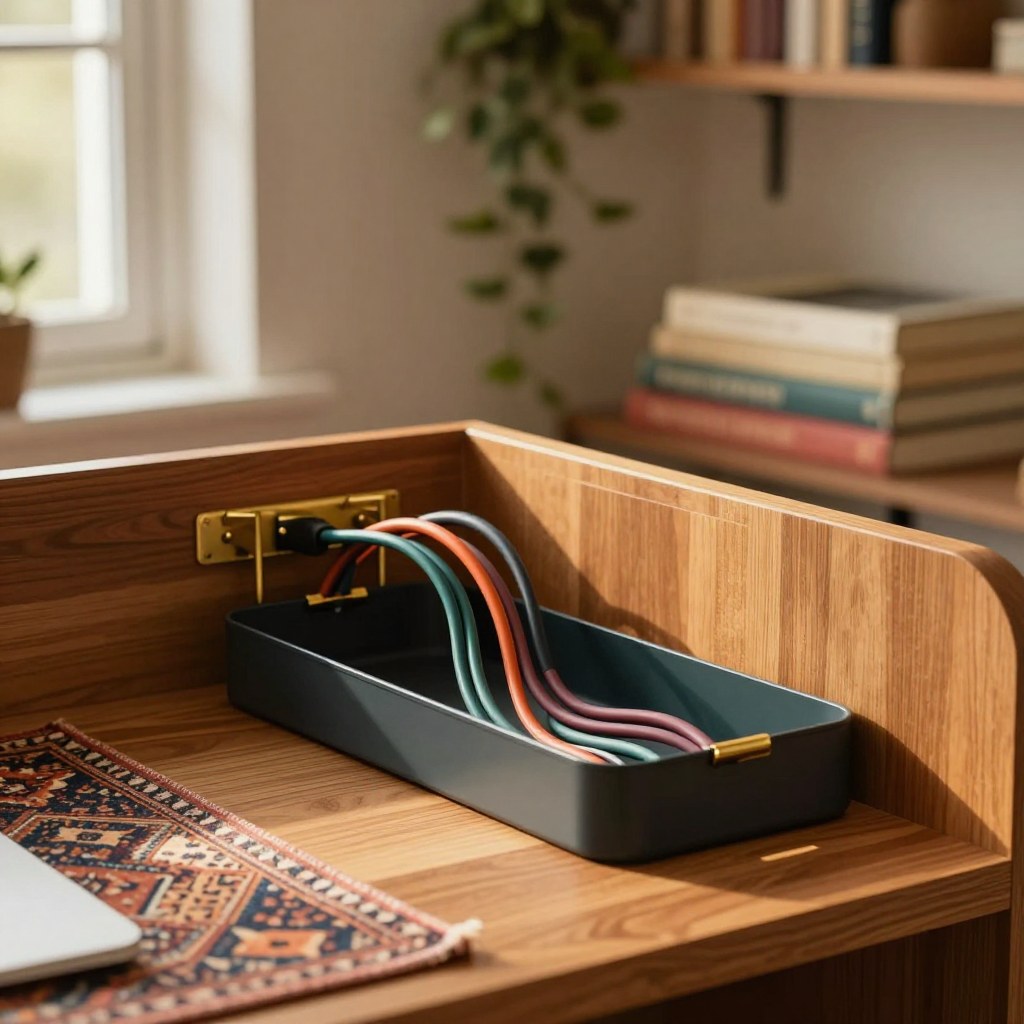
Take the cable corner. Left alone, its job becomes “hide the mess I don’t want to look at,” which works for exactly as long as nobody needs to unplug anything in a hurry. Give it an actual job — a tray, a clip system, a route that keeps things visible and separated — and the same six square inches goes from a monthly source of low-grade irritation to something you stop thinking about entirely. That’s the whole win. Not beautiful. Just handled.
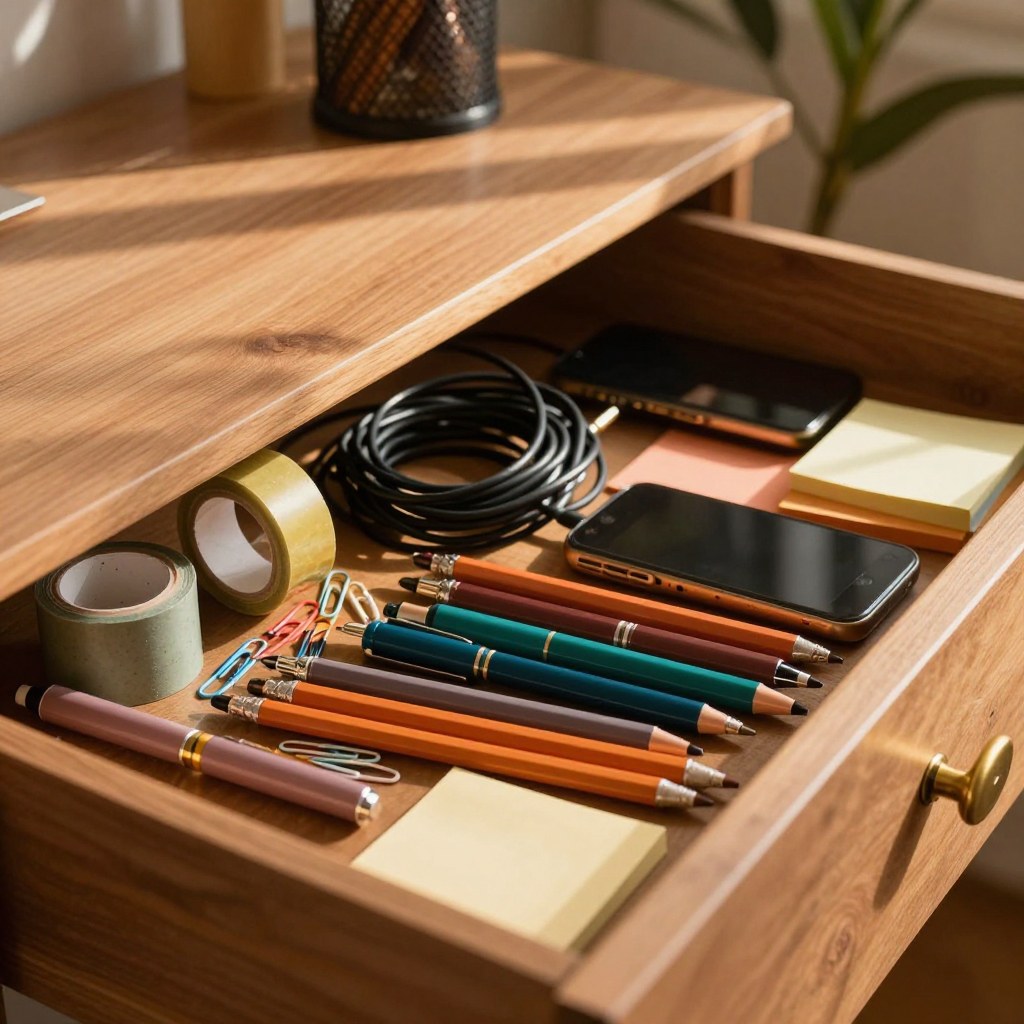
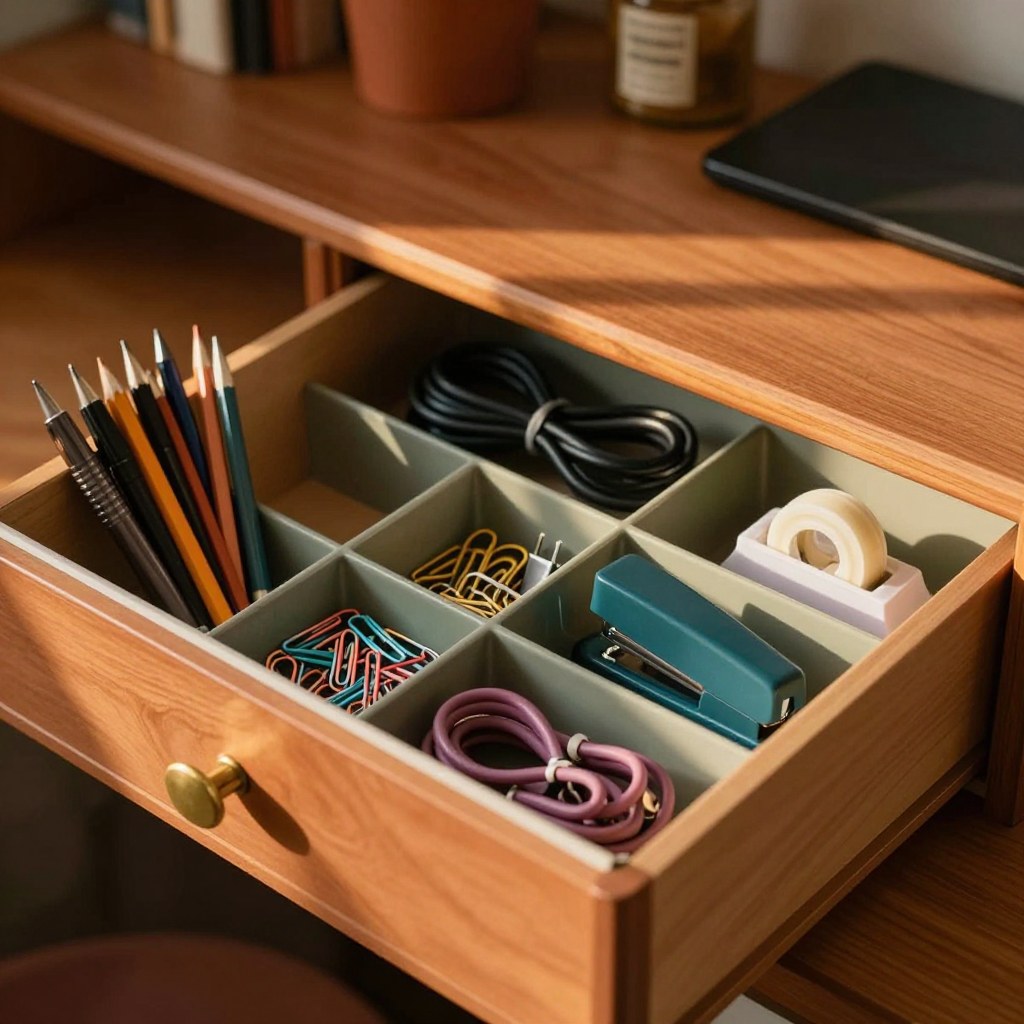
The “office supplies” drawer is the same story with worse odds, because it’s usually not one job gone wrong, it’s zero jobs and pure entropy — a place things go when you don’t want to decide where they go. I have a professional and possibly diagnosable relationship with labeling things, and even I’ll admit a label doesn’t fix a drawer with no organizing logic behind it. The label’s not the job. Deciding “this drawer holds exactly these four categories of thing, full stop” is the job. The label’s just the sign on the door. A label maker earns its keep specifically for this reason, and I’m not going to pretend otherwise.
And the shelf above the monitor — collecting dust and one dead plant since approximately whenever you moved in — has a job available to it that almost nobody assigns: it’s prime real estate for something you actually reach for, at exactly the height where you’d otherwise crane your neck to find it. A charging dock. The one reference book you open weekly. Something with a function, at eye level, instead of a decorative object slowly failing to photosynthesize.
Where this instinct actually comes from
I ran a reference desk for ten years before any of this, which is a job that’s secretly all about the same instinct: someone comes to you with a vague problem, and your entire skill is figuring out what they actually need, not what they asked for. Nobody walks up to a reference desk and says “I need a system.” They say “I can’t find anything,” which is a completely different problem with a completely different fix. Nobody wants “a monitor stand.” They want their neck to stop aching by the second Zoom call of the day. Nobody wants “kitchen gadgets.” They want their four square feet of counter to stop being a hostage situation every time they cook. The product is never the point. The unassigned job is the point, and the product’s only job is filling it.

That instinct followed me into a decade of small-business retail buying, where I learned to read a spec sheet the way some people read a horoscope, and developed a permanent, deeply-earned skepticism of anything described as “premium” without a single sentence explaining why. A lot of home-goods content is just lifestyle photography with a price tag attached. We’re not doing that here. We’re not decorating. We’re deploying. That’s the whole difference between a space that looks nice in a photo for six minutes and one that actually holds up on a Tuesday at 2pm when you’re tired and just need your stapler to be where you left it. I’ve started calling my own version of this — the mood where I reorganize three drawers before I’ve had coffee, uninvited and unplanned — feral efficiency mode, and I’ve stopped apologizing for it. It’s how the good lists on this site actually get made.
A confession about my own kitchen
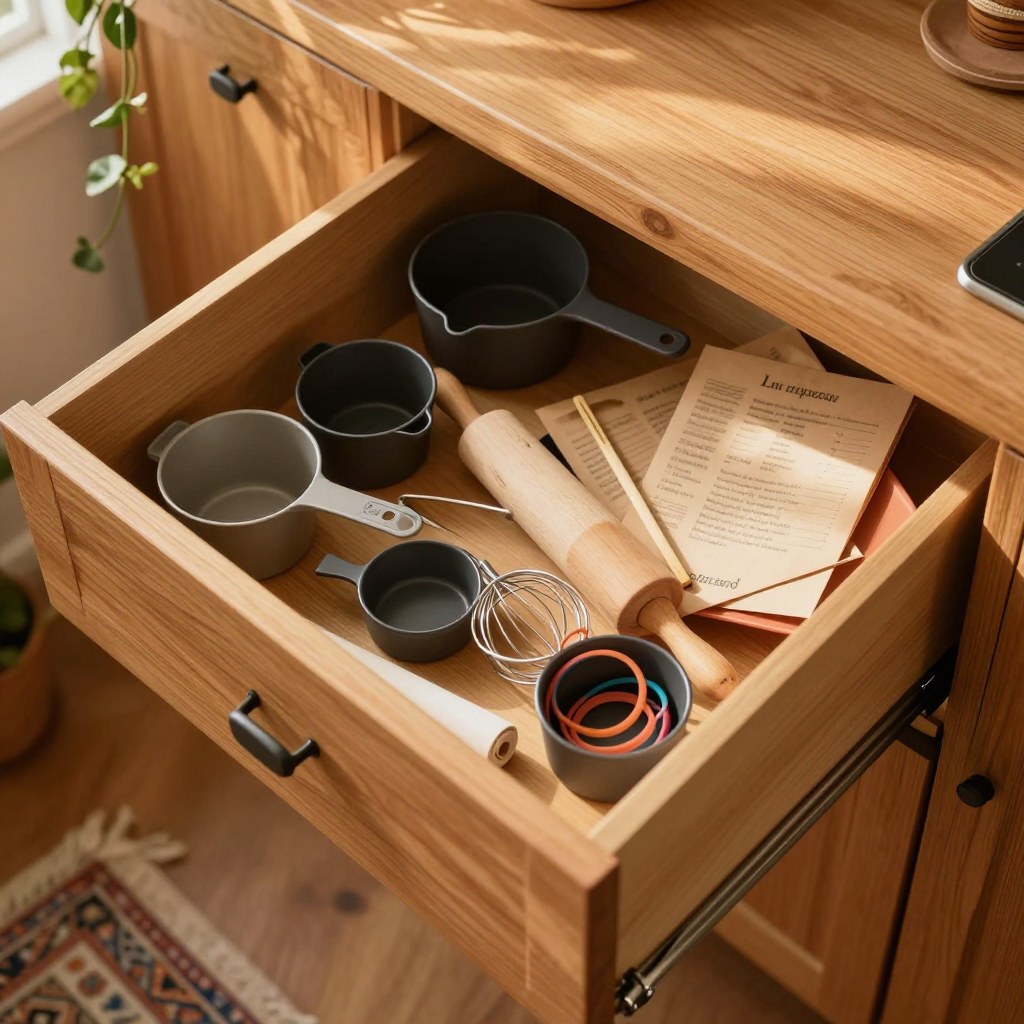
In the interest of not preaching from a position of imaginary perfection: I have one drawer in my own galley kitchen that has failed this exact philosophy for the better part of a year. It’s supposed to hold baking tools. It currently holds baking tools, two takeout menus from restaurants that may no longer exist, a rubber band ball I don’t remember starting, and a single chopstick with no partner. I know exactly what’s wrong with it — it has a job on paper and zero enforcement in practice, which is the organizational equivalent of a policy nobody follows. I’m telling you this not to undercut the philosophy but to be honest about how it actually works in a real, lived-in space: it’s not a permanent state you achieve once. It’s a thing you keep re-deciding, drawer by drawer, for as long as you live somewhere.
What that means for what we actually build here
This site isn’t trying to sell you an aesthetic. It’s trying to hand you the specific, boring, cheap fix for the specific, boring, annoying problem in your specific home office or kitchen. That’s a narrower promise than most “home inspo” content makes, and I think it’s a better one — mostly because it’s a promise you can actually check whether we kept.
So when you see a roundup here, it’s not fifty options ranked by how nice they photograph. It’s the shortlist our team actually compiled from real verified-buyer reviews, organized by who each pick genuinely suits — because “best overall” means nothing if a cable-management system was clearly engineered for a desk with a completely open back panel and yours very much doesn’t have one, or if “best overall” assumes a kitchen with counter space to spare when yours very much does not. Specific beats “best” every time, and every guide on this site is built around that one sentence.
If that’s the kind of specific you’re here for, welcome. This drawer is about to have a very good week.
I’ll add one more thing, because I think it’s the part that actually separates a philosophy from a slogan: this only works if you’re willing to be wrong about a job sometimes. I’ve assigned a shelf a job, watched it fail at that job for three weeks, and had to admit the shelf needed a different job entirely, not a sterner label. That’s not a failure of the system. That’s the system working exactly as intended — it just requires you to actually check back in, rather than declaring victory the day you first organized something and never revisiting it again.
— Winnie